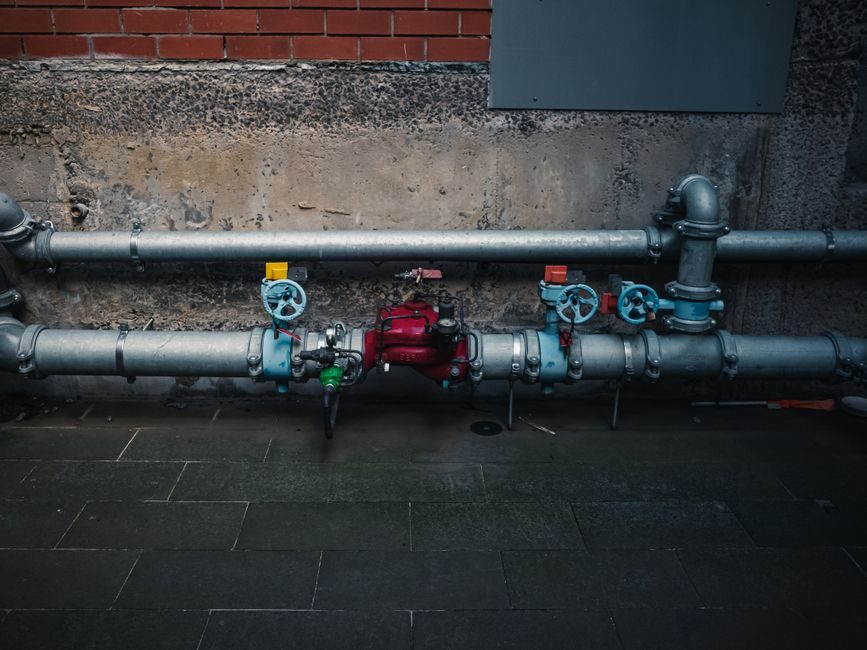
A globe valve is sized by required Cv against line pressure drop, with pressure class, body material, and end connection driving the bill of materials; the three commercial patterns (Z/straight, Y, angle) cover roughly 90% of process, HVAC, and fire-protection duty cycles.
Industrial sourcing data published 2026-04 through 2026-07 confirms a standardized envelope: petroleum and natural-gas globe valves are routinely quoted in 1/2"-56" with ASME Class 150-2500 ratings in carbon steel, stainless steel, duplex, alloy, and aluminum-bronze bodies [S3].
Step 1: Lock the Sizing Basis (Cv, Pressure Drop, Sizing Gas vs. Liquid)
Required Cv is the primary sizing number; the formula Q = Cv·√(ΔP/G) for liquids and Cv = Q/(N·P1·Y·√(x/(T·Z·M))) for compressible media sets the minimum port area and eliminates guesswork on duty. For a throttling service, the chosen Cv should normally land at 60-80% of the calculated value so the plug operates in the upper linear portion of the characteristic curve and avoids the first 20% of stroke where the equal-percentage curve is steep and unstable. Two rules of thumb that catch most under-sized jobs: (a) for steam and high-pressure gas, multiply the theoretical Cv by a safety factor of 1.2-1.5 to absorb choked-flow and superheat derate; (b) for viscous liquids above ~80 cSt, a dedicated viscosity correction (linked to Reynolds number) must be applied, because the standard water-based Cv formula overstates flow by 20-40% on heavy oils. The accompanying globe valve selection map for 2026 walks through the same gates (Cv, pressure class, body material, end connection) in process-engineer order. [S1]
Step 2: Pick the Pattern - Z (Straight), Y, or Angle
Z-pattern (T-pattern) is the default for general service and isolation: vertical plug travel, horizontal line, moderate pressure drop, larger face-to-face envelope. Angle-pattern turns the valve into a 90° elbow, removing one piping bend entirely and cutting installed cost on condenser-level and drain-line service. A first-pass comparison across the realistic options: [S1]
Pattern vs. For a deeper valve-pattern vs. body-material map across the gate-valve family and food-grade globe specs, the same envelope logic applies: bigger pressure class = more wall thickness, more weight, and a longer delivery lead time.
Step 3: Pressure Class, Body Material, and Trim
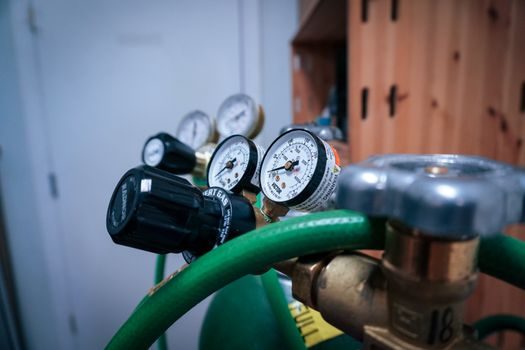
ASME B16.34 pressure class is the first gate: Class 150 (285 psi @ 100 °F), Class 300 (740 psi), Class 600 (1480 psi), Class 900 (2220 psi), Class 1500 (3705 psi), and Class 2500 (6170 psi) define the body rating; selecting a class one step above the calculated maximum allowable working pressure buys margin for water hammer and upset events. Body material is the second gate, and the commercial envelope is well defined: WCB carbon steel covers -29 °C to 425 °C non-corrosive service; LCB and LCC low-temperature carbon steel extends to -46 °C per ASME B16.34; CF8/CF8M (304/316) stainless covers food, pharma, and mild chemicals; duplex (4A/5A/6A) covers chloride-bearing and sour service; alloy 20, Hastelloy, and Monel cover sulfuric, hydrochloric, and seawater. Current China supplier data shows the same pattern: cast-steel, forged-steel, Y-type, angle, and BS 1873 globe valves dominate the offered range, with WCB, PSB, and stainless as the three stock body materials [S2].
Step 4: End Connections, Bonnet, and Stem
End connection drives both pressure rating and installed cost. Flanged ends (ASME B16.5 for ≤ 24", ASME B16.47 for ≥ 26") are the default for Class 150-2500 and are the only option at Class 900 and above in most process plants. Butt-weld ends lower weight and eliminate the flange gasket leak path but commit the valve to the pipe permanently. Threaded (NPT) and socket-weld ends stay inside Class 800 and Class 1500 respectively and are used for 1/2"-2" instrument and small-bore service. Bonnet selection: bolted bonnet for general service at Class 150-600, pressure-seal bonnet for Class 600-2500 high-temperature service, and welded bonnet for nuclear and toxic service where zero leak path is mandatory. Stem packing has shifted from graphite-asbestos (banned in most jurisdictions) to graphite, PTFE, or live-loaded PTFE V-rings; for temperatures above 250 °C, flexible graphite is the default. [S3]
Step 5: Special Duty - Fire-Safe, Cryogenic, Sour, and Actuation
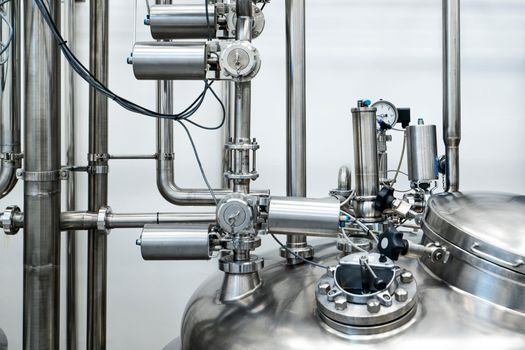
Fire-safe globe valves for hydrocarbon and offshore service must meet API 607 / API 6FA fire-test duration of 30 minutes minimum, with metal-to-metal secondary seat and graphite stem packing - the standard on which most hydrocarbon-plant globe-valve RFQs hinge. For fire-protection deluge and pre-action sprinkler service, the working spec is UL/ULC Listed "Special Systems Water Control Valves Class I (VLFT)" with manual, hydraulic, or pneumatic pilot operation; the Cla-Val 100G/2100G deluge globe is a published example, rated 285/300 psi and 180 °F (82 °C), hydraulically operated with diaphragm actuator, fusion epoxy internal/external coating, and Dura-Kleen stem [S1]. Cryogenic service below -46 °C requires extended bonnet, austenitic stainless or bronze body, and LNG-qualified packing; sour service (NACE MR0175) limits hardness to 22 HRC max on wetted trim. The majority of the duty envelope - around 80% of process throttling - is now fitted with pneumatic diaphragm or electric actuators sized for the calculated seating thrust, typically with a 1.25-1.5× stem-thrust safety factor.
Selection Shortlist Logic: When NOT to Pick a Globe Valve
Do not pick a globe valve for dirty, abrasive, or slurry service: the tortuous Z-pattern flow path traps solids and accelerates seat erosion - a ball valve or a butterfly valve handles solids 5-10× better and at lower cost. Do not pick a globe for full-bore, unrestricted flow service: the globe trim adds 2-5 velocity-head pressure loss compared with a gate valve, and a gate or ball is the right answer for isolation. Do not pick a standard Z-pattern globe for high-ΔP continuous throttling: switch to Y-pattern or angle-pattern to cut erosion by half. The shortlist logic for 90% of specifiers: confirm Cv and pressure class first, lock the pattern, pick the body material against corrosion and temperature, and only then add the special-duty overlay (fire-safe, cryogenic, sour, actuated). For actuation sizing on the linear-actuator side, the same thrust/thrust-margin math is the gate. [S1]
A second live signal is the continuing shift of Chinese foundries from WCB to duplex and super-duplex stock lines, which shortens lead time for chloride and seawater service by 4-8 weeks compared with 2024-2025.
The underlying component specifications are covered under globe valve.