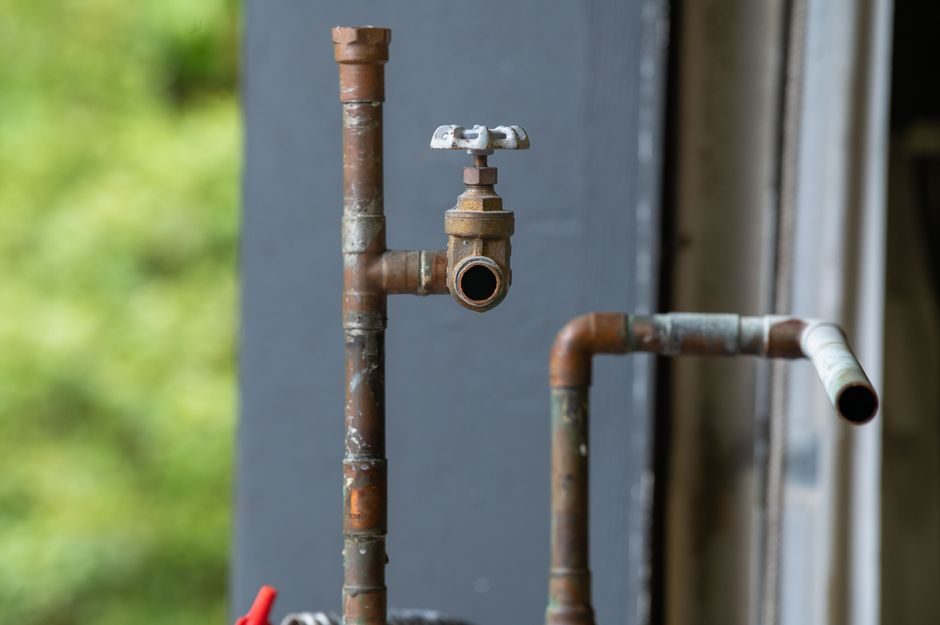
Pick a globe valve when the line needs precise throttling, high-pressure drop handling, or bubble-tight shutoff; pick a butterfly valve when the line is large-bore, low-pressure-drop, and price-per-DN matters [S1][S3].
Both product families remain core offerings across Chinese, Indian and European OEM catalogues published in 2026, with globe valves concentrated in high-pressure / steam / modulating duty and butterfly valves dominating large-bore water, HVAC and low-pressure process lines [S1][S2][S3][S4][S5].
Operating Principle and Flow Characteristic
Globe valves force flow through an S-shaped path between a horizontal seat and a vertically traveling plug, giving a linear or equal-percentage characteristic ideal for modulating duty [S3]. Butterfly valves rotate a disc 90° around a shaft centered in the bore, producing a roughly equal-percentage characteristic that flattens out above ~60° opening and offers no real throttling below ~20°.
The globe's tortuous path creates a higher, more stable flow coefficient loss factor (typical Kv/Cv drop per nominal size) but also a much steeper, more controllable curve across the full lift range. The butterfly's unobstructed bore when fully open gives a near-bore-of-pipe flow area and pressure recovery that a globe cannot match. The full globe valve geometry suits high-pressure-drop service; the butterfly valve geometry suits high-volume, low-pressure-drop service.
Pressure, Temperature and Size Envelope
Globe valves are routinely quoted in ASME Class 150 through Class 2500 and API 602 / API 600 small-bore variants, with body and trim rated for steam up to 593°C on stainless trim and superheated service up to 600°C on Cr-Mo steel in the same catalogues [S1][S3][S4]. Butterfly valves in commercial catalogues cluster around PN10 / PN16 / Class 150 with dedicated high-pressure variants to PN25 / Class 300 and cryogenic / high-temp executions to roughly -196°C (LN2) and 600°C (Dembla triple-offset) [S3][S5].
On size, butterfly valves scale cleanly into the DN2000+ / 80-inch range with wafer, lug and double-flanged body styles, where a same-size globe becomes a multi-ton lifting and freight problem. Sub-DN50 / 2-inch, the economics flip: small butterflies lose their cost edge and the globe's heavier body, harder seat and tighter shutoff take over. Several 2026 OEM catalogues from Kaitai and Dembla list globe valves down to DN15 and butterfly valves up to DN2000 as standard catalogue items [S3][S4][S5].
Shutoff Class, Seat Leakage and Service Life

Metal-seated globe valves are routinely offered to API 598 / ISO 5208 Class IV, V and VI (bubble-tight) with soft-seat PTFE / graphite executions delivering Class VI as standard; butterfly valves land mostly at Class IV (metal) or Class VI (soft seat) and require a true triple-offset geometry to reach Class V / VI on metal seats without destroying the seat over time [S3][S5].
Cycling life on a soft-seated butterfly is typically several thousand cycles before seat replacement; a metal-seated triple-offset will reach tens of thousands, and a globe valve with hardened trim typically exceeds 100,000 cycles on clean service. Both are in active 2026 OEM line-ups from Dembla (India), Kaitai (China) and dbv-armaturen (Germany DIN) [S3][S4][S5]. For a deeper look at the globe-side spec and sourcing levers, see the Globe Valve Buying Guide 2026.
Cost, Weight and Footprint per DN
On a 2026 China-supplier basis, a wafer butterfly in DN300 PN16 with EPDM seat and lever operator lists in the low three-figure USD range, while a same-class flanged globe in DN300 PN16 lands several multiples higher, with the gap widening fast above DN600 [S1][S2][S6]. Installation footprint follows the same pattern: a DN600 wafer butterfly sits between flanges and weighs a fraction of a same-bore flanged globe body.
The hard floor on butterfly cost is structural — small body, short face-to-face, no internal stem thread bore — so the cost curve stays nearly flat from DN50 to DN1000. The globe cost curve climbs with size because casting, machining and stem-valve area all grow with bore. The Butterfly Valve Price and Cost Guide 2026 walks that cost curve in detail, while the Gate Valve Buying Guide 2026 gives a useful third-leg comparison for isolation duty.
Selection Criteria: When to Use Which

Use a globe valve for: (1) modulating control duty, especially with equal-percentage trim; (2) high-pressure-drop clean service such as feedwater, steam desuperheating, chemical injection; (3) tight shutoff required on hydrocarbon or toxic service; (4) small-bore (DN ≤ 50) where butterfly seat geometry loses its cost edge [S1][S3].
Use a butterfly valve for: (1) large-bore isolation in water, HVAC, fire protection and seawater; (2) low-pressure-drop lines where a near-bore opening preserves pumping cost; (3) tight spaces where wafer or lug face-to-face is decisive; (4) fast-acting isolation with pneumatic or electric actuator at a price the globe cannot match [S2][S4][S5]. For on/off isolation duty above DN150, also weigh a gate or ball valve — the Gate Valve vs Ball Valve: 2026 Spec Cut lays out that trade-off.
Failure Modes and Maintenance Reality
Globe valves fail predictably: seat erosion on high-ΔP modulating service, stem packing leaks at the top, and internal cavitation pits on the plug face. Repair is straightforward because the seat and disc are discrete, field-replaceable parts on most 2026 catalogue offerings [S3][S4].
Butterfly valves fail differently: soft seats blister, swell or chunk out on off-spec chemistry; disc-to-shaft pins wear in slurry service; the shaft packing leaks after mid-thousands of cycles. Disc and seat are typically a one-piece replacement on wafer and lug bodies, so field rebuild is part-replacement rather than re-machining. Triple-offset metal-seated executions change the math, but they are still price-elevated in every 2026 catalogue surveyed [S3][S5].
Actuation, Control and Smart Integration
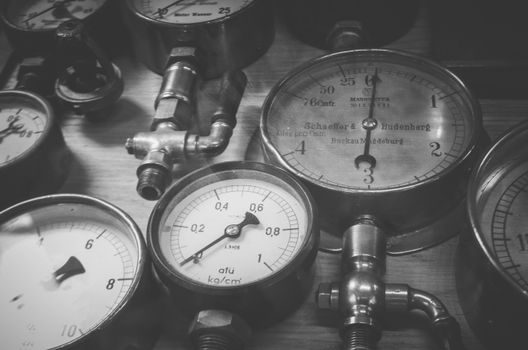
Both families are sold bare-shaft, lever, gear, pneumatic and electrically actuated in 2026 OEM catalogues, and both are routinely supplied with pneumatic rotary actuators, electric quarter-turn actuators, and positioners for 4-20 mA / HART / Fieldbus control loops [S2][S3][S5]. On modulating duty, the globe still wins because the linear stem travel drives a positioner more predictably than a 90° rotary; on isolation duty, the butterfly is faster and cheaper to actuate per torque unit.
For a balanced view of quarter-turn versus multi-turn actuator sizing, the Gate Valve Buying Guide 2026 is a useful cross-reference. Across all 2026 catalogues surveyed — dbv-armaturen, Dembla, Kaitai, High Mpa Valve, Suntti, Advanced Technology Valve, Sudhana — the control valve and the ball-valve families are listed as the dominant modulating offerings, with the globe as the established throttling workhorse [S1][S2][S3][S4][S5][S6].
Track three signals over the next quarter: (1) 2026-Q3 catalogue refreshes from the same seven OEMs for any new triple-offset pressure class entries above PN40 / Class 300; (2) actuator OEM moves toward integrated IIoT positioners with native Ethernet-APL on quarter-turn bodies, which would tip more large-bore isolation toward the butterfly; (3) any Chinese or Indian supplier pushing globe-valve lead times below eight weeks on Class 600+ stainless trim, which would close the last cost gap on small-bore modulating service.