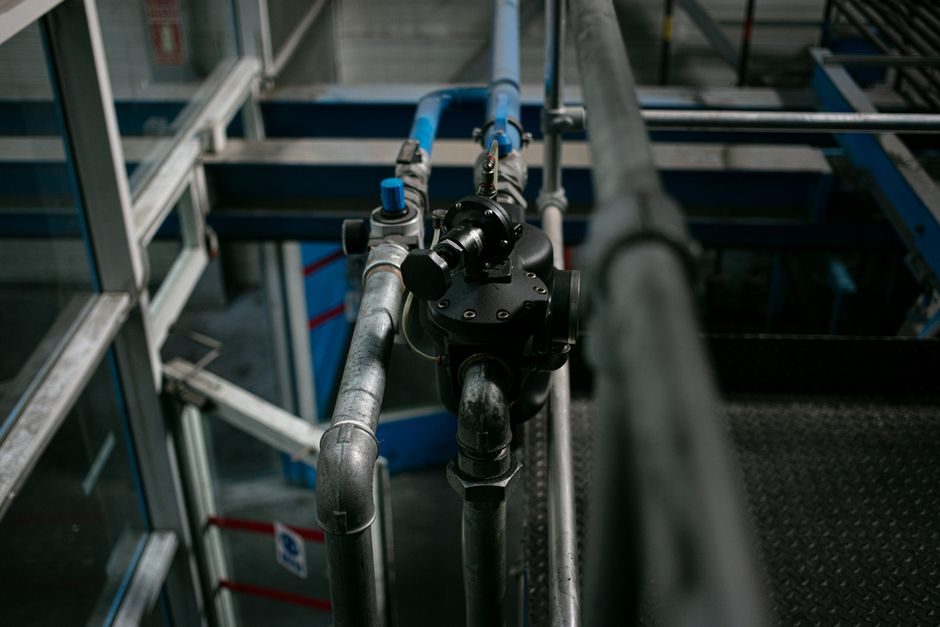
Soft-sealed butterfly valves on the China wholesale market were listed between US$ 29.00 and US$ 1,675.00 per piece at a 1-piece MOQ on Made-in-China.com, snapshot 2026-05-15 [S4]. Posi-flate's 470 series, marketed as a distribution / high-temperature pneumatic butterfly valve, was still actively listed on DirectIndustry as of 2026-05-31 [S1], confirming that pneumatic double-disc designs remain a distinct price tier above commodity wafer-type soft-seated units.
The price spread of roughly 57:1 inside one category on a single sourcing page [S4] is the headline fact: "butterfly valve price" is not a number, it is a stack of decisions — body material, seat elastomer, pressure class, end connection, actuation package and the certification burden (drinking water, fire, ATEX, NACE) attached to the tag. For a working baseline see the butterfly valve reference page before reading the cost levers below.
Baseline Price Bands on China Wholesale (2026-05 snapshot)
The Made-in-China.com 2026-05-15 listing page for soft-sealed butterfly valves shows price points from US$ 29.00 to US$ 1,675.00 per piece at 1-Piece MOQ, with Diamond Member / Audited Supplier status on the top rows [S4]. A separate dedicated export portal, butterflyvalveprice.com, was live on 2026-06-25 and positions itself as a "Butterfly Valve Expert" sourcing channel with a "factory price" pitch [S2].
Reading those two sources together gives three usable price bands for 2026 quoting: entry wafer-type soft-seated DN50-DN300 in ductile-iron / EPDM bodies typically sits US$ 29-US$ 120 per piece [S4]; mid-tier flanged or double-flanged lug/wafer bodies in carbon steel with PTFE or NBR seats cluster around US$ 150-US$ 500 per piece [S4]; high-end high-temperature, food-grade or fire-rated units — including pneumatic-actuated packages such as the Posi-flate 470 series distribution / high-temperature design [S1] — move into the US$ 800-US$ 1,675+ zone per piece [S4]. Below ~US$ 30 per piece, treat the listing as a teaser, not a deliverable price: confirm body casting origin, seat compound and hydrostatic test certificate before issuing a PO.
Cost Levers #1-3: Body, Disc, Seat
Three material decisions move roughly 60-70% of the BOM on a butterfly valve. Body material steps up from grey cast iron (cheapest, water service only) → ductile iron (AWWA C504 / C506 typical) → WCB carbon steel → 316 stainless → duplex / super-duplex (chloride and NACE MR0175 sour service). Disc material tracks the body but is the wetted sealing part, so it usually steps up first when chemistry gets aggressive; 316L is the common upgrade, with bronze or ALBC (aluminum-bronze) specified for seawater / ballistic-missile-class firewater. Seat / liner is the third lever: EPDM (water, weak acids, ≤120 °C), NBR / Buna-N (oils, hydrocarbons, ≤80 °C), PTFE (chemicals, ≤200 °C but cold-flows under load), FKM / Viton (chemicals, ≤200 °C) and metal-to-metal (fire-safe to API 607, ≥400 °C) each carry their own price step. [S1]
For comparison, the same DN100 wafer pattern was listed across the US$ 29-US$ 1,675 band on 2026-05-15 [S4]; the difference between the floor and the ceiling of that band is almost entirely (body, disc, seat), not machining or painting. Buyers who fix pressure class and end connection first, then iterate on these three fields, get the most predictable quote response. A useful counterpart in the linear-motion family is the linear guide, which follows the same "material and tolerance dominate cost" rule.
Cost Levers #4-5: Pressure Class, End Connection, Size
Pressure class is the single biggest non-material cost driver. PN10 / PN16 (ANSI 125 / 150) wafer and lug bodies in DN50-DN300 stay in the entry band [S4]; moving to PN25 / ANSI 300 roughly doubles the body casting cost because of thicker walls and higher-pressure seat geometry. PN40 / ANSI 600 in metallic-seated designs is a different product line entirely — expect 3-5× the PN16 price before any material upgrade.
End connection adds the second step. Wafer (sandwiched between flanges, no bolt holes) is the cheapest body. Lug (threaded bolt holes, dead-end service at full ΔP) costs 10-20% more. Double-flanged (flanges integrally cast or welded, long-pattern) is the most expensive and is what most spec sheets call for in water and wastewater treatment plants. Size compounds non-linearly: DN50-DN150 are "commodity," DN200-DN300 are still competitive, DN350-DN600 are quote-only, and DN700+ butterfly valves become engineered skids with shipping crating and actuator-matching costs that often exceed the bare valve. The related decision on whether to specify a butterfly at all versus a swing-check or ball is laid out in Butterfly vs Swing Check Valve: Spec Cut, Function Boundary, Sourcing.
Actuation, Fire-Safe and Certification Premiums
Manual gear operators (hand lever, worm-gear) add roughly US$ 50-US$ 200 per unit. Pneumatic double-disc designs such as the Posi-flate 470 series are explicitly positioned for distribution and high-temperature service [S1], which means the price includes a matched pneumatic actuator and a high-temperature seat — expect US$ 1,000+ at the small end and 2-3× that for DN150+.
Fire-safe certification to API 607 / API 6FA (typically a metal secondary seat in addition to the soft seat) is a 15-30% premium on the body. Drinking-water certifications (NSF/ANSI 61, WRAS, ACS) gate the elastomer and the coating, not the casting, and usually add 10-20% but open the unit to municipal bids. ATEX / IECEx for Group II Cat 2 (zone 1) on the actuator and switch box is a hard 20-40% adder because the supply chain narrows to audited OEMs. For sour service, NACE MR0175 / ISO 15156 restricts hardness on wetted parts and pushes buyers into 316L or duplex, which is a material upgrade more than a certification line item.
Who a Butterfly Valve Is For — and Where It Is Not

A butterfly valve is the right pick for DN50-DN600 on/off or modulating service where the differential pressure stays under ~10 bar in the soft-seated range and under ~40 bar in metal-seated, where the medium is clean or only lightly particulate, and where weight and face-to-face length matter (water treatment, HVAC, firewater mains, tank-farm isolation, low-pressure gas). It is the wrong pick for dirty slurries (use a knife-gate or pinch), for high-pressure steam above the seat rating, for cryogenic LNG (use extended-bonnet ball or cryogenic butterfly from a specialist only), and for tight bubble-class shut-off above Class VI — a ball valve or check valve will outperform it. On modulating duty, beware of seat erosion below ~10° from closed: specify a high-cycle seat (PTFE with backing ring, or metal seat with hard facing) and budget for shorter seat life. [S2]
Crossed-roller and linear-guide framing for valve-actuator linkages follows the same logic: pick the duty cycle first, then the component — see the crossed-roller guide reference. Within balancing and HVAC, a butterfly is sometimes substituted for a balancing valve; the two are not interchangeable — a balancing valve is characterized, numbered and leak-measured, a butterfly is not.
Sourcing Levers: Channel, MOQ, Logistics, Inspection
Channel choice moves 10-40% of the landed price. Three live channels appeared in the May-June 2026 snapshot: DirectIndustry OEM listings (e.g. Posi-flate 470 series [S1]), Chinese B2B wholesale pages (Made-in-China.com soft-sealed range US$ 29-US$ 1,675 at 1-Piece MOQ [S4]) and dedicated China-export brand portals (butterflyvalveprice.com, "Butterfly Valve Expert / factory price" pitch [S2]). Trading-company listings on these portals often look 15-25% under audited-factory quotes; confirm ISO 9001 certificate, material test reports (MTR) and the actual casting mark before paying a deposit.
MOQ is a hidden lever. A 1-Piece MOQ at US$ 29.00 [S4] is a sample / dealer price; a 50-200 piece release of the same SKU typically drops 15-30% on the unit price. Logistics is the third lever: DN600+ butterfly valves exceed standard container dimensions and move on flat-rack with crating that can add US$ 300-US$ 800 per unit. For buyers also moving pneumatic and linear-motion kit, the cost logic on stroke, drive and payload follows the same channel/MOQ/shipping/inspection stack — see the Linear Module Price 2026: Stroke, Drive, Payload and Source Levers reference.
Decision Matrix: 4 Valve Types on 4 Buying Criteria
Comparing butterfly against the three alternatives it most often competes with: (1) Cost per DN at PN16 — butterfly wins, ball is 2-4× higher, swing check is 1.5-2× higher, gate is 1.5-2.5× higher. (2) Face-to-face length — butterfly is the shortest (ISO 5752 short pattern), ball is 2-3× longer, swing check and gate are 2-4× longer. (3) Bubble-class shut-off — soft-seated butterfly reaches Class VI, ball reaches Class VI, swing check is non-settling, gate reaches Class V. (4) Slurry / dirty service — butterfly fails quickly, ball fails on seat, swing check fails on disc swing, gate handles coarse media best. The price premium for a fire-safe API 607 soft-seated butterfly is typically 15-30% over a non-fire-safe equivalent; a metal-seated high-temperature unit such as the Posi-flate 470 series sits higher still because of the matched pneumatic actuator [S1].
Trackable Signals to Watch Through Q3 2026
Two signals will tighten butterfly valve pricing through 2026. First, Chinese steel and stainless scrap benchmarks, which set the floor for ductile-iron and 316 body castings — any sustained move moves the entry band [S4] within 4-8 weeks. Second, the ATEX / IECEx actuator supply chain: with the Posi-flate 470 series and similar pneumatic units [S1] already priced as a premium tier, any expansion of audited Chinese pneumatic-actuator capacity will compress the 20-40% ATEX adder into the 10-20% range for small-DN orders.