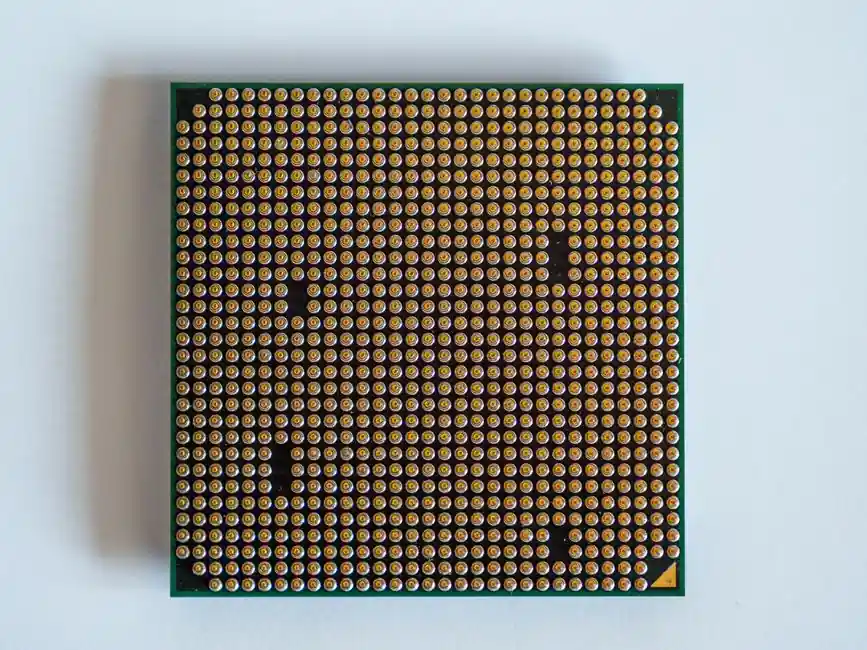
Discrete power semiconductors and silicon wafers from Chinese suppliers are quoted at US$28-35 per piece at 10-piece MOQ on Made-in-China.com, with broader ranges of US$10-100 per piece for raw wafer material and US$100 per piece for high-voltage phase-control thyristors (Kp1300A6500V class) at 5-piece MOQ [S2][S5].
The product stack actually breaks into three separate sourcing problems: raw wafers and substrates, discrete power devices (thyristors, rectifier diodes, Schottky, diode modules), and finished ICs/components for OEM assembly. Treating all three as "semiconductor sourcing" is the most common buyer mistake and the reason so many procurement cycles blow up on lead time.
Channel Comparison: B2B Portal vs Sourcing Agent vs Direct Factory
Made-in-China.com listed 18,748 semiconductor SKUs at the time of the 2026-07-20 catalogue scrape, with Gold Member and Diamond Member audited suppliers concentrated in Shanghai and Fujian [S5]. Audited Supplier status and Gold/Diamond tier are the first filter to apply, because the same platform openly mixes trading companies and actual factories, and only the audited tier carries any on-site verification of production line, export license, and quality system [S2][S5].
A sourcing agent such as FR International, based in Guangzhou, claims 25-30% landed-cost savings versus prior manufacturers and provides end-to-end procurement plus QC inspection for clients in the US, UK, Poland, Australia, India, and Nepal [S3]. The trade-off is a service fee layer on top of factory FOB, which makes agents uneconomical below roughly US$20k order value, and the value only compounds once you have multiple SKUs, multiple factories, or QC failures that need on-the-ground resolution [S3].
Direct factory sourcing (no agent, no portal) is the cheapest path on paper, but it is also the one that has stranded buyers with 3rd-shipment quality drift, communication breakdown, and lost end customers, per an anonymised purchasing manager testimonial from a South African WR Corporation case [S3]. Treat any direct-factory order above US$50k as warranting either a third-party inspection clause or a short agent retainer covering the first three production batches.
Product Category Specs and What the Prices Actually Mean
High-voltage phase-control thyristors in the Kp1300A6500V class (1300 A average on-state current, 6500 V repetitive peak off-state voltage) sit at the top of the discrete power device range, quoted around US$100 per piece at 5-piece MOQ [S5]. That is the device class feeding HVDC converter stations, large industrial DC drives, soft starters on 6 k motor circuits, and traction rectifiers; it is not interchangeable with a 25 A TO-220 thyristor, and buyers who spec by keyword rather than by IT(AV), VDRM, and dV/dt ratings will end up with the wrong part every time.
Rectifier diodes, recovery diodes, Schottky diodes, and diode modules are the volume tier, where unit price drops into single-digit USD at higher MOQ, and where Chinese suppliers have a real cost advantage on commodity glass-metal-sealed packages [S5]. For thermal management and heatsinking work, the same procurement path that pulls in a Schottky diode often pulls in the pressure sensor or flow meter that lives in the same rectifier cabinet, and combining shipments on one consolidated PO is the single biggest freight-per-unit lever a small buyer has.
Silicon and SiC wafer substrates are the upstream layer, quoted at US$28-35 per piece for the 2-inch to 4-inch consumer/industrial grade at 10-piece MOQ, and US$10-100 per piece across the wider 6H-SiC, 4H-SiC, and prime-grade silicon range, with suppliers like Shanghai Opticrystal Materials and Xiamen Innovacera Advanced Materials anchoring the listing [S2]. Wafer sourcing is qualitatively different from device sourcing: lead times run 6-12 weeks for prime grade, MOQ rarely drops below 25 wafers, and resistivity, orientation, and TTV specs must be locked in writing before PO, not negotiated after.
MOQ, Lead Time, and the Audit Trail
MOQ on Made-in-China.com semiconductor listings clusters around 5-10 pieces for finished discrete devices and 10 pieces for wafer substrate at the entry tier, with freight, export license, and HS-code classification adding 10-20% to the FOB quote once you move to LCL or 20-ft container [S2][S5]. Payment terms on the platform default to T/T 30/70 or L/C at sight, and Secured Trading Service adds an escrow-style hold that is worth the fee on any first order above US$10k [S5].
Lead time discipline is the harder problem. For a stock discrete device, a Shanghai or Shenzhen factory will quote 7-15 days production plus 18-25 days sea freight to Long Beach or Rotterdam; for a custom-spec thyristor module or a non-standard wafer diameter, add 30-45 days for engineering sample and another 30 days for batch ramp [S3]. Buyers running JIT lines should build a 90-day safety stock on the long-tail discretes and only rely on spot-buy for the high-volume commodity SKUs.
Documentation that has to land with the shipment includes the mill test certificate or wafer spec sheet, RoHS and REACH compliance statements, and for any device going into an ATEX or IECEx certified assembly, the component-level certificate of conformity traceable to the IEC 60079 family and the ATEX 2014/34/EU directive. Crossed-roller and linear guide systems used in wafer-handling robots sit under the same ATEX/IECEx regime when the cleanroom is in a hazardous-area plant, and the crossed-roller guide supplier on the same project will need equivalent certification paperwork.
Selection Criteria: Who This Path Is For, and Who Should Walk Away
Direct-from-China semiconductor sourcing is the right answer for buyers needing commodity discretes (rectifier diodes, Schottky, standard thyristors, glass-metal-sealed packages), wafer substrate for non-leading-edge R&D, and OEM/ODM assemblies where the Chinese factory holds the bill of materials. It is the wrong answer for aerospace-grade, automotive-grade AEC-Q101/Q104 qualified parts, and for any sub-28 nm IC where export controls and ITAR-equivalent rules make a Chinese-origin part a compliance risk regardless of price [S2][S5].
Decision rule: if your end product carries a functional safety certification (IEC 61508 SIL 2/3, ISO 26262 ASIL C/D, IEC 60601), buy the semiconductor from the franchised distributor of the silicon vendor and use the China channel only for non-safety subsystems like cabinet industrial valve assemblies, linear guide rails, and structural enclosures. The 25-30% cost savings a sourcing agent advertises do not survive a single SIL-2 recertification cycle if the underlying component traceability is not pristine [S3].
For the rest of the market (industrial controls, consumer electronics, white goods, mid-volume power conversion), the spec-first procurement path works: lock IT(AV), VDRM, dV/dt, and package type in the RFQ; require an Audited Supplier tier factory; specify a third-party pre-shipment inspection (SGS, Bureau Veritas, or TUV) for orders above US$20k; and build the agent fee into the landed-cost model rather than treating it as a surprise on the PO.
Signals to Track Through 2026 and Into 2027
Two trackable signals will reshape this sourcing path over the next two quarters: the spread between Audited-Supplier and un-audited tier pricing on the B2B portals, and any new BIS/EU dual-use export control rules covering sub-45 nm process nodes, compound semiconductor substrates, and EDA tools. Buyers should also watch the consolidation of Chinese power-semiconductor fabs (CR Micro, BYD Semi, Silan, etc.) into JVs that mirror the Infineon/ON Semi distribution model, because that shift changes MOQ math and franchised-distributor access for foreign buyers. [S5]
A verifiable next step: pull the current Made-in-China.com semiconductor category page, filter to Audited Suppliers only, and request quotes on three SKUs that bracket your volume (one commodity rectifier, one high-voltage thyristor, one wafer substrate), with payment terms, lead time, and a sample pre-shipment inspection schedule in writing. A reading on the edge computing gateway supply picture is the natural companion read, because the same fieldbus and gateway silicon that drives industrial automation sits on the same wafer supply chain.