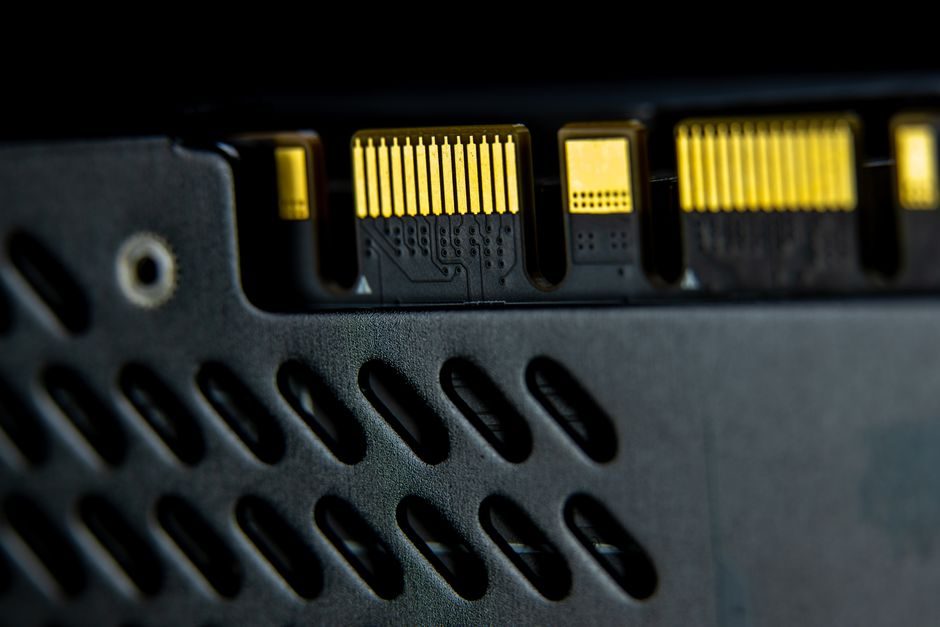
GPU supply chains in 2026 are constrained on the upstream side by CoWoS-L advanced packaging, HBM3E/HBM3 memory stacking, and ABF substrate throughput, while downstream demand is paced by hyperscaler CapEx ROI, AI cloud rental price increases, and the durability of model-training orders [S4].
North-American cloud Q1 2026 earnings season saw full-year CapEx plans revised upward at the end of January 2026, with three observable marginal shifts: Anthropic ARR acceleration validating demand strength and continuity, GPU cloud rental price increases lifting service-provider profitability, and a lengthening high-margin cycle for AI accelerators [S4].
Upstream layer 1 — Wafer fabs, HBM, and advanced packaging
The upstream bottleneck for AI GPUs in 2026 is concentrated in three nodes: leading-edge wafer fabrication at TSMC N3/N2-class process lines, HBM3E and HBM3 stacking throughput from SK Hynix, Samsung, and Micron, and CoWoS-L (Chip-on-Wafer-on-Substrate with local silicon interconnect) advanced packaging capacity that aggregates logic die, HBM stacks, and I/O on a large interposer [S4].
CoWoS-L has become the rate-limiting step because each accelerator package combines 4–8 HBM stacks with a large logic die, and the local silicon interconnect bridge requires large-area interposers that few foundries can produce at high yield. Wafer allocation is no longer the primary choke point — packaging is [S4].
Upstream layer 2 — Substrates, PCB, and thermal materials
ABF (Ajinomoto Build-up Film) substrates from Ibiden, Unimicron, Shinko Denki, and Kinsus remain a tighter constraint than the silicon die itself; large 100×100 mm-class substrates for AI accelerator packages run on multi-month lead times [S4].
Cooling-side upstream materials — cold plates, vapor chambers, two-phase immersion fluids, and high-conductivity TIM2 pastes — have moved from commodity to spec-controlled items, with data-center liquid-cooling loop designs centered on 45–65 °C inlet water and 25–40 °C delta-T to the chip junction [S4].
At a deeper level, the upstream base for an AI accelerator touches tool steel, copper heat spreaders, and precision alloy components used in bonding collets and chip-handling robotics, and selecting those inputs against an alloy steel buying guide 2026 grade, form, and mill source map is now part of GPU-tier sourcing reviews rather than a back-office purchase.
Midstream — Foundry, OSAT, and module assembly
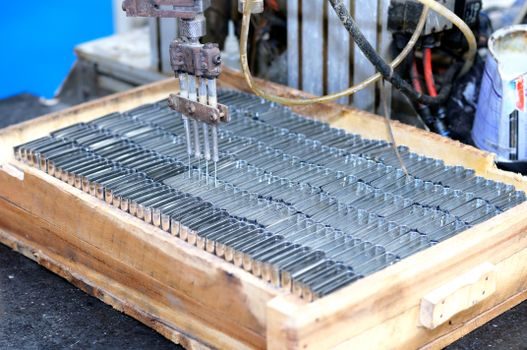
The midstream step that determines accelerator shipment volume is advanced packaging + OSAT (Outsourced Semiconductor Assembly and Test) — including CoWoS-L line allocation, package-level burn-in, and HBM-stacked-die Known-Good-Die (KGD) testing. Q1 2026 cloud earnings commentary flagged these stages as the gating items behind deliverable unit count, not raw wafer count [S4].
From a PLC control standpoint, each CoWoS-L line carries hundreds of precision motion axes, vacuum handlers, and thermal-bonding heads tied to recipe-based dispatch; bonding head position repeatability and oven temperature uniformity have become the metrics that fabs report to their hyperscaler customers.
Downstream — Hyperscaler CapEx, AI cloud rental, and ROI
Downstream of the foundry, the immediate customer base is the top-5 North-American hyperscalers plus a fast-growing tier of sovereign and Asian AI clouds. The Q1 2026 earnings season explicitly raised the question of CapEx ROI when upstream memory and substrate prices are high and downstream demand durability is uncertain; management commentary is now read as carefully as the spend numbers themselves [S4].
Three demand-side signals matter in 2026: (1) Anthropic ARR trajectory validating sustained training and inference workloads, (2) GPU cloud rental price increases translating directly into higher service-provider gross margin, and (3) the implied high-margin window for AI accelerator silicon. When all three are positive, the upstream constraint relaxes into a unit-volume game; when any one weakens, industrial valve and chiller lines for new data-center builds are pulled in ahead of schedule [S4].
Comparison: upstream constraint nodes vs downstream demand drivers

The cleanest way to read the 2026 cycle is to line the upstream constraints against the downstream drivers on shared axes: [S1]
CoWoS-L advanced packaging vs GPU cloud rental rate: CoWoS-L is the rate limiter on unit count, while rental-rate increases lift per-unit margin. Together they determine how much incremental revenue each additional packaged accelerator produces [S4].
HBM3E/HBM3 throughput vs Anthropic ARR growth: HBM capacity caps the maximum tokens-per-second a fleet can serve, while ARR growth signals the steady-state training-and-inference load. The gap between the two is the over- or under-supplied region in 2026 [S4].
ABF substrate and large PCB lead time vs data-center CapEx revisions: substrate lead time sets the buildable accelerator count per quarter, while CapEx revisions set the demand floor. If CapEx is revised up faster than substrate capacity, the pressure transmitter order book on data-center chilled-water loops moves first.
Risk and failure modes in the chain
Three concrete failure modes showed up in 2025–2026 industry reporting: HBM3E qualification slippage on certain foundry/HBM pairs, ABF substrate delamination on large-area packages exposed to multiple reflow cycles, and TIM2 pump-out under sustained high-power workloads, each of which can pull accelerator yields by single-digit percentages and force allocation reshuffles [S4].
On the downstream side, the failure mode is ROI compression — when GPU cloud rental rates stop rising but CapEx keeps growing, hyperscaler capex-to-revenue ratios deteriorate and procurement slows. The market read in Q1 2026 was that rental rates were still rising, so the cycle is not yet there [S4].
Standards and reference frameworks that govern the chain
While the GPU is not a controlled industrial product, the chain around it is governed by JEDEC standards for HBM3E (JESD238A-derived) and DDR memory, IPC-6012 and IPC-A-600 for PCB and substrate acceptance, and SEMI E84 / E87 for interbay and intrabay equipment communication inside CoWoS-L lines. Data-center cooling loops that these accelerators feed are specced against ASHRAE TC 9.9 thermal guidelines and AHRI 1360 for liquid-cooling performance [S4].
A practical procurement signal: the upstream constraint in 2026 is packaging, the downstream risk is ROI, and the proximate KPI is GPU cloud rental rate per accelerator per hour — track that figure quarterly against packaged-unit count to see whether supply or demand is loosening.
For a module-by-module walkthrough of where the upstream materials and process controls sit on a finished AI accelerator, the AI chip manufacturing process 2026 module-by-module flow is the closest reference, and flow meter selection on the chilled-water skid upstream of the rack is where the data-center build's ROI math is first validated in hardware.