For a marine hardware casting, size a gravity die casting machine from the part and die envelope, then verify aluminium shot mass, tilt range, clamping force, ejection force and cell cycle against production requirements.
A permanent-mould machine suits dense, heat-treatable aluminium components with sand cores, but it is not the default for thin-wall, high-volume parts or shapes that require rapid pressure filling.
Process fit and marine hardware requirements
Gravity die casting fills a reusable steel or cast-iron mould under gravity, often by tilting the mould so metal travels along the cavity wall rather than dropping into it [S2]. The process can produce dense, heat-treatable aluminium castings, including components with sand-core passages, which makes it credible for marine housings, brackets and structurally exposed hardware.
The product sequence then includes riser removal, heat treatment such as T6 where required, and inspection [S2]. This route can support corrosion-sensitive marine service only after alloy, heat treatment, coating and inspection requirements have been defined; the casting process itself does not establish marine service approval.
The decision starts with functional geometry. Internal waterways, chambers or passages may require sand cores, while a solid marine bracket may not. Dense castings and planned heat treatment favour gravity or low-pressure casting over high-pressure die casting, where trapped gas can create porosity that limits heat treatment [S2][S4].
Compare the realistic casting routes
Gravity die casting, low-pressure die casting, high-pressure die casting and sand casting should be compared by fill method, thermal quality, geometry, tooling cost and production volume rather than by a generic claim that one process is better. [S4]
For a complex marine bracket requiring thin walls below the practical gravity-fill range, high-pressure die casting may win on cycle time and detail; one cold chamber die casting machine should then be evaluated. If the casting must be heat treated, must contain sand-cored passages and must maintain low porosity, gravity or low-pressure filling is usually the stronger engineering choice [S2][S4].
Machine architecture and capacity thresholds
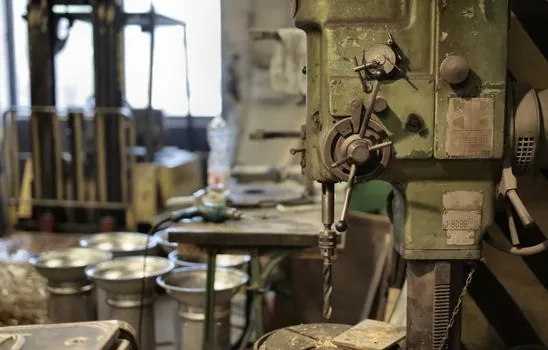
A tilting gravity machine is the baseline when a controlled fill programme, riser removal or a large mould requires programmable rotation. Stallion Machine Tools offers gravity die casting machines, including an FMU1 tilting machine and an FMU2 static machine. These are example machine capabilities, not universal selection limits.
For marine hardware, match the layout to product mix rather than selecting the largest available machine.
Static machines suit repeatable pours where tilting adds no process value, while servo tilting supports controlled fill profiles, riser placement and easier core insertion. Rotary or carousel arrangements can improve handling and output where several die stations share furnaces, robots, conveyors or quench systems, but they add coordination and maintenance interfaces [S2][S3].
Size the part, die and metal charge
Use the casting part mass, finished part envelope, runner and riser mass, and mould weight to determine the machine. A 200 lb, or approximately 91 kg, casting shot demonstrates the scale of structural metal components that high-pressure equipment may be designed to handle [S1]. That figure is not a gravity-machine requirement and should not be transferred without a supplier load study.
Confirm the usable mould dimensions, closing travel, platen size, table load, clamping or die-locking force, ejection stroke, ejection force, melt-pot capacity and maximum metal temperature. The machine must accept the complete die footprint, including guide, runner and gating hardware, with service access for core insertion, coating, vent cleaning, die opening and extraction.
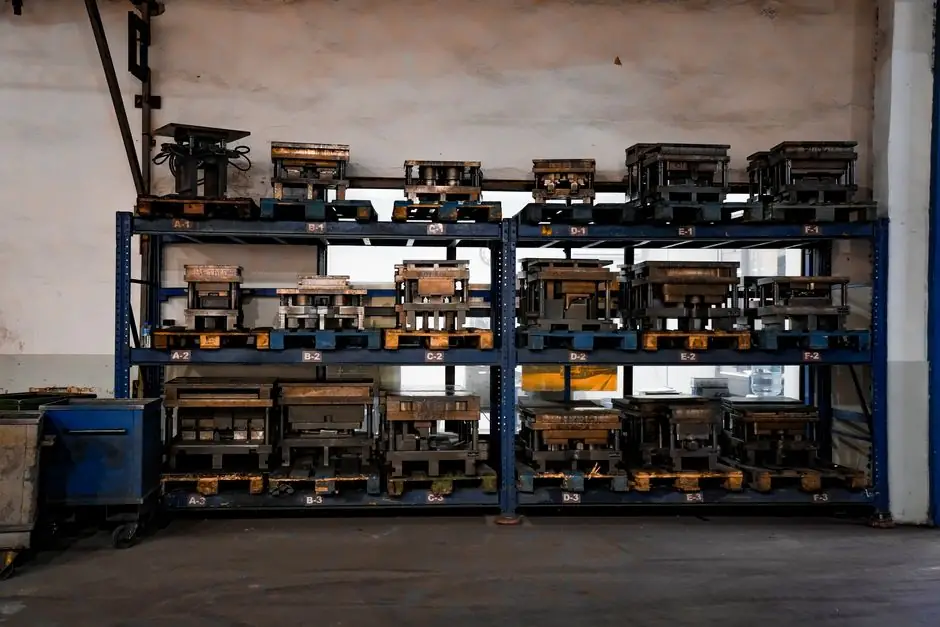
For the die itself, the gravity die casting die must provide the cavity, gating system, vents, cores or core supports, cooling or heating passages, ejection system and handling features. Die weight is a more useful first machine-class screen than part weight because it includes steel structure, cooling lines, cores and supports. The cited 4,000 kg mould capability demonstrates why heavy marine castings need a structural machine rather than a bench-top unit [S2].
Cycle time and production capacity
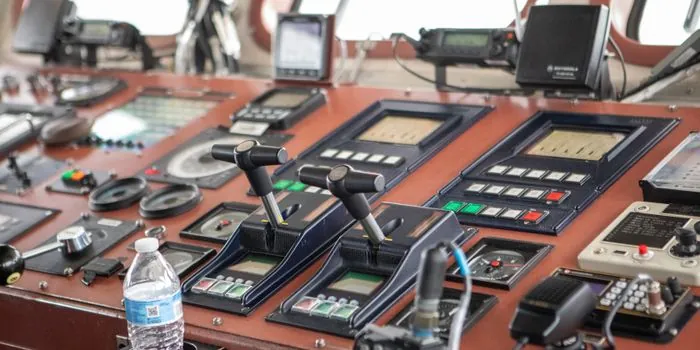
Machine output is limited by the slowest controlled step, not by nominal pouring speed alone. For a marine hardware cell, build the cycle from core placement, mould coating, fill, solidification, die opening, extraction, cooling and fettling.
Estimate annual demand from the casting cycle, planned shifts, available hours and an agreed yield factor, then subtract planned maintenance time. The dry cycle time method for output estimation provides the appropriate framework for separating demonstrated machine motion from theoretical production capacity.
Do not use the 2–10 machine carousel, 2–6 machine linear arrangement or 1–2 machine flexible arrangement as an output guarantee [S3]. Those are layout configurations. Final capacity depends on cycle time, automation interactions, core handling, cooling, furnace availability, changeover losses and inspection gates.
Alloy, core and thermal-control requirements
Aluminium is the primary gravity-cast material for dense, heat-treatable marine hardware, while zinc is also identified as a gravity-cast option [S4]. Magnesium and brass appear in broader pressure-die-casting applications, but that does not make them automatic gravity-machine choices; alloy fluidity, corrosion behaviour, melting practice and heat-treatment response must be confirmed for the selected casting.
Sand cores enable internal passages such as cylinder-head water jackets [S2]. A marine casting with sealed or open fluid passages should be designed around core location, core print dimensions, collapse characteristics, buoyancy and coat chemistry. The automation scope may include sand-core preparation, transport, storage, insertion and core destruction before cooling [S3].
Specify separate temperature control for cope, drag and core zones, with typical cited operating levels of 250–400°C [S2]. Furnace capacity, melt chemistry, degassing, transfer temperature and holding time form one metallurgical system. A machine that can handle the die mass but cannot maintain the required alloy temperature or metal supply is not a production-capable selection.
Automation, maintenance and supplier qualification
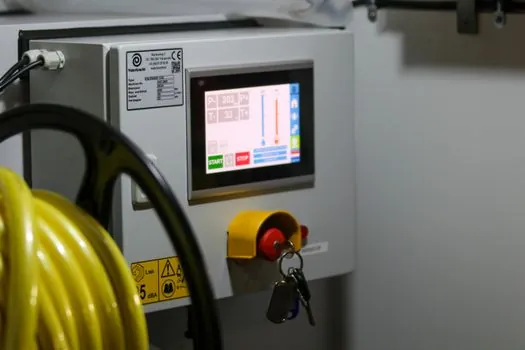
For repeatable marine production, request a cell concept that defines every interface between the gravity die casting machine, furnace, core station, die, robot, conveyors, cooling equipment, trimming equipment and inspection. ItalPresseGauss identifies core preparation and insertion, melt transport, pouring, extraction, die changes, cooling, marking, flash trimming, conveying, degassing and smoke extraction as relevant cell functions [S3].
Require a documented FAT and SAT plan covering tilt position, fill repeatability, die opening, ejector motion, core insertion, safety interlocks, melt-temperature retention, cycle timing and fault recovery. Traceability should connect each casting with the machine programme, material charge, die and core identity, inspection record and any heat-treatment batch. The cited supervision systems are intended to provide traceability and consistent process control [S3].
Marine exposure raises the importance of corrosion-resistant aluminium selection, clean casting surfaces, accessible drain paths, pressure testing and compatible protective finishes. Ask the supplier to state what it supplies and what remains the buyer’s responsibility, especially for coatings, heat treatment, nondestructive inspection, pressure testing and certification records.
Selection decision and final shortlist
Choose a static gravity machine when the part is relatively simple, the mould fits a practical envelope and automated tilt has no measurable process benefit. Choose a servo tilting machine when a calm programmed fill, riser control or complex core access materially improves quality. Choose a multi-station rotary or linear cell only when validated cycle data, product volume and automation justification support the added interfaces. [S2]
Do not choose a mainstream gravity solution when the design requires very thin walls, high output, minimal flash or extremely short cycles; compare a high-pressure route using the aluminum die casting machine envelope and porosity requirements. Do not choose pressure die casting without evaluating heat treatment, gas porosity and repair consequences for a structural or pressure-containing marine part [S2][S4].
The final shortlist should contain the proposed machine class, confirmed part and die mass, mould dimensions, usable plate or table size, tilt range and accuracy, clamping load, ejection force and stroke, melt capacity, furnace specification, demonstrated cycle time, automation boundary, safety controls and service support. Require the supplier to demonstrate those figures on the actual casting and die before purchase, rather than selecting from nominal tonnage, machine price or a generic production range.