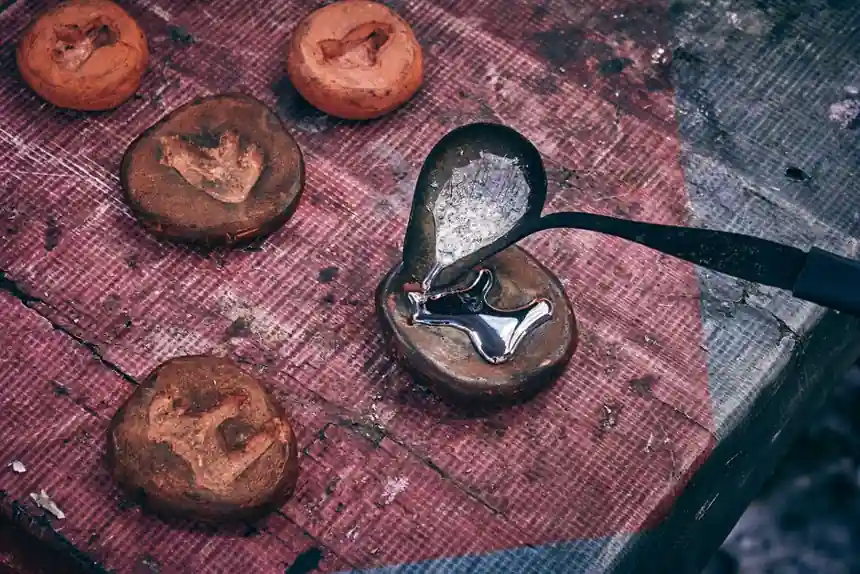
Gravity die casting (GDC) reaches its cost break-even against sand casting in the 500–5,000 part band, with the GDC sweet spot sitting between 1,000 and 50,000 units per run [S2][S9]. Below that range, sand casting's $500–$5,000 pattern cost wins outright; above 10,000 parts, high-pressure die casting takes over on per-part economics.
Three published data sets (April 2026) converge on the same conclusion: tooling spend is the lever, secondary machining is the trap, and the volume at which GDC overtakes sand casting is closer to one thousand parts than the old "10,000 units" rule of thumb engineers still quote [S2][S3][S9].
Volume Bands and Tooling Cost Drivers
Sand casting pattern (flask, cope, drag) tooling typically runs $500–$5,000, while a GDC steel die lands in the $5,000–$25,000 band and a high-pressure die casting die sits at $10,000–$100,000+ depending on slide count and cavity layout [S2][S3][S4]. Cycle time separates the three: GDC runs a 2–6 minute gravity fill versus hours-to-days for sand mold build [S2]. For context, a hot-chamber die casting machine can hit 15 cycles per minute on zinc and magnesium alloys [S2].
Sand casting scrap rates of 5–15% versus 2–5% for GDC in controlled production compound the cost gap as volume climbs, and CNC post-machining is typically 3–5x higher on sand-cast blanks because of the wider ±0.030 in (±0.76 mm) as-cast tolerance band [S2][S3]. GDC lands at roughly ±0.005–0.015 in (±0.13–0.38 mm) on critical dimensions, which usually eliminates finish-machining on non-critical features [S2].
Decision Matrix: Sand vs Gravity Die vs High-Pressure Die
The April 2026 process comparison from aleader lines up the three options against the four criteria that drive sourcing [S2]:
Tooling cost: sand $500–$5,000; GDC $5,000–$25,000; HPDC $10,000–$100,000+. As-cast tolerance: sand ±0.030 in; GDC ±0.005–0.015 in; HPDC ±0.002–0.005 in (±0.05–0.13 mm). As-cast surface finish Ra: sand 6–25 µm; GDC 3–6 µm; HPDC 1–2.5 µm. Ideal volume: sand 1–5,000; GDC 1,000–50,000; HPDC 10,000+ [S2][S9].
Hot-chamber HPDC is restricted to low-melting-point alloys (zinc, magnesium) because the injection mechanism sits submerged in the melt, while cold-chamber HPDC and GDC both handle aluminum and copper-base alloys [S2]. Sand casting remains the only realistic route for parts over ~25 kg and for ferrous alloys including cast iron, carbon steel, and bronze, where neither GDC nor HPDC tooling is practical at typical volumes [S2].
Real-World Use Cases by Volume
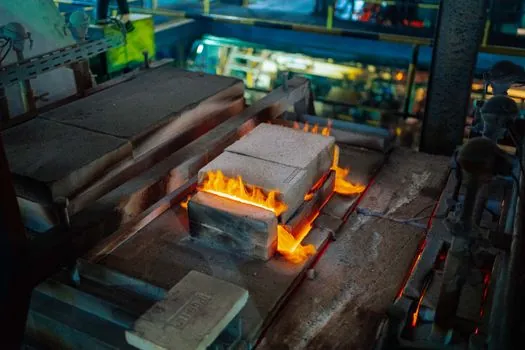
Under 300 parts per year, sand casting is the default: prototype batches, artistic or architectural pieces, and heavy ferrous components above the GDC machine's platen size [S3]. The 1,000–5,000 unit band is where GDC earns its keep, particularly for aluminum automotive substructures, electrical housings, and LED heat sinks where sand casting's surface finish and porosity profile would force expensive machining [S2][S5][S9].
Above 10,000 parts, HPDC on a dedicated die casting machine pulls ahead, with one aluminum die casting machine cell typically producing thousands of shots per shift and amortizing the steel die across 100,000+ parts [S3][S5]. Eureka's July 2026 break-even study places the surface-quality-driven crossover at 5,000–10,000 units annually when Ra 1–2.5 µm is a hard specification [S8]. For a deeper look at how sand mold geometry itself constrains tolerance, see the gravity die casting process reference entry.
Hidden Cost Levers That Shift the Break-Even
Three variables compress or stretch the crossover point. First, post-machining: every additional finish-machining step on a sand casting adds cost to every part in the run, so a part with 3 critical-machined faces can flip the break-even downward toward 500 units [S3]. Second, scrap and rework: 5–15% sand scrap versus 2–5% GDC scrap can swing a 2,000-part run by $0.50–$2.00 per part at aluminum pricing [S3].
Third, die life and amortization: a GDC die rated for 50,000–100,000 shots versus an HPDC die at 100,000+ means GDC's per-shot tooling cost is higher than HPDC at the upper end of GDC's band, which is why foundries re-quote HPDC aggressively above ~30,000 parts [S2][S3]. Material also matters, since zinc and magnesium hot-chamber HPDC cycles are fast enough to compete with GDC on a per-part basis as low as 1,000 parts for small zinc hardware [S2].
When Sand Casting Still Beats GDC
Sand casting wins in five specific scenarios regardless of volume: part weight above ~25 kg (beyond typical GDC machine capacity); very short runs of 1–50 parts where pattern cost is the dominant cost; parts with deep internal cavities that would require complex GDC cores; short lead-time prototypes where pattern fabrication in days beats GDC die lead time of 4–8 weeks; and ferrous alloys (cast iron, carbon steel, bronze) where GDC die steels cannot survive the pouring temperature [S1][S2][S4].
On the other end, GDC loses to HPDC above 30,000–50,000 parts per run, to investment casting for very complex geometries with undercuts that GDC cannot draw, and to CNC machining for runs under ~100 parts when tolerances below ±0.005 in are mandatory [S4][S7]. For shops weighing machining against casting altogether, the typical CNC-vs-casting crossover sits at roughly 100 parts for sand and 1,000–10,000 parts for HPDC [S4]. A look at 2026 casting-alloy pricing on grey cast iron vs cast steel cost data helps frame the material side of that decision.
Engineering Specification Checklist
Lock the geometry and alloy before sampling tooling. Confirm the annual volume band (1–500, 500–10,000, 10,000+) and grade the part on four binary criteria: required as-cast tolerance, required surface finish Ra, critical-face machining count, and part weight versus GDC machine capacity [S2][S3]. Quote both sand and GDC at the 1,000- and 5,000-unit scenarios; the spread between the two quotes at 5,000 parts is usually the deciding number, and it should be in the 15–30% range favoring GDC once machining is included [S2][S3].
Track these signals over the next two quarters to recalibrate the break-even: revised HPDC minimum-order quantity policies from Chinese and Mexican job-shops, any GDC die-steel price moves that shift the $5,000–$25,000 tooling band, and updated A356 and A380 scrap-to-ingot price ratios, which directly feed the 5–15% versus 2–5% scrap rate gap between sand and GDC [S3][S5][S8].