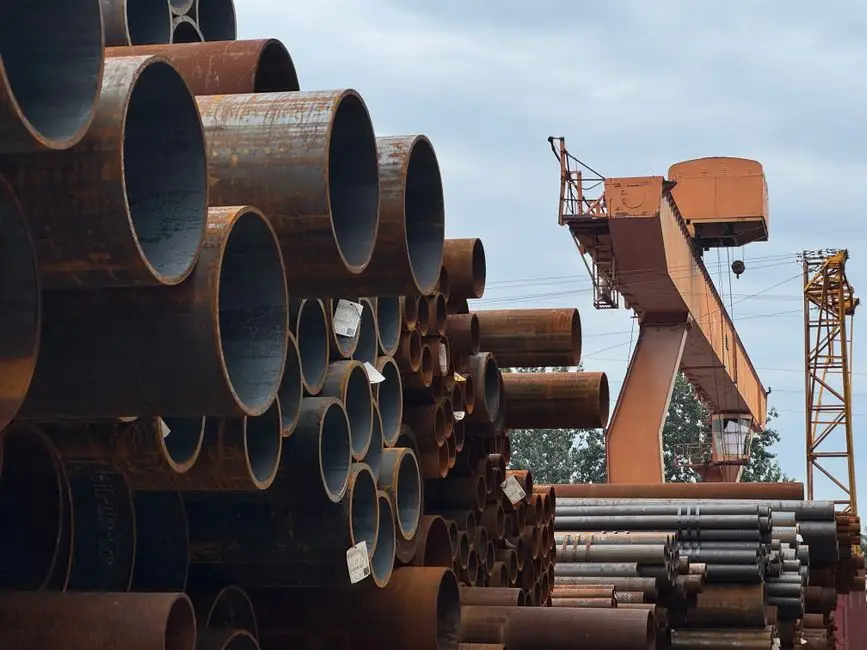
The LeadIT Green Steel Tracker (Feb 24, 2026) puts total announced primary green steel capacity at about 28 million tonnes per year and green iron for steelmaking at 18 million tonnes per year by 2050, against a global steel market of roughly 1.8 billion tonnes per year [S2].
Global Energy Monitor's GIST database tracks 1,293 iron and steel plants in 91 countries, covering 2,216 mtpa of operating capacity and 846 mtpa of developing steelmaking capacity, with 640 Mt of excess capacity in 2025 that the OECD projects will hit 745 Mt by 2028 [S3][S5].
H2-DRI and EAF Routes: Where the 28 Mt of Announced Green Steel Actually Lives
Hydrogen is the leading energy source in the European green steel market, holding roughly 61% share in 2026, anchored on SSAB's HYBRIT commercial pilot, the H2 Green Steel 2.5 Mt/year facility, and offtake agreements with Volvo, BMW, and Mercedes-Benz [S1].
Scrap-EAF production paths recorded a CO2 intensity of 0.69 tonnes per tonne of crude steel, compared with 2.34 tonnes for the conventional BF-BOF route, which is why recycled green steel led the 2025 product mix with 52.1% share [S4]. Across Europe, 60% to 70% of steel still uses the blast furnace process even as the European carbon premium for steel fell from EUR 140/mt in 2024 to EUR 50/mt in November 2024, undercutting buyer willingness to pay the green premium [S4].
For reference, the standard EAF and DRI configurations used in these projects draw heavily on stainless steel and alloy steel process equipment for the rolling and finishing side, even when the primary reduction unit runs on hydrogen. The Linköping HYBRIT plant and the Stegra Boden facility are the two European sites most often cited as 2026 commissioning milestones under LeadIT's framework, which only counts projects that can reach 85% emissions reduction, defined as below 300 kg CO2 per tonne of steel [S2][S8].
2026 as a Reality Check: New Project Announcements Fell From 15 in 2021 to 2 in 2025
LeadIT's Tracker data shows new green steel project announcements fell sharply, from a 2021 peak of 15 projects down to just 2 in 2025, with several high-profile European projects paused or cancelled last year on cost, demand, and policy uncertainty grounds [S2].
Per Andersson, Head of Secretariat at LeadIT, framed 2026 as an execution year rather than an announcement year, with Stegra's Boden plant positioned as the first potential full-scale commercial commissioning of green steel worldwide [S2]. A related cost-side data point is covered in Green vs Grey Hydrogen: 2026 LCOH Reality Check, which traces the LCOH gap that any H2-DRI project has to clear before green steel can scale beyond offtake-anchored volumes. Actual operating green volumes are still marginal: only about 270,000 tonnes per year of green iron capacity and 60,000 tonnes per year of green steel capacity were in production as of early 2026 [S2].
India Overtakes China in the Steel Pipeline: 357 Mtpa in Development
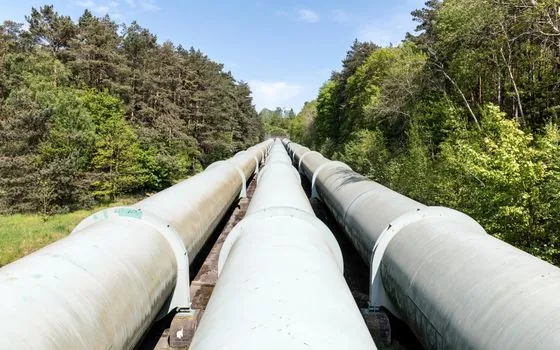
India now accounts for 42% of all steelmaking capacity under development worldwide, with 357 Mtpa in the pipeline, three times China's share, per Transition Asia (Oct 2026) [S9].
That same source cites the world's largest greenfield steel project as the one likely to compress the green steel premium to roughly 6% to 13%, an order-of-magnitude shift versus the EUR 50 to EUR 140/mt premium band that held through 2024 [S4][S9]. India's Ministry of Steel counted 58 certified green-steel manufacturers by December 31, 2025, with combined output of 9.1 million tons of green steel, and JSW Steel's Rayalaseema project is targeting a 1 MTPA electric arc furnace for FY2028 to FY2029 [S4]. For structural and rebar grades feeding that pipeline, the carbon steel category remains the dominant feedstock specification, even when the upstream iron comes from green routes.
Comparison: Four Green Steel Routes Lined Up on Cost, Scale, and CO2
Route selection in 2026 still comes down to four options, each with a different cost, scale, and CO2 profile. Hydrogen-DRI with EAF sits at the top of the green premium range but delivers the lowest residual CO2, while scrap-EAF is the cheapest near-term lever at 0.69 t CO2/t crude steel versus 2.34 t for BF-BOF [S4]. Coal gasification is the fastest-growing energy source in Europe at a 26% CAGR through 2033, used as a transitional pathway in Central and Eastern Europe with EU Innovation Fund support [S1]. Molten oxide electrolysis remains a pilot-scale option today, but the EU 55% reduction target by 2030 versus 1990 levels effectively forces H2-DRI and EAF to dominate any new build, with Germany's tkH2Steel project and France's EUR 1.7 billion Dunkirk transformation as the two anchor cases [S1].
The data points line up as: H2-DRI/EAF for lowest emissions at highest cost; scrap-EAF for lowest cost at moderate emissions; coal gasification as a transition bridge; and BF-BOF as the legacy baseline at 2.34 t CO2/t that new capacity is being built to displace [S1][S4]. Outside Europe, the Australian A$1 billion Green Iron Investment Fund has earmarked up to A$500 million (USD 351 million) for the Whyalla Steelworks transformation, with the remaining A$500 million open to greenfield projects, against a wider A$1.9 billion Whyalla support package for future investment and infrastructure upgrades [S4].
Standards, Definitions, and What "Green Steel" Officially Means
LeadIT's Green Steel Tracker only includes projects whose technology can reach 85% emissions reduction, defined as below 300 kg CO2 per tonne of steel, and is updated three times per year [S8].
That 300 kg CO2/t threshold is the working definition engineers should use when screening supplier claims, since it rules out coal-with-CCUS routes that stay above the line. The 85% reduction benchmark also aligns with the EU CBAM reporting scope that is now pulling procurement specifications across automotive and construction buyers. For grades where magnetic and electrical performance matters in the rolling mill drives, the silicon steel family is a useful cross-reference, even though the green steel discussion is primarily about primary reduction and EAF feedstock rather than electrical steels. For fibre-reinforced and high-tensile rebar grades that may be specified alongside green billet in construction, the steel fiber entry covers the relevant mechanical and dosage data.
Market Size Forecasts Diverge by an Order of Magnitude
Analyst forecasts for the global green steel market by the mid-2030s diverge by roughly two orders of magnitude: Persistence Market Research sizes Europe alone at US$ 5.9 billion in 2026 reaching US$ 32.9 billion by 2033 at a 27.8% CAGR, while DataM Intelligence projects the global market reaching US$ 8,488.87 billion by 2035 starting from US$ 5.31 billion in 2026, and Dimension Market Research goes further to US$ 109.28 billion in 2026 reaching US$ 6,939.88 billion by 2035 at a 58.6% CAGR [S1][S4][S7].
These gaps reflect different scopes (Europe versus global, near-term versus long-horizon, output value versus total addressable steel value chain) and different baseline tonnages; Demand for green steel in building, construction, and infrastructure is projected to reach 4.49 million tonnes by 2030, which sits well below LeadIT's 28 Mt by 2050 figure and suggests the construction segment alone is unlikely to clear the supply gap [S2][S6]. The watch items for the rest of 2026 are the Stegra Boden commissioning outcome, any further pauses in the European project list, and whether India's 357 Mtpa pipeline starts to convert from announced to operating capacity at a faster rate than the OECD's projected 745 Mt of global excess capacity by 2028.