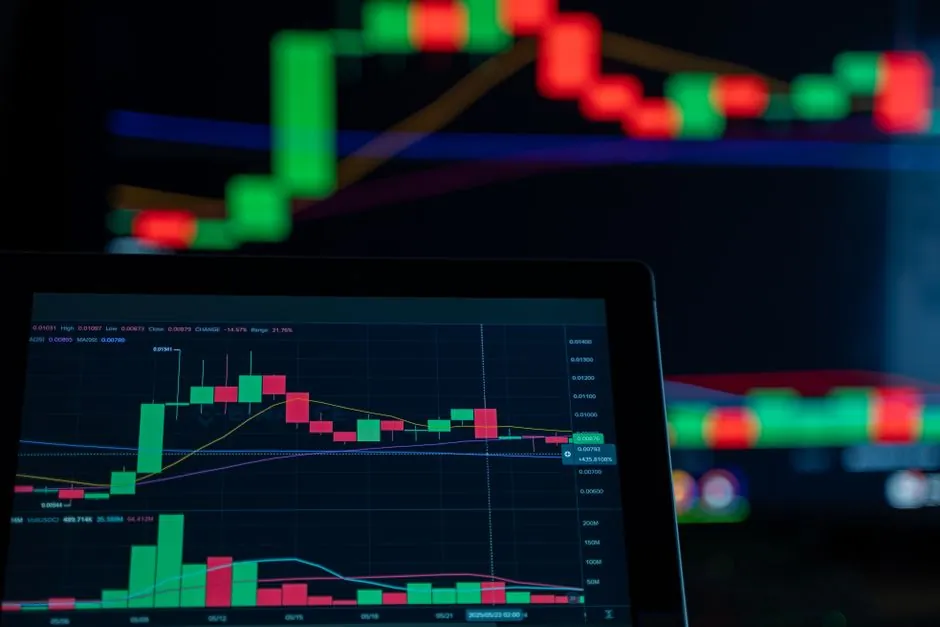
Synthetic graphite anode prices fell about 20% over the year to October 2026, pulling the average below natural graphite for the first time in over three years and ending a long stretch where natural held a clear cost edge [S8][S1]. Battery-grade synthetic material now trades around $4,500-$6,500/t, while natural graphite concentrate sits in a $800-$1,200/t band on a like-for-like concentrate basis, but the gap narrows sharply once purification and spheroidisation are added [S2].
The 2026-2031 graphite anode market for lithium-ion batteries is sized at 3.71 million tons in 2026, heading to 9.45 million tons by 2031 at a 20.54% CAGR, with synthetic graphite holding 56.89% of 2025 volume and natural graphite projected to grow at a 25.21% CAGR through 2031 [S4]. China accounts for around 80 percent of mined natural graphite supply and near 98 percent of the combined natural and synthetic graphite anode market, with more than 95 percent of global anode processing capacity [S3]. For a spec engineer, that concentration is now a first-order design variable, sitting alongside capacity, energy density, and cycle life on the anode selection worksheet.
Where Prices Actually Sit on 11 October 2026
Chinese regional quotes for graphite anode material span 23,000 to 49,500 Yuan/mt across six regions, with enterprise spot prints at the low end of that range, a band wide enough that grade, particle size, and coating specification move the figure more than freight does [S5]. On the global trade desk, battery-grade artificial graphite for high-end EV cells is printed at 4,526.29 USD/tonne, a level that places the synthetic-natural crossover firmly inside 2026 and removes the textbook "natural is cheaper" shortcut [S7].
On a feedstock-and-energy view, the crossover has two drivers: cheaper needle coke and coal-tar pitch feedstocks flowing into Chinese graphitisation, and a sustained 20% price decline on synthetic anode material this year as Chinese producers scale [S8]. The 2024 first crossover event, when the synthetic average slipped below natural for the first time in three years, was an early signal; the 2026 print is a structural reset, not a blip [S1].
Decision Matrix: Synthetic vs Natural on the Spec Worksheet
Synthetic graphite wins on consistency, rate capability, and cycle life, and historically it has been the default for high-energy NCM cells, but it carries a 20-40 kg CO2/kg production footprint against 2-6 kg CO2/kg for natural, a gap that has started showing up in cell maker Scope 3 reporting [S2]. Chinese graphitisation runs an average 9.0 t CO2/t of synthetic material in peer-reviewed work, with a 6.8-12.9 t/t range, while natural-graphite-route emissions from spheroidisation dominate its own footprint at roughly two-thirds of total natural-anode CO2 [S2].
Natural graphite wins on raw-material cost, capacity (the theoretical 372 mAh/g sits closer in practice than synthetics achieve), and the carbon profile, but it needs purification to >99.9% C and tight particle-size control for the same cycle-life warranty a synthetic anode delivers out of the furnace [S6]. A 2025 emissions comparison from one EV maker's internal benchmarking, cited by CarbonScape, put synthetic graphite anode emissions as high as 25 t CO2/t against up to 14 t CO2/t for natural, numbers that explain why LFP-dominant cell programmes are now specifying higher natural content [S2].
Who Each Material Is For (and Who It Is Not For)
Synthetic graphite is the right call for NCM811 and high-nickel NCM programmes targeting 280+ Wh/kg at the cell level, for cells with >2C continuous and >4C peak charge acceptance, and for buyers willing to absorb the 20-40 kg CO2/kg footprint in their Scope 3 line [S2][S6]. It is the wrong call for a procurement team optimising on tonnes of CO2 per kWh of pack capacity, and it is the wrong call for a programme that needs a non-China-dominant supply chain in the next 24 months, since ex-China synthetic capacity additions are not yet at scale [S3].
Natural graphite is the right call for LFP prismatic cells in stationary storage and entry-level EVs, for cell makers reporting Scope 3 with a CO2/kWh gate, and for buyers needing ex-China optionality, given that non-Chinese natural projects in Mozambique, Tanzania, and Madagascar are advancing faster than ex-China synthetic lines [S3][S4]. It is the wrong call for premium NCM packs where energy density and rate are non-negotiable, and for programmes with cycle-life targets above 4,000 cycles at 80% DoD without a silicon-blend assist [S2][S6].
Use Cases Wired to 2026 Buyer Behaviour
Stationary energy storage is the fastest-growing end-use, projected at a 22.23% CAGR through 2031, and it is almost entirely LFP, which is the chemistry most willing to accept higher natural-graphite content and accept the cost and emissions profile in exchange [S4]. EV packs still dominate volume at 71.12% of 2025 demand, but the mix inside that 71.12% is shifting toward higher natural content, especially in China where LFP has now taken the majority of the passenger-EV cell market [S4].
Silicon-blended anodes, fluorine-free purification routes, and long-duration storage are the three application vectors that consistently pull natural-graphite content up in a bill of materials, and each is showing up in multi-year offtake contract language that buyers are signing through 2026 [S4]. The same contracts increasingly carry a tariff and country-of-origin clause, which is why Indonesian rerouting of Chinese material has become a structural feature of US-bound anode supply rather than a temporary workaround [S3].
Limits, Failure Modes, and the Tariff Overlay
The 20% synthetic price decline is not risk-free: the 2024 US anti-dumping and countervailing duty case collapsed in March 2026, and the tariff burden on Chinese anode imports settled at around 40%, which means US buyers face a moving import-cost line that can swing tens of percent on policy news alone [S3]. Combined with the 2024 countervailing duty near 67% and the 2025 anti-dumping duty around 94%, the cumulative import burden briefly touched 200% before the ITC dismissal, and Indonesian rerouting by BTR and peers kept material flowing through that window [S3].
Synthetic-graphite anodes carry a higher processing-energy risk: coal-grid production in Inner Mongolia has been measured at 800-1,000% above database benchmarks, which means two nominally identical synthetic anodes can have a 10x carbon spread depending on where the graphitisation furnace runs [S2].
Standards, Sourcing, and Trackable Signals
There is no single IEC or ISO standard that pins a synthetic-versus-natural anode decision; cell makers set internal specs on specific capacity (typically 340-360 mAh/g for graphite), first-cycle efficiency (>90% for premium synthetic), particle size distribution (D50 of 10-20 micrometres typical), and electrode coating loading. Buyer-side validation should pull the relevant Chinese regional quote band as the reference price, since 23,000-49,500 Yuan/mt is the live trading range on the Chinese spot market as of late September 2026 [S5]. The 4,526.29 USD/tonne trade-desk print for high-end EV artificial graphite is a usable second reference, and the $4,500-$6,500/t synthetic range against $800-$1,200/t natural concentrate gives the upper and lower edges of the cost story [S7][S2].
Two signals worth tracking into 2027: the actual share of Indonesian-origin anode material entering the US, and the 2026-2031 CAGR print for natural graphite, which is currently set at 25.21% against 20.54% for the total market, a gap that will widen if Scope 3 carbon pricing tightens in either the EU or US [S4][S3]. Procurement teams should treat the synthetic-natural cost crossover as a moving target, not a fixed decision, since feedstock coke prices, Indonesian rerouting, and any new EU or US carbon-border adjustments can flip the worksheet in a single quarter.
For the relevant spec sheets and selection criteria, see synthetic resin, pressure transmitter, and flow meter.
Related analysis: Alloy steel price per kg: grade, condition, region (Oct 2026).