
Yole Group's "Power GaN 2026" report sizes the power GaN device market at a 35% CAGR through 2031, reaching USD 3.5bn, with consumer/mobile electronics still anchoring USD 1.7bn of 2031 revenue while automotive onboard chargers and 48V systems compound at 57% and telecom/infrastructure (largely AI data-center power) at 45% toward USD 750m [S2].
Earlier Yole commentary framed the same trajectory as a sixfold expansion through 2030 at a 42% overall CAGR, with the data-center sub-segment compounding at 73% as 48V and 800VDC rack power-conversion topologies absorb GaN's high-frequency, high-efficiency switching [S1]. The shift reframes GaN from a fast-charger novelty into a wide-bandgap workhorse competing head-to-head with silicon carbide across voltage classes.
Segment Sizing: Where the Next USD 2bn Lands
Yole's automotive GaN segment grows at 57% CAGR through 2031, driven by onboard chargers and 48V boardnet architectures where GaN's switching losses at 100-200 V rails beat silicon MOSFETs on efficiency and density [S2]. Telecom and infrastructure, which Yole groups with AI data-center power conversion, compounds at 45% to USD 750m in 2031, reflecting hyperscaler adoption of 48V intermediate bus and 800VDC distribution architectures that demand GaN or SiC switches above what legacy silicon IGBTs can deliver at the required frequency [S1][S2].
Adjacent market trackers triangulate the same direction from different scopes: IDTechEx sees the broader power-electronics market at USD 65.2bn by 2036 (10% CAGR), with GaN and SiC splitting the wide-bandgap share as 800V e-powertrains and 800VDC data centers scale [S4]. Maximize Market Research sizes the narrower GaN Power ICs segment at USD 2.78bn in 2025 growing to USD 9.92bn in 2034 (15.16% CAGR) [S3], and Fortune Business Insights puts the combined GaN+SiC power semiconductor market at USD 2.53bn in 2026 heading to USD 16.17bn by 2034 [S6]. The wide-bandgap envelope clearly absorbs the GaN-specific forecasts without strain.
Competitive Landscape: Leaders, Challengers, and New Foundry Flows
Innoscience held the 2025 revenue lead and is expanding into automotive and data-center sockets; Infineon posted the sharpest 2025 gains on data-center and renewable wins; Renesas extended across multiple fronts; Navitas deliberately traded low-margin fast-charger share for higher-value sockets [S2]. The most consequential 2026 entrant is onsemi, which entered power GaN through a GlobalFoundries collaboration on 650V devices built on a 200mm GaN-on-silicon platform, with a parallel wafer-supply arrangement with Innoscience, customer sampling starting in H1 2026, and AI data centers, EVs, and renewable energy as stated targets [S2].
Behind the leaders, a fast-growing second tier (ROHM, Texas Instruments, STMicroelectronics, Nexperia, plus Chinese entrants GaNext and Southchip) is picking up share as GaN applications diversify [S2]. Foundries are fragmenting rather than consolidating: GlobalFoundries has licensed GaN technology from TSMC and is qualifying production in the USA, Taiwan-based VIS and Powerchip are absorbing volume as customers move off TSMC, and Samsung, DB HiTek, and SK Keyfoundry are building early GaN capabilities in South Korea, while IDMs (Infineon, Renesas, onsemi, ST, ROHM, Nexperia) keep investing in captive capacity and vertical integration [S2]. The epi-wafer upstream that feeds this foundry base is itself reshaping, as tracked in this 2026 capacity and qualification snapshot of Si, SiC, and GaN supply.
Application Selection: When GaN Wins Versus When SiC or Silicon Holds the Socket
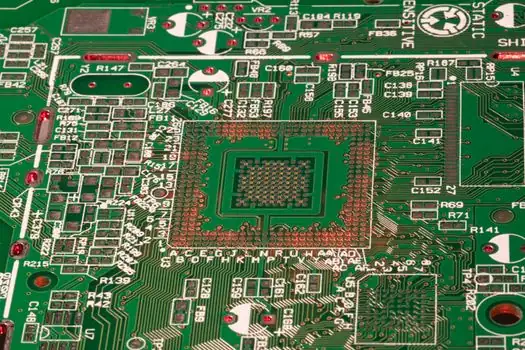
Selection splits cleanly on voltage class, frequency, and thermal budget. At 650V and below, especially 100-200V 48V boardnets and onboard chargers, GaN's figure-of-merit and switching-frequency advantage (driving smaller magnetics and capacitors) makes it the default wide-bandgap choice; IDTechEx flags the commercialization of 300mm GaN-on-Si and vertical GaN as the cost-down catalysts that will let GaN wafer prices approach silicon levels over the 10-year forecast window [S4]. Above 650V and into the 1200V-1700V range, SiC retains the lead in traction inverters, solar string inverters, and grid-tie applications, where the SiC supply chain has already absorbed aggressive Chinese-led price competition that drove wafer costs down and created SiC oversupply [S4].
For procurement teams the criteria-based comparison reads: (1) voltage rail, 650V and below favors GaN, above favors SiC; (2) switching frequency above 100 kHz with tight magnetics budget favors GaN; (3) high-temperature, high-power-density traction and renewable inverters favor SiC; (4) consumer fast-charger sockets at sub-300W are now commoditized GaN, so margin has migrated up the power curve into EV, industrial, and AI-server applications [S2][S4]. Specifying engineers should confirm whether the candidate part is a discrete GaN HEMT or a GaN power IC integrating drive, logic, and protection, since the integrated variants eliminate the gate-drive and level-shift losses of discrete half-bridge designs and are increasingly the default for sub-kW to multi-kW power stages [S3].
Data-Center Power: 48V Intermediate Bus and 800VDC Architectures
Hyperscaler AI clusters are the single most cited demand driver in 2026 reporting. Yole attributes the 45% CAGR of its telecom/infrastructure bucket to AI-driven data-center power demand, where 48V intermediate bus converters and 800VDC distribution architectures require wide-bandgap switches to hit the efficiency and density targets that legacy silicon cannot reach at the needed switching frequency [S2]. IDTechEx independently projects 800VDC data centers as one of the two anchor applications (with EVs) pulling the wider power-electronics market to USD 65.2bn by 2036 [S4].
For the power-conversion stage itself, GaN at 650V and emerging 100-200V variants is now specified at the intermediate bus converter, the point-of-load VR stage, and increasingly at the AC-DC front-end for sub-3kW server supplies [S2][S4].
Automotive GaN: Onboard Chargers, 48V Boardnets, and the 800V Ceiling
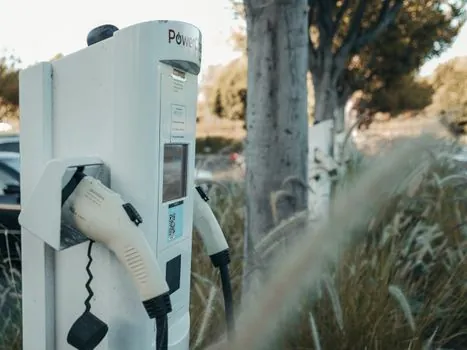
Yole's 57% automotive CAGR is the steepest in the 2026 report, anchored by onboard chargers (OBCs) and emerging 48V architectures in mild-hybrid and zonal-EV platforms [S2]. At the high-power end, 800V e-powertrains remain a SiC stronghold because traction inverters pull 400-800V DC bus rails at currents that still favor SiC MOSFETs and modules on RDS(on) and short-circuit ruggedness; IDTechEx projects SiC will take the majority share of the power-electronics industry through 2036, with significant but not majority GaN uptake alongside [S4].
The practical split inside a typical EV: GaN for the 6.6-22 kW OBC and the 48V zonal DC-DC converter, SiC for the traction inverter and the 800V-to-400V or 800V-to-48V fast-charge link. Global EV sales crossing 20 million units in 2025, roughly one in four new cars, are the macro tailwind that turns 57% CAGR into real volume rather than aspirational percentage points [S5].
Manufacturing, Standards, and Qualification Risks
Manufacturing is fragmenting productively rather than consolidating: GlobalFoundries' US GaN line (via TSMC license), VIS and Powerchip absorbing TSMC's exiting GaN volume in Taiwan, and Samsung/DB HiTek/SK Keyfoundry in Korea, alongside IDM captive fabs at Infineon, Renesas, onsemi, ST, ROHM, and Nexperia [S2]. On the materials side, IDTechEx flags 300mm GaN-on-Si commercialization and vertical GaN (vGaN) as the two cost-down and voltage-up enablers that will broaden GaN's addressable socket [S4].
Qualification risk is real and growing. AEC-Q101 for automotive discrete GaN, JEDEC JEP180 for GaN HEMT reliability, and the IEC 60747-15 family for power semiconductor measurement still apply, but device-level qualification alone is no longer sufficient: customers in data center and EV programs increasingly demand module-level and system-level evidence of gate-drive robustness, dynamic RDS(on) drift under hard switching, and thermal-cycling endurance under 1000-3000 A/cm² current densities. The risk is amplified by the 800VDC data-center transition, which is the same vector that is forcing fuse, breaker, and protection gear upgrades across the board, and that is reshaping fuse-clearing let-through and I²t budgets in upstream protection components [S1][S2][S4].
Trackable Signals for the Next 6-12 Months

Three signals are worth watching through Q1-Q2 2027: (1) onsemi's 650V GaN-on-silicon ramp with GlobalFoundries and the read-out from H1 2026 sampling, which will be the first concrete data point on whether a non-Asian supply chain can serve hyperscaler 48V/800VDC programs; (2) the cadence of automotive OBC design-wins at 6.6-22 kW using GaN, since 57% CAGR only converts to revenue if platform wins ship in volume; (3) IDTechEx's next 300mm GaN-on-Si cost-curve update, which will set the price point at which GaN wafer cost approaches silicon IGBT cost and unlocks the sub-USD 0.05/A RDS(on) tier that broadens GaN into cost-sensitive industrial motor drives [S2][S4]. Each of these is a public milestone with a known disclosure window, and any slippage will be visible in the same Yole/IDTechEx reporting channels that framed the 2026 outlook.
Component reference pages worth checking: data logger, checking and testing apparatus, and construction machinery and equipment.