Guided wave radar (GWR) is a TDR-based continuous level technology: a low-energy nanosecond pulse travels along a metal probe, reflects off the liquid or interface surface, and the echo return time is converted to distance [S1][S3]. The BinMaster GWR-3000 TDR-guided wave radar level sensor, for example, is specified at 1–40 bar process pressure, –60 °C to +200 °C process temperature, IP68 ingress, and a maximum measuring range of 22.86 m (75 ft), with a stated design focus on storage tanks and hazardous-area liquid interface service [S1].
A dock leveler, by contrast, is a hydraulic or mechanical bridge plate fixed to a loading-bay pit; it is part of the material-handling envelope, not the process-instrument loop. The two products do share one fact: they are both commonly specced on a single industrial site where a tank farm feeds a tank-truck loading dock — but they solve different problems and are sourced from different vendor stacks [S1].
GWR Technology Envelope: Frequency, Probe, and Limits
GWR transmitters operate in the 100 MHz–6 GHz microwave band, with the pulse guided along a coaxial, rod, or flexible cable probe rather than radiated through free space like non-contacting radar level meters [S3]. The guided-probe design makes the echo independent of tank geometry, foam, and most dielectric variations, but sensitive to buildup, bridging between probe and tank wall, and gas-phase propagation velocity changes at high pressure and temperature [S4]. ABB's LWT300 series, for instance, ships with an on-board LevelExpert™ algorithm intended to remove the multiple-parameter setup that traditional GWR devices still require [S2].
High pressure and high temperature reduce propagation velocity in the gas/vapour above the medium, which shifts the apparent distance reading; the effect is documented and compensated in modern firmware, but remains a stated accuracy budget item on datasheets [S4]. For a deeper comparison against non-contacting radar, see the encyclopedia entry on guided wave radar level measurement principles.
BinMaster GWR-3000 Spec Sheet (Reference Data Point)
The GWR-3000 datasheet is a useful anchor because it states its envelope explicitly: level range up to 22.86 m, process pressure 1–40 bar (14.5–580.15 psi), process temperature –60 °C to +200 °C (–76 °F to +392 °F), IP68 housing, and Bluetooth setup interface [S1]. It is listed for liquids, storage tanks, and hazardous areas, and the vendor description calls out steam, vapor, foam, condensation, and residue-prone liquids as design targets [S1].
That same datasheet is also explicit about installation boundary: the device is a continuous level transmitter, not a point switch, and is paired with TDR signal processing rather than the threshold-detection electronics of a vibrating-fork or capacitance point sensor [S1]. The probe length, not the tank diameter, defines the maximum measuring distance — a fact often missed by buyers cross-shopping against non-contacting radar.
Dock Leveler: Function, Ratings, and Where It Lives
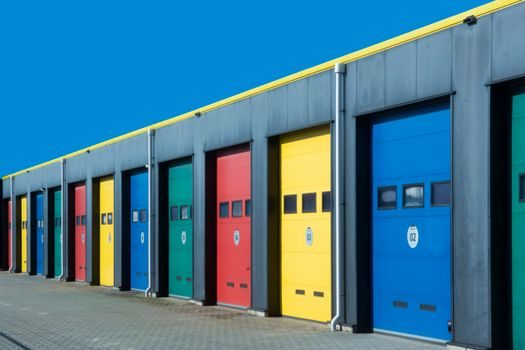
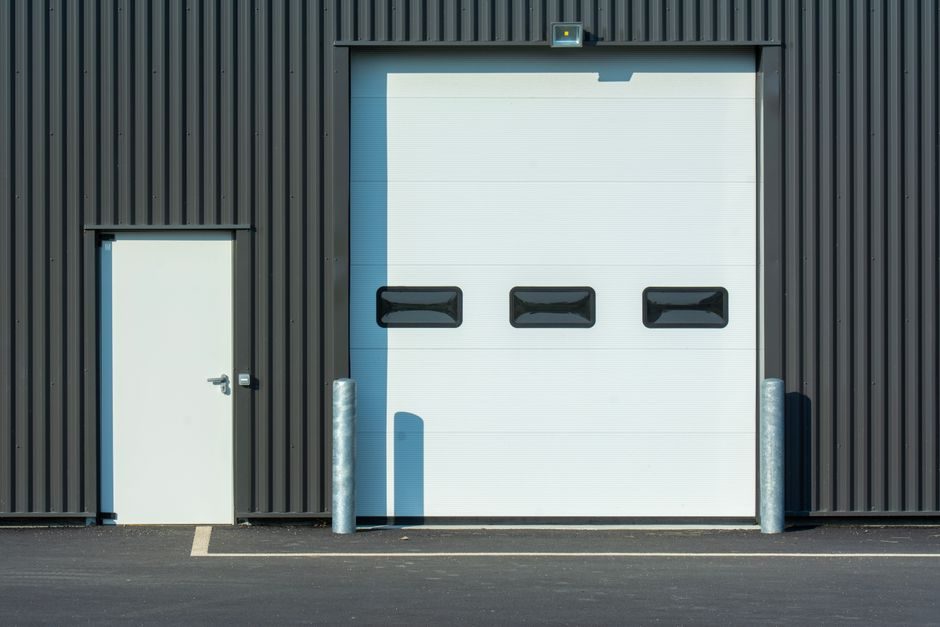
A dock leveler is a steel plate set into a recessed pit at a warehouse or terminal loading bay; a hydraulic or mechanical actuation system raises the plate to the bed height of an incoming truck so a forklift or pallet jack can roll across. Rated capacity is typically 25,000–80,000 lb (≈11,340–36,290 kg), with dock heights matched to common trailer bed ranges of 36–60 in (≈915–1525 mm), and operation powered by hydraulic cylinders, electric-over-hydraulic, or mechanical spring-assisted systems.
Dock levelers are governed by safety standards and loading-bay building codes rather than process-instrumentation standards such as IEC 60079 or ATEX. The two products share a warehouse envelope — a chemical or food terminal may have both GWR transmitters on the storage tanks outside and dock levelers on the loading bays inside — but they do not share a control loop, a vendor catalog, or a procurement spec. Buyers looking up "dock leveler" alongside a level sensor search are typically sizing out a tank-farm-to-truck loading operation, not selecting a single instrument.
Decision Matrix: Which Do You Actually Need?
The decision is rarely "GWR vs dock leveler" in the literal sense — it is "do I need a process measurement, a material-handling platform, or both." A four-criterion comparison makes the cut clean: [S1]
1. Function. GWR measures liquid level, interface, or distance to surface continuously; dock leveler bridges the height gap between bay floor and truck bed, no measurement role. 2. Standards regime. GWR falls under process-instrumentation (HART, FOUNDATION Fieldbus, PROFIBUS PA, IEC 60079 for Ex zones) and ATEX for hazardous areas [S1][S3]; dock levelers fall under mechanical-handling safety standards and building/fire codes. 3. Vendor stack. GWR is sourced from process-instrument vendors (BinMaster, ABB, Endress+Hauser) [S1][S2][S3]; dock levelers come from materials-handling OEMs. 4. Failure mode. A failed GWR reads the wrong level — a safety and inventory risk; a failed dock leveler halts loading — a logistics risk. The two failure modes do not overlap.
Buyers who search the two terms together are almost always doing facility planning for a tank-and-bay site, not evaluating one instrument. For a related spec-driven comparison of industrial equipment categories, see the spec map of overhead bridge crane vs truck crane — same decision-tree logic, different asset class.
Selection Criteria Inside the GWR Family
Once the GWR path is locked in, three criteria drive the specific model: probe type, hazardous-area rating, and interface protocol. Coaxial probes handle low-dielectric liquids and narrow stilling wells; rod probes suit clean liquids in standard tanks; flexible cable probes reach the 20+ m ranges shown on the GWR-3000 datasheet [S1]. Hazardous-area certification dictates whether the unit is specified for Zone 0/1 or Zone 2 service per IEC 60079 series — the GWR-3000 is positioned by BinMaster for hazardous-area storage tanks without naming a specific zone on the public product page [S1].
On the protocol side, GWR transmitters typically support HART 4–20 mA, Modbus, or Foundation Fieldbus/PROFIBUS PA digital outputs; the GWR-2000 sibling from BinMaster is explicitly listed with Modbus [S1], and ABB's LWT300 series lists device-configuration flexibility as a differentiator [S2]. Endress+Hauser's guided-radar portfolio is positioned for both liquids and solids, with vendor-supplied product filters for protocol and application task [S3]. For an alternative non-contacting level technology, the infrared and optical level family covers a different use-case bracket.
When GWR Is the Wrong Tool
Three failure modes push buyers off GWR and onto a different level technology. First, highly agitated or boiling surfaces with very low dielectric still challenge TDR echo discrimination; non-contacting radar is the common substitute. Second, low-reflectivity media (e.g. hydrocarbons below εr ≈ 1.9) on long coaxial probes may starve the echo; again, free-space radar or a guided-wave alternative with a different probe geometry is the fix. Third, heavy coating or crystallization on the probe shifts the calibration; in those services, segmented or coated probes, or a non-contacting radar level meter, is the durable answer [S3].
The dock leveler, meanwhile, has its own disqualifier list: it is meaningless on a process skids-only site with no truck loading, and is over-spec for a packaging line that ships in totes or drums. Spec the dock leveler on logistics throughput and truck-turn time; spec the GWR on tank geometry, media dielectric, and hazardous-area classification. The two are complementary facility assets, not competing instruments.
Closing: a site that needs both — a tank farm feeding a loading dock — should spec and procure them on separate documents, separate standards, and separate vendor lists, and only unify them in the plant layout and safety-case review. Trackable follow-up signals to watch: vendor-side updates to the GWR-3000 family at BinMaster [S1], new firmware generations of the LWT300 at ABB [S2], and Endress+Hauser guided-radar portfolio extensions for low-dielectric and solids services [S3].