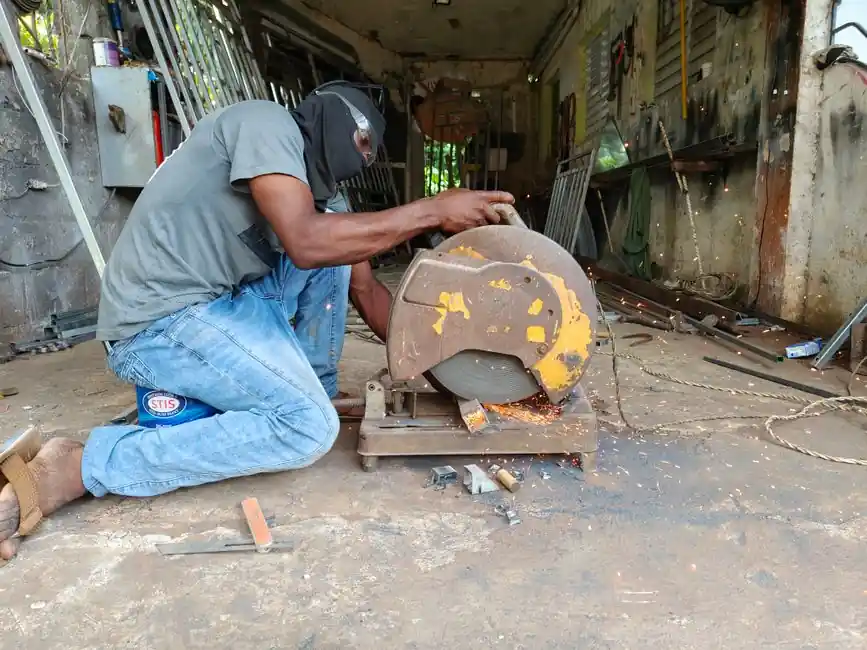
The decision covers concrete removal, coating stripping, edge work and finishing, where motor power affects removal rate, tooling load, heat management and the machine duty cycle.
Heavy-Duty Motor Power Threshold
That threshold is a practical selection guide rather than a guarantee that every machine within it can sustain unrestricted continuous duty.
For continuous heavy work, the power figure must be evaluated together with head design and working width. A large planetary machine may expose several diamond discs to the slab at once, so adequate motor torque matters more than maximum no-load speed. Husqvarna’s PG 8 DR is a three-phase planetary floor grinder rated at 22.1 hp with a grinding width of 31.5 in.
Those machine ratings sit above the 15–25 HP heavy-industrial band. That does not make them excessive. It illustrates that large production grinders can require more than 20 hp when they combine wide coverage with multiple planetary heads. Operators should not translate a high horsepower label directly into a higher removal rate, because disc diameter, abrasive grade, pressure, concrete hardness and debris extraction determine the actual cutting load [S1][S2].
Single-Phase, Three-Phase and Portable Options
The main comparison is single-phase electric, three-phase electric and combustion-powered equipment. For continuous heavy grinding, three-phase electric power offers the most straightforward industrial specification, while single-phase machines serve smaller jobs and gasoline remains an option where electrical access is limited [S1][S5].
The two machines have similar head counts, but the X6 combines more power, larger discs and a wider voltage supply, which is the more appropriate architecture for prolonged removal work.
Lower-powered options remain legitimate. The Scanmaskin guide lists 1.1 and 2.2 kW motors, 15 A and 12 A currents, 110–120 V or 220–240 V single-phase supplies, and grinding speeds of 200–500 rpm or 300–750 rpm [S4]. A listed four-head concrete grinding machine has a 3,800 W motor, six speed settings, and a maximum speed of 6,000 rpm. High RPM does not substitute for sustained torque under load.
Which Operator and Workload Need This Rating
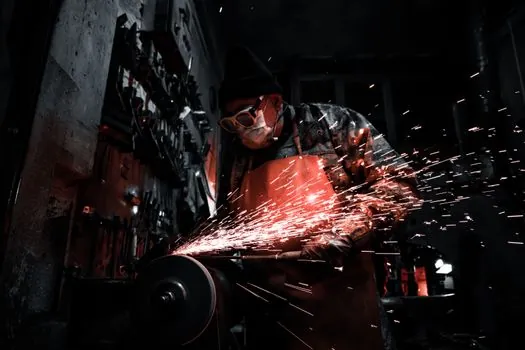
Heavy industrial grinding is suited to warehouse slabs, retail floors, industrial facilities and large concrete areas where removal must continue across an 8-hour shift. Walk-behind grinders typically cover 200–1,000 m² with 12–17 in working paths and production rates of 100–300 m² per shift, depending on concrete hardness and the required finish [S5].
Walk-behind grinders typically have 12–17 inch paths, and their production rates depend on concrete hardness and the desired finish. This is the workload class where a 15–25 HP three-phase selection is defensible, subject to the complete machine specification.
Light commercial work is a different requirement. The 5–7 HP single-phase range serves residential and lighter commercial applications [S5].
The operator also determines the machine architecture. Ride-on equipment reduces fatigue on large commercial work, while multiple planetary heads distribute contact across the slab.
Service Requirements and Motor Load
Three-phase motors demand more than a high horsepower label. Electrical design should therefore match the motor nameplate, including voltage, phase, frequency, full-load current and required starting capacity.
The Scanmaskin grinding guide lists motor powers of 1.1 kW or 2.2 kW, currents of 15 amp or 12 amp, voltages of 110–120 V or 220–240 V, and a frequency of 50–60 Hz. Those values illustrate why increasing tool speed does not remove the supply constraint: sustained current remains tied to motor power and circuit design.
Heavy-duty machines need protection against the predictable failure modes. The CS Unitec EBS 180 includes soft start, temperature control, overcurrent cut-off and constant-speed control, with its 22 A motor mounted above the diamond wheel to limit exposure to dust and debris [S2]. These controls matter because continuous grinding creates both thermal load and intermittent starting current.
Vacuum and water connections are part of the duty-cycle decision, not accessories to add after purchase. The EBS 180 includes a dust-extraction port that allows connection to industrial wet/dry vacuums. Effective extraction helps control airborne slurry and abrasive debris, but its airflow requirement must be matched to the number and width of active heads.
Disc Configuration, Speed and Production Limits
Motor rating should be matched to the grinder architecture and disc configuration. A planetary grinder distributes force across several rotating discs, while a single-disc machine has a different load profile. Tyrolit states that counter-rotating planetary systems require 20–30% more power than single-direction heads [S5].
Speed range provides operating control, not proof of heavy-duty capability. The X6 spans 300–1,400 rpm, the X4 spans 800–1,100 rpm, and Scanmaskin guide examples cover 200–500 rpm or 300–750 rpm [S2][S4]. Professional handheld variable-speed grinders use a much faster 6,000–11,000 rpm range for detail work [S5]. These speeds serve different functions and should not be compared as interchangeable ratings.
Width and head count influence production. Husqvarna machines range from the PG 450 at 3 hp and 17.7 in grinding width to the PG 8 series at 20.1–27 hp and 31.5 in width [S1]. Large planetary floor grinders therefore consume more power because they cover more area and impose more aggregate contact than compact machines.
Production estimates still require a qualification. The cited 100–300 m² per 8-hour shift is tied to concrete hardness and desired finish, and walk-behind units are associated with projects of 200–1,000 m² [S5]. A motor specification cannot override soft concrete, worn diamonds, inadequate pressure or poor slurry control. For procurement, floor grinder cost and planetary head count are separate cost drivers from motor capacity.
Specification Checklist for Continuous Grinding
A continuous-duty purchase order should state minimum motor power, phase, voltage, full-load current, head count, disc diameter, working width, speed range, duty rating, overload protection and service requirements. For heavy industrial work, the starting point is a three-phase machine in the 15–25 HP range, with higher ratings considered when the published design exceeds that range [S5].
Require evidence that the rating applies to the configured machine rather than to a smaller engine or motor on a related model. Husqvarna labels its values as engine power as rated by the engine manufacturer, including 22.1 hp for the Autogrinder 8 D and PG 8 DR, 20.1 hp for the PG 8 XR, and 27 hp for the PG 8 P [S1]. That distinction matters because engine-rating terminology does not translate directly into electrical input power for an electric model.
For procurement, the decisive signal is not simply “heavy-duty” wording. Compare the nameplate power and phase against the area, hardness, removal depth and 8-hour production target. The trackable check is the loaded test: the selected machine must maintain its specified speed under the configured discs without thermal shutdown, repeated overcurrent trips or unacceptable tooling wear.
