Harmonic Drive gearing and the variable speed drive (VSD) belong to two different layers of a motion axis: the first is a mechanical reducer that trades motor RPM for torque inside a few cubic centimetres, the second is an electronic controller that regulates the motor itself.
Specifiers regularly confuse the two because both sit between the motor shaft and the load, and both are now bundled inside the same servo loop on a robot joint or CNC feed. Harmonic Drive LLC's product literature positions the technology as a precision gear with zero backlash, torque sensing and CAD-ready data for robotics and machine tool integrators [S1], while MathWorks documents the same mechanism as a "high-ratio speed reducer based on elastic deformation of an elliptical gear" modelled with a single transfer function [S2]. The SHG-series combined-type harmonic reducer catalogued by HarmonicDrive (origin: Japan) is sold as a standalone mechanical component, not as a drive package [S3].
What each technology actually does
A harmonic reducer is a strain-wave gear: a wave generator with an elliptical bearing deforms a thin flexspline into a circular spline, and the relative tooth count (typically two fewer teeth on the flexspline) gives ratios commonly in the 30:1 to 320:1 range, with single-stage units quoted in the 50:1 to 160:1 band on most industrial datasheets [S2][S3]. The flexspline rotates about 2 teeth behind the wave generator per input revolution, which is the source of the high reduction ratio and of the near-zero backlash that robotic and surgical-tool OEMs buy it for [S1].
A variable speed drive, by contrast, takes a fixed-frequency mains input (50/60 Hz) and outputs a variable-frequency, variable-voltage waveform to an AC induction or permanent-magnet motor. The reducer and the VSD are physically independent: a VSD will not multiply torque by 100, and a harmonic reducer will not change motor speed on its own. They chain together — VSD → motor → harmonic reducer → load — and the engineer's choice of one alters the operating envelope of the other.
Selection criteria: ratio, backlash, torque density vs. speed range, braking, regen
Three numbers drive harmonic reducer selection: reduction ratio, repeatable peak torque (T_peak) and backlash in arc-minutes. The MathWorks model exposes ratio, efficiency and inertia as the three tunable parameters, with the block targeted at compact, high-ratio applications [S2]. Harmonic Drive's marketing literature adds torque sensing and backlash-free behaviour to the same envelope for high-end robotics [S1].
For the VSD side, the decision pivots on motor type (induction vs. PM), power range (sub-1 kW to multi-MW), braking regime (regenerative vs. dynamic resistor), enclosure/IP rating, and the fieldbus — EtherCAT, PROFINET, Ethernet/IP, or the legacy analogue ±10 V plus encoder. Servo drives are a tighter subset of VSDs with closed-loop current, velocity and position loops, and they are the category that almost always sits upstream of a harmonic reducer on a robot axis.
A useful mental rule: pick the reducer first when the bottleneck is positioning accuracy and packaging volume on the joint; pick the VSD first when the bottleneck is line-start behaviour, energy recovery, or coordination of a multi-axis line.
Criteria-based comparison: harmonic reducer vs. VSD
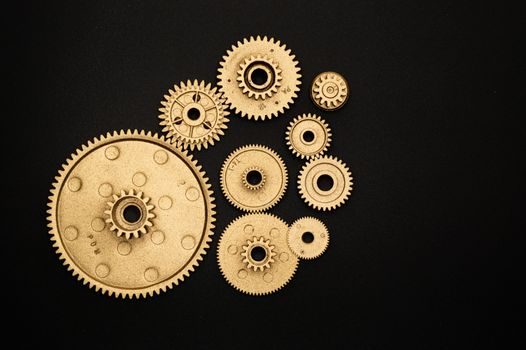
Lining the two up against four decision criteria clarifies why they are not interchangeable. (1) Function: harmonic reducer multiplies torque and reduces speed mechanically; VSD regulates motor speed electronically. (2) Physical form: harmonic reducer is a small, sealed metallic gear unit; VSD is a wall- or panel-mounted power electronics chassis with cooling. (3) Typical ratio/speed: harmonic reducer provides 30:1 to 320:1 single-stage reduction at output speeds often below 100 rpm; VSD controls motor speed from 0 Hz to several hundred Hz across the full motor constant-power range. [S1]
Where the two do interact — and where engineers mis-spec — is the servo axis. There, the VSD closes the current loop, the harmonic reducer sets the mechanical gain, and the gearbox's lost motion (backlash + windup) is the largest single contributor to positioning error. Buying a high-bandwidth VSD cannot fix a sloppy reducer; conversely, a backlash-free harmonic reducer cannot rescue a VSD that cannot commutate the motor at low speed.
Where each is the right answer
Harmonic reducers fit when the load needs high torque in a small envelope, near-zero backlash, and coaxial input/output: robot joint modules, semiconductor wafer-handling robots, surgical instruments, satellite antenna pointing mechanisms, and machine tool rotary tables [S1][S3]. They are over-specified — and over-priced — for conveyor drives, pumps and fans, where a planetary reducer or a right-angle helical gear is the correct mechanical stage, and the control question is a VSD, not a strain-wave gear.
VSDs are the right answer when you have a fixed-speed AC motor and need to throttle flow, pressure or torque on a centrifugal load, or when you need soft starts, coordinated line control, and energy data for the plant historian. Typical 2026 use cases include HVAC fans, wastewater aerators, extruder screws, crane hoists, and the spindle plus feed drives on machining centres. A harmonic reducer does nothing for any of these unless the VSD-driven motor is also the actuator for a positioning axis.
Limits, failure modes and common mis-specs

The dominant harmonic-reducer failure mode is flexspline fatigue: the thin cup that deforms twice per input revolution eventually cracks, with life highly sensitive to mean torque, peak torque, and any radial load on the output. Spec sheets rate units for "rated life at rated torque" — exceeding that, or adding side-load the catalogue does not list, cuts life disproportionately. Backlash also drifts as the wave-generator bearing wears, so the "zero backlash" claim is at install, not for life. [S2]
VSD failure modes sit in the power stack: IGBT/module desaturation, DC-bulk capacitor ripple current, and bearing currents driven by common-mode voltage on long motor cables. Cooling-fan failure is the most common single cause of an unplanned VSD trip on a shop floor. On the application side, oversizing the VSD so the motor never enters its constant-torque region leaves the reducer under-utilised; undersizing the VSD forces the harmonic reducer to absorb torque ripple the drive should be smoothing — a mis-spec pair that turns up regularly in low-cost robot retrofits.
Standards, sourcing and the 2026 supply picture
There is no single international standard that covers "harmonic reducer vs. VSD" as a paired selection — they are governed by different documents. Reducers are typically qualified to ISO 6336 for load capacity and to AGMA 2001 / DIN 3962 for accuracy class; VSDs are qualified to IEC 61800-2 (general requirements) and IEC 61800-3 (EMC), with regional product standards such as UL 61800-5-1 in North America. For explosive atmospheres, the harmonic reducer itself is usually passive and outside the ATEX/IECEx scope, but the VSD and motor pair must be ATEX 2014/34/EU or IECEx-certified for the zone, and the harmonic filter sized for the VSD must match the certified configuration. [S3]
On sourcing, Harmonic Drive LLC (US/Japan origin), Harmonic Drive Systems Inc. (Japan), and several domestic precision gear makers in Germany and China supply the SHG/CSF/CSD-style combined units; the 2026 market continues to be supply-constrained for high-purity robotics grades, and lead times for harmonic reducer SHG-series units shipped from Japan remain the gating item in most robot OEM bills of materials [S3]. For broader motion architecture cost framing, the gearbox price and cost guide walks through frame, ratio, torque and material cost levers that apply to harmonic units as much as to planetary or helical lines.
Watch for two signals over the next quarter: (1) published lifecycle data from the major harmonic-reducer makers on the new high-torque SHG variants, which will re-rank the 50:1 to 160:1 bracket for cobot joint sizing; (2) IEC 61800-9 updates landing on VSD efficiency classes, which tighten the loss budget on the drive sitting upstream of any new reducer spec. Either one shifts the harmonic-reducer-vs-VSD trade-off on a given axis — but it never collapses the two into a single component.