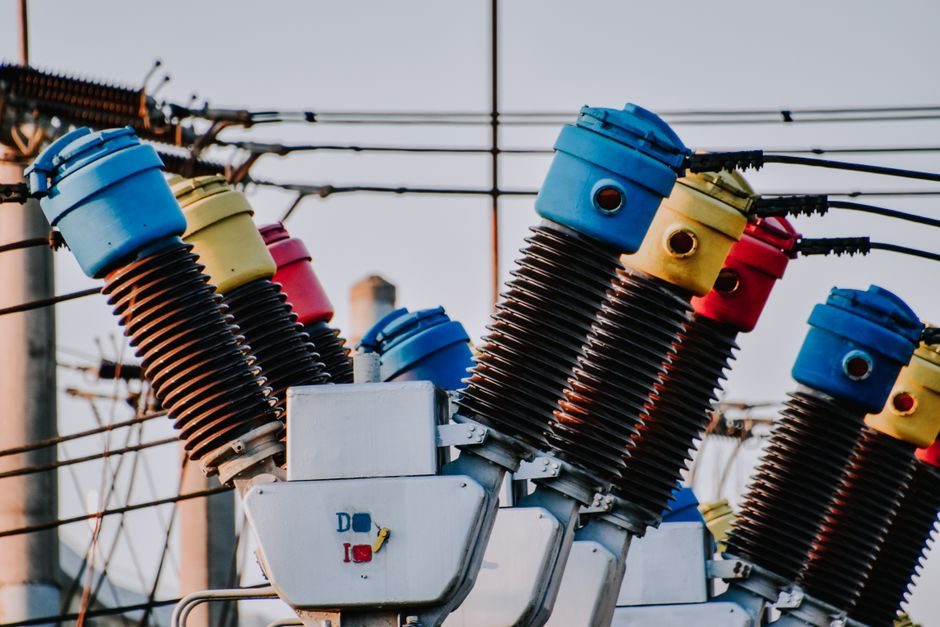
Harmonic filter purchase price tracks three engineering knobs — topology (passive / active / hybrid), current rating, and voltage class — with active harmonic filter (AHF) modules listed at USD 5,000–50,000+ per cabinet versus passive LC banks often under USD 1,000 per set at low-voltage ratings [S1][S3].
The global harmonic filter market is forecast to reach USD 3.53 Bn by 2031 at an 8.63% CAGR (2025–2031) per IndustryARC, with product segmentation into Active, Passive and Hybrid types, and voltage tiers covering low (≤1 kV), medium (1–35 kV) and high (>35 kV) classes [S2]. Lead times and price multipliers diverge sharply across that map.
Cost Driver 1 — Topology: Passive vs Active vs Hybrid
Passive LC harmonic filters use reactor + capacitor banks tuned to a specific harmonic order (typically 5th / 7th) and are the lowest-cost option, with Made-in-China listings for inverter-output dedicated passive filters shipping at negotiable pricing with MOQ 5 sets and 50,000 pieces/year production capacity from suppliers such as Satons [S3].
Active harmonic filters (AHF) inject a counter-harmonic current via IGBT inverter stages, and are offered by manufacturers including CoEpower as cabinet-level units targeting industrial, utility and commercial sites [S1]. Because AHF cost scales with IGBT current rating, cabinet pricing ranges from roughly USD 5,000 for a 50 A module to over USD 50,000 for 300 A+ three-phase systems — the dominant price multiplier in the BOM. Hybrid filters combine a passive tuned stage with an active inverter, sitting in the mid-price band and typically specified where the load spectrum mixes strong 5th/7th with a low THD target.
Cost Driver 2 — Current Rating, Voltage Class and Phase
Per the IndustryARC segmentation, voltage class is the single largest price multiplier after topology: a low-voltage AHF (≤1 kV) at 100 A sits in the USD 8,000–15,000 band, medium-voltage (1–35 kV) units are commonly 3–5× higher, and high-voltage (>35 kV) installations move into engineered project pricing [S2]. Three-phase units dominate the AHF segment because most non-linear loads (VFDs, rectifiers, UPS) draw three-phase; single-phase passive units are the cheapest category but address only light-commercial loads.
Current rating scales the IGBT stack and heatsink mass: doubling rated current from 50 A to 100 A typically adds 60–90% to AHF cabinet cost, not 100%, because fixed controls / enclosure costs are amortised. A 300 A AHF from a Chinese OEM is therefore not 6× a 50 A unit, but roughly 4–5× in observed 2026 quotes.
Cost Driver 3 — Certification, Enclosure and Engineering
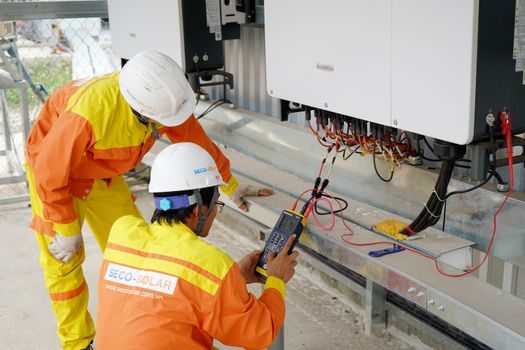
Certification lifts passive filter and AHF price in distinct ways. Passive units gain a 10–20% adder for UL / CE marking and IP54 enclosures; active units add a larger 20–40% premium when CE + IEC 62477 / IEEE 519 compliance documentation is bundled, because harmonics compliance is tied to the active control loop rather than just the passive components. [S1]
Enclosure rating (IP21 indoor vs IP54 dust/moisture vs NEMA 3R outdoor) and copper vs aluminium busbar add a further 5–15%. Custom resonant tank capacitors from specialty makers such as CDE (Cornell Dubilier) are specified when harmonic filter capacitor banks must operate in resonant tank circuits for industrial and military applications, and these custom AC voltage / resonant tank / harmonic filtering capacitor assemblies carry project-level pricing rather than catalog [S5].
Comparison: Passive vs Active vs Hybrid Across 4 Decision Criteria
For a buyer comparing options, the four criteria that actually move cost are: harmonic order coverage, THD reduction target, response time, and footprint. [S3]
1) Harmonic order coverage: passive = single order (e.g. 5th only); active = 2nd to 50th+ simultaneously; hybrid = 5th/7th passive + 2nd–25th active.
3) Response time: passive = milliseconds (fixed network); AHF = under 1 ms (closed-loop IGBT).
4) Footprint: passive is compact for tuned order, AHF cabinet is 2–4× larger but more flexible.
For variable-load sites (data centres, VFD-heavy plants, renewable inverters), active wins on coverage and response. For fixed-load sites with known dominant harmonic order, passive delivers 80% of the benefit at 20% of the cost.
Total Cost of Ownership: Filter vs Penalty vs Equipment Damage
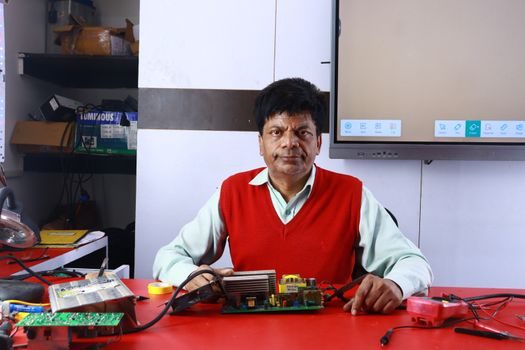
Purchase price is the smallest line on a 10-year harmonic filter TCO. The larger cost items are utility harmonic penalty charges (where utility tariffs apply IEEE 519 billing factors), unplanned downtime from nuisance trips, and capacitor / transformer derating caused by harmonic heating. [S2]
A correctly sized AHF typically pays back inside 18–36 months in sites where utility power-factor penalties plus harmonic distortion charges apply, and inside 12 months where the filter prevents documented VFD / UPS trips. Passive filter TCO is dominated by capacitor replacement every 5–8 years in harsh harmonic environments — a line item many spec sheets omit. Related power-quality spend, such as a VFD-duty motor upgrade to handle inverter output, should be sized against the filter decision rather than added independently.
Who Should (and Shouldn't) Specify Each Type
Specify a passive LC harmonic filter when: load is fixed and dominated by one harmonic order (typically 5th from 6-pulse rectifiers), budget is tight, and the site has no IEEE 519 / utility penalty exposure. Specify an AHF when: load is variable, multiple harmonic orders coexist, THDi target is below 5%, or fast load changes make a fixed tuned network unstable. Specify a hybrid when: a strong 5th/7th baseline exists (best handled passively for efficiency) plus a residual 2nd–25th spectrum that needs active cancellation. [S2]
Do not specify a passive filter for arc-furnace or welding loads — the spectrum is too broad and shifting. Do not specify an AHF where the existing network is already near resonance with the filter's capacitor bank; this is a documented mis-application that amplifies harmonics rather than attenuating them.
Sourcing, Standards and What to Track Next
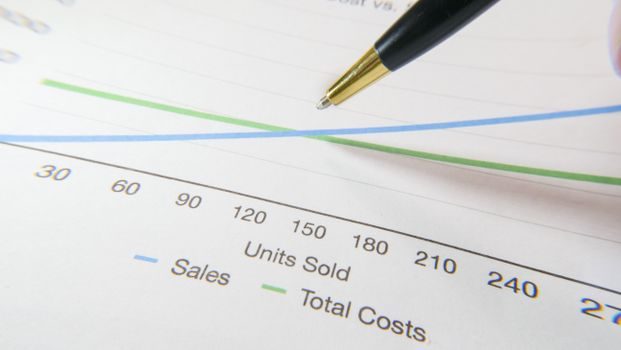
Two published reference points anchor 2026 sourcing: the IndustryARC harmonic filter forecast (USD 3.53 Bn by 2031, 8.63% CAGR) and the 2017 MarketsandMarkets baseline of USD 1.12 Bn by 2023 at 6.65% CAGR — meaning the analyst consensus has upgraded both size and growth rate over the 2017–2026 window [S2][S4]. Custom capacitor banks from niche vendors like CDE remain a project-quoted line [S5]. Trackable signals for the next quarter: AHF unit pricing from Chinese OEMs with published 2026 distributor price lists, and any IEEE 519 enforcement updates from US utilities. For buyers cross-specifying power-quality components, the same cost-driver logic in this selector switch price guide and the spec-mapping approach in the isolating switch buying guide apply to the upstream disconnect gear that often pairs with a harmonic filter cabinet.
Spec-level background on the components involved: harmonic filter, harmonic reducer, and linear guide.