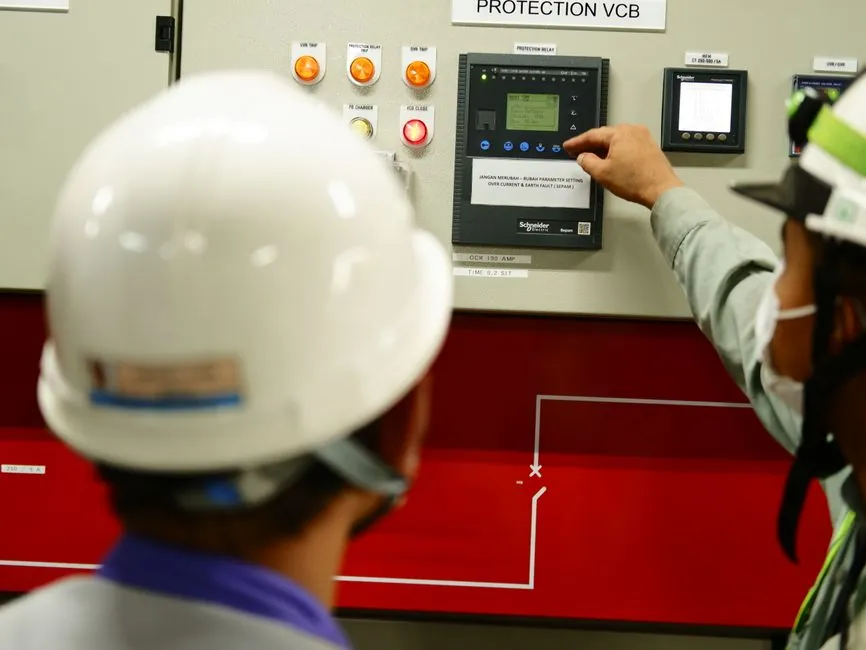
Electrical rooms, switchgear halls, transformer bays, and cable-spread rooms sit at the top of the industrial heat-detector shopping list because airborne dust, paint mist, or HVAC stratification routinely blinds optical smoke detection in those spaces, and the 2026 industrial catalog snapshot shows roughly 50 distinct heat-detector models from about 25 manufacturers targeting exactly that use case [S3].
Selection for electrical work is not the same as selection for life-safety corridors: the goal is property and process protection of high-value assets like MV switchgear, bus ducts, and battery strings, with response time tuned to a flaming fault, not to smouldering cable insulation, which is why the heat detector sits below smoke or aspirating detection in the heat detection hierarchy but ahead of it for confirmation.
UL 521 Spacing, Setpoint, and the Ceiling-Temperature Derate
UL 521 listed spot detectors cover a 50 ft × 50 ft (2500 sq ft) area on a smooth ceiling, but a 135°F (57°C) fixed-temperature head is only valid up to 100°F (38°C) ambient, and a 194°F (90°C) head is only valid up to 150°F (66°C) ambient, a rule that causes more nuisance trips in summer attic and boiler-room retrofits than any other spec error [S3].
In an electrical room the ambient rarely sits above 104°F (40°C) on a design day, so the 135°F head is normally the right pick, but a substation vestibule with solar gain or a top-floor MCC room routinely sees 110-120°F in July, which forces the specifier up to the 194°F rating or a rate-compensation element; in either case, the response index under UL 521 spacing must be re-checked because the published 2500 sq ft coverage shrinks on ceilings above 10 ft and falls to roughly 40% of the listed figure at 30 ft, as the sensor-class spacing map confirms [S6].
NFPA 72 governs application, spacing, testing, and maintenance of these detectors in the US, and the spacing rule shrinks again near roof beams, joists, or air-supply diffusers that block the ceiling jet; the practical workflow is to draft a 1:50 reflected-ceiling plan, overlay the listed coverage circles at 0.7× the published spacing for high ceilings, and count heads before pricing, because the detector cost is small against the panel-channel cost on an addressable loop [S3].
Sensing Principle: Fixed, Rate-of-Rise, Rate-Compensation, or Linear Cable
Fixed-temperature detectors trip on a calibrated setpoint, either self-restoring (bimetallic, thermistor) or non-restoring (fusible link), and they are the cheapest per point and the most predictable in steady-ambient electrical rooms [S3].
Rate-of-rise units alarm on a delta-T of roughly 8.3°C/min (15°F/min), so they catch a fast-flaming insulation fire inside 30 seconds while ignoring the slow morning warm-up of an unloaded transformer; rate-compensation designs merge the two, a fast rise trips early to cancel thermal lag and a slow rise trips at the rated temperature, which is the right behaviour for a high-bay switchgear hall with elevated ambient [S3].
Linear heat cable and fiber-optic linear heat detection (LHD) covers long, narrow assets like bus-duct risers, transformer winding pockets, and cable trays in tunnels, where 100-500 m of sensing cable replaces dozens of spot heads; for the cable-tray hazard in particular, EN 54-20 and NFPA 72 require smoke or aspirating detection because a smouldering cable fault can produce toxic fumes for hours without ever crossing 57°C, a limitation every specifier should note in the hazard analysis [S6].
Hazardous-Area Approval: ATEX, IECEx, and the Zone Class on the Drawing
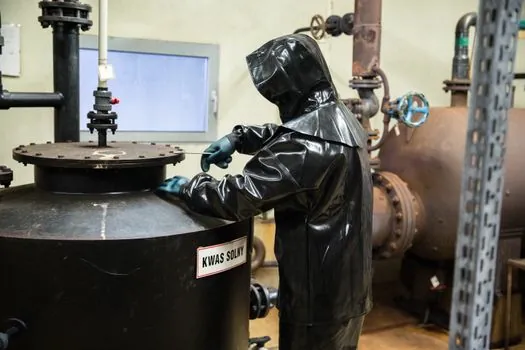
Electrical work routinely lands in classified areas: a battery room is Zone 1 or Zone 2 under IEC 60079-10-1 depending on ventilation, a generator skid with day-tank vents is Zone 1 inside the skid boundary, and an outdoor transformer compound is typically unclassified but treated as a harsh-weather space, so the detector certification must match the certified area classification drawing, not the building's general hazard class [S3].
Explosion-proof heat detectors such as the TM 1/9 Ex line continuously measure ambient temperature and trigger on a defined rate or threshold rise, carry an Ex d or Ex e marking for Zone 1 or Zone 2, and add threaded conduit entries that survive the harsh mechanical and vibration environment of an electrical room, which a residential-style head would not [S3].
IP rating is a separate axis from Ex rating, and a Zone 2 detector with IP54 still needs IP67 if the room is wash-down or outdoors, so the spec sheet should call out both the Ex marking (e.g. Ex db IIC T6 Gb) and the IP code explicitly; the 2026 catalog snapshot flags IP67, explosion-proof, and ATEX/IECEx as the three most common option tags in the electrical-duty segment, which tracks the field reality that an industrial heat detector is rarely a stock SKU [S3].
Panel Interface: Conventional Dry Contact vs Addressable Loop
A conventional spot detector exposes normally-open dry contacts on a two-wire initiating device circuit, drives 6-125 VAC at 5 A or 6-25 VDC at 1 A or 125 VDC at 0.5 A, which is enough to switch a horn/strobe coil or a relay base, but it will not enrol on a CLIP or Advanced Protocol addressable loop without a listed base or an analog-value module [S3].
Modern electrical-room retrofits on EST, Notifier, Simplex, or Siemens panels run addressable loops, so the specifier must confirm the detector carries a listed base (e.g. B501, B524, HOCHIKI HFP base) or a published analog protocol; mixing a conventional head onto an addressable loop either latches in alarm at the panel or never enrols, both of which are field call-backs, not design issues [S3].
Restorability is the second interface decision: self-restoring bimetallic, pneumatic, rate-compensated, and thermistor elements reset after operation, while fusible-link and digital LHD sections are consumed and must be replaced, which drives both the lifecycle cost and the field-test cadence; the encyclopedia entry on heat detector signalling lays out the contact, addressable, and wireless variants for cross-reference [S2].
Electrical-Room Specific Failure Modes and What to Watch
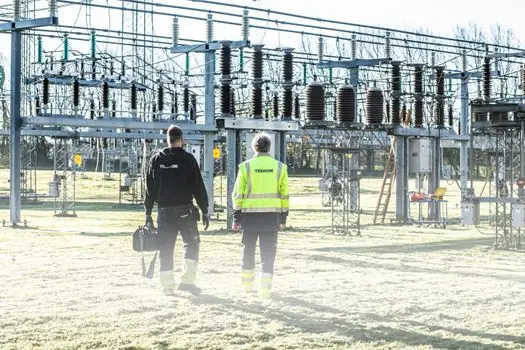
Harmonics and EMI from VFD-driven equipment can couple into long detector loops and create false rate-of-rise trips, so the loop should be shielded, the shield grounded at the panel end only, and the routing kept clear of VFD output cables by at least 300 mm; the same shielding rule applies when the detector cable shares a tray with 480 V feeders, and the construction-site spec map covers the temporary-power variant of the same problem [S5].
Stratification in a tall switchgear hall produces a cold layer at the floor and a hot layer at the ceiling, so a 30 ft ceiling derates the listed 2500 sq ft coverage to a fraction of that figure, and beyond 10.5 m (roughly 35 ft) fixed-temperature detection is generally not accepted for life-safety signalling under BS 5839-1, which forces a smoke or aspirating solution in the upper part of the room while heat detection stays at the switchgear level for asset protection [S6].
Mechanical damage from forklift impact, cable-pulling, and routine maintenance is the most common field failure of a heat detector head, and protective guards, weather shields, and impact-resistant cages must not block the thermal element or shift its response characteristic; vibration isolation is also required in rooms with rotating equipment above 5 mm/s, because pneumatic rate-of-rise elements are particularly sensitive to low-frequency mechanical noise [S5].
Selection Criteria Compared: Fixed vs Rate-of-Rise vs Rate-Compensation vs LHD
For a clean, stable-ambient electrical room under 10 ft, the fixed-temperature spot detector is the cheapest per point and the most predictable, but a high-bay switchgear hall above 20 ft needs rate-compensation to fight thermal lag, and a transformer bay or bus-duct run longer than 50 m is a linear heat cable application where spot heads are simply uneconomic to install and test. [S3]
On response time, rate-of-rise and rate-compensation lead with sub-30-second trips on a fast flaming fault, fixed-temperature lags by 1-3 minutes until the setpoint is reached, and LHD with fiber-optic averaging can mask a fast local event if the cable is too long, so the LHD spec must include a maximum zone length, typically 100-300 m per channel, to preserve resolution; the laser distance meter article covers a related toolset when the layout survey itself drives the head count.
On hazardous-area compliance, only Ex-marked rate-compensation or LHD heads cover Zone 1, while Zone 2 accepts a wider range including properly installed fixed-temperature units, and the unclassified electrical room accepts any of the four, which is why the procurement document must list the Ex marking, the IP code, the response index, and the loop interface as four separate lines, not as one combined "industrial heat detector" line item that the vendor can fill with the cheapest match.
Watch the 2026-08 catalog refreshes from the major panel-compatible detector families (HOCHIKI, Mircom, NOTIFIER, EST) for new IP67 rate-compensation heads with native addressable-base support, and the next ATEX/IECEx certificate revisions under IEC 60079-0 for any change in the Zone marking format that would force a re-spec of existing Ex detector bills of material.
The underlying component specifications are covered under aerial work platform, and aerial work truck.