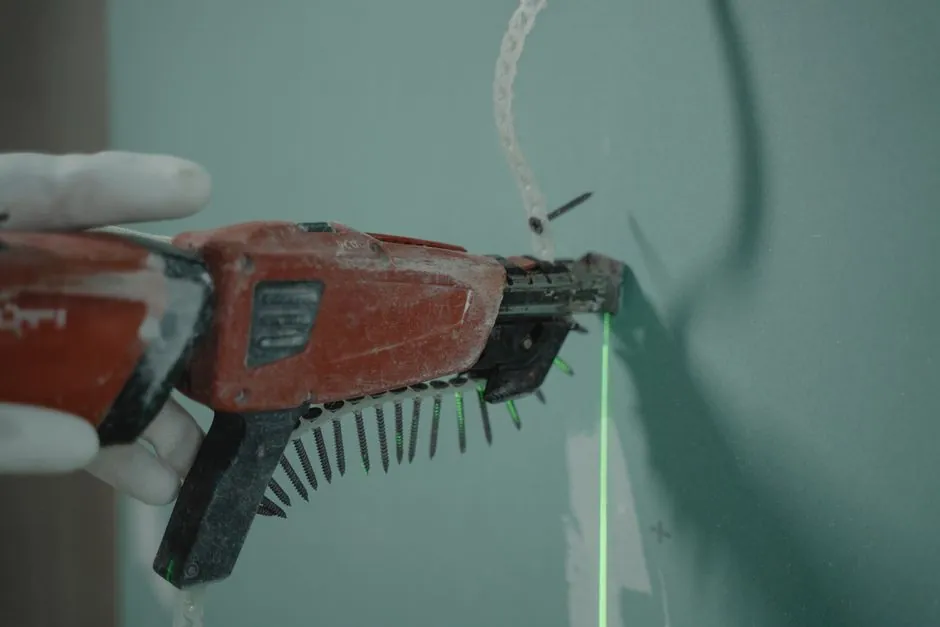
A 50 m handheld laser distance meter retails for roughly $22 on the consumer channel as of mid-2025, while a Leica DISTO X3-class industrial unit sells around $250 and pulsed long-range modules climb into four-figure territory, so the spec gap is wide enough to treat selection as a four-gate filter rather than a single product decision [S1].
For electrical installation work, the four gates that actually decide a buy are: declared range matched to the longest run on site, accuracy tolerance tighter than the conduit or busway layout tolerance, IEC 60825-1 laser class compatible with the jobsite safety rule, and an IEC 60529 IP rating that survives the dust, drilling swarf, and occasional outdoor exposure an electrician actually meets [S3].
Range Bands and Which Run Lengths Each Tier Covers
Handheld phase-shift meters dominate the 0.05–50 m segment and rely on modulating a continuous laser beam against the reflected return to derive distance by phase difference, with typical accuracy of ±1.5–2.0 mm at the cheap end and ±1.0 mm above the $200 mark [S1]. For most indoor electrical work, a 50–100 m range is sufficient, while outdoor or large-scale industrial projects may require longer reaches [S2].
Industrial phase-shift meters such as the Leica DISTO X3, Bosch GLM 120i C, and Stabila LD 520 stretch the same technology to 100–150 m, add a tilt sensor (±90° or 360°), and package it in IP65 housings rated for a 2 m drop onto concrete [S1]. Beyond 150 m, the phase-shift approach loses SNR and the industry switches to pulsed time-of-flight, which places outdoor cooperative-target instruments at 3.5–5,000 m for survey use [S1]. Inside a 30×40 m electrical room, the 50 m handheld covers every wall-to-wall run a wire-puller will measure, so paying for the long-range pulsed option is wasted budget on an MEP build.
Accuracy Tiers: ±1.0 mm vs ±1.5 mm vs ±2.0 mm for Conduit and Busway Layout
Three tolerance tiers are visible in the public catalog, and the right one is set by the tightest downstream tolerance on the run, not by the brochure adjective. Entry-level 50 m units publish ±2.0 mm typical accuracy, acceptable for room dimensions and cabinet fit-out but accumulating visibly across a 20 m pull [S1]. Mid-tier industrial handhelds push ±1.0 mm, the threshold below which surveyors, facade contractors, and steel fabricators will accept the reading without a steel-tape check [S1].
For mechanical-electrical-plumbing layout on a 200 mm-slab tolerance, ±1.5 mm is the practical floor, while IEC 61439 low-voltage switchgear assembly work demands measurement consistency below ±1.0 mm for repeatable busbar fit [S2]. A practical acceptance check: take ten readings on a fixed 5 m reference and confirm the spread stays inside the datasheet figure before the unit is signed off for production work.
Laser Class and Jobsite Compliance Under IEC 60825-1

IEC 60825-1 classifies laser products and places laser distance meters in Class 2: visible only (400 to 700 nm), no more than 1 mW continuous-wave, eye-safe by the no-more-than-0.25 s blink reflex, with required warning labeling; the EU references EN 60825-1 and China references GB 7247 / GB/T 7247 [S3]. Most consumer and professional devices ship as Class 2 by default, which is eye-safe for accidental exposure of under 0.25 s and is the legal default for construction sites in most jurisdictions [S1][S2].
Class 3R units (≤5 mW) appear on long-range models and require nominal operator briefing but no PPE, while Class 3B and Class 4 pulsed rangefinders (the 1,500 m plus survey instruments) demand laser-controlled areas, interlocks, and OD-rated eyewear, which is a category jump, not a price jump [S1]. Specifying a Class 3B or higher unit onto an active construction site without the controlled-area paperwork is the most common compliance miss seen in 2024–2026 project audits, and Class 2 handheld units should always carry the visible warning label required by the standard [S1].
IP Rating, Drop Survival, and Indoor vs Outdoor Service
Ingress protection is the first environment filter: the AEG LMG 50 carries IP54 water and dust protection, and the Fluke 417D is IP54 rated plus 1-metre drop tested, so both can survive dusty or light-rain exterior work [S5]. The Ryobi RBLDM20, by contrast, is described for home/indoor use with a backlit display and a low-battery indicator but no published IP rating, so keep it off the construction-site floor [S5].
For an electrician moving between a switchgear room, a riser, and a rooftop PV combiner, IP54 is the workable minimum; IP65 becomes the right pick when the meter is shared with a concrete crew or a steel-erection gang where dust and falling tools are routine [S1][S5]. Refer to the dedicated electrical measurement page for the broader environment test rules that govern the instruments themselves.
Target Surfaces, Beam Clearance, and the Failure Modes That Show Up on Site
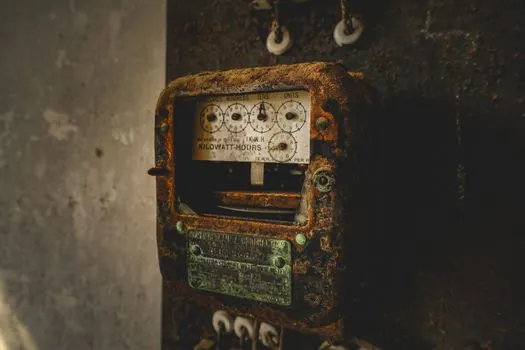
Laser distance meters require a solid, opaque surface for a reliable reflection: highly reflective, transparent, or absorbent surfaces such as shiny metal, glass, or black foam can cause errors or measurement drop-outs [S2]. On glossy painted metal at oblique angles, the specular return misses the collector aperture, so the spec sheet figure only holds against a diffuse-reflective target [S5].
Beam clearance is the single most-overlooked installation rule: a 0.1 mm precision LDM still gives garbage if the beam grazes a fixture, a cable tray, or a steam plume within 200 mm of the target, so the beam path should be walked with a flashlight before powering the laser [S5]. Common field symptoms and corrective actions: specular reflection on shiny metal is fixed by tilting the sensor 10–15° off-normal or applying matte-finish/talc to the target; ambient light saturation from sunlight, welding flash, or strobe is fixed by a sensor with adjustable exposure or a narrow optical bandpass filter [S4].
Comparison: Handheld vs Fixed Industrial vs Sub-Millimetre Triangulation
Three technology lanes compete for the electrical-installation budget, and the right pick is set by the tolerance on the run rather than the price. The table below lines them up against the four decision gates an electrical buyer cares about. [S5]
Handheld phase-shift (50 m, ±1.5–2.0 mm, Class 2, IP54) suits conduit routing, cable-tray lengths, switchgear room dimensions, and as-built surveys, with one-person operation and a roughly $22 entry point [S1][S2]. Industrial phase-shift (100–150 m, ±1.0 mm, Class 2, IP65) suits outdoor substation work, long busway runs, and facade conduit where a tilt sensor and 2 m drop rating pay off [S1]. Fixed laser triangulation (0.4–1 m stand-off, ±0.1 mm linearity, IP65/67) suits control-panel fabrication and busbar machining, where 0.05–0.2% of full-scale linearity on 20–1000 mm stand-offs is the only tier that holds the tolerance [S4].
Cross-reference: the broader laser distance sensor family covers fixed-mount Ethernet/IP, PROFINET, and Profibus DP units that share the optics but live on a 24 V rail; the electrical automation page maps the wider control-loop context where the 0.1 mm triangulation tier plugs in.
Limits, When Not to Use a Laser Meter, and Escalation Triggers
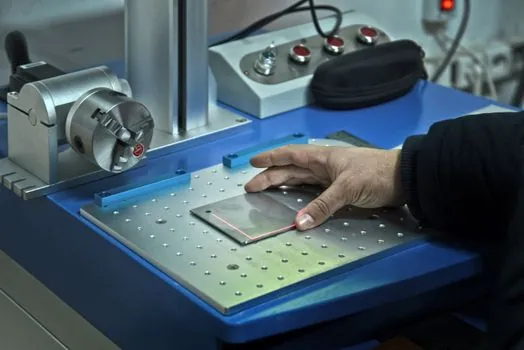
A laser distance meter answers one question: how far is it from here to there in a straight line; it does not read angles, and a total station remains the right tool when horizontal and vertical angles plus survey-grade coordinates are required, typically 1 mm plus 1.5 ppm to a prism [S3]. Indoor-rated units with no published IP rating should not be used on a construction-site floor, and a handheld that returns fixed near-max or near-min readings in sunlight usually means the receiver is saturated, so the meter should be replaced or shielded rather than the readings averaged [S4][S5].
For electrical rooms where 0.1 mm panel tolerances apply, the laser distance meter is the wrong tool: switch to a fixed triangulation sensor with Profibus DP or 4–20 mA + remote I/O, mounted on a vibration-isolated bracket with the OEM-specified retroreflector or matte target [S4][S5]. Escalation triggers: a beam path that cannot be cleared of cable trays and steam plumes within 200 mm of the target, a stand-off that varies by ±400 mm, or a gloss-painted target at oblique angles, each of which is a sign the job has outgrown a handheld [S4][S5].
Two trackable signals for the next buying cycle: confirm whether your preferred handheld publishes Class 2 conformity under EN 60825-1 with the visible warning label required by the standard [S3], and verify that any fixed-mount sensor carries an IP65/67 rating plus a Profibus DP or 4–20 mA interface matching the panel's LV electrical I/O scheme before sign-off. For site-day decision trees on the same hardware class used on concrete and steel work, see this laser distance meter picks for concrete work reference.