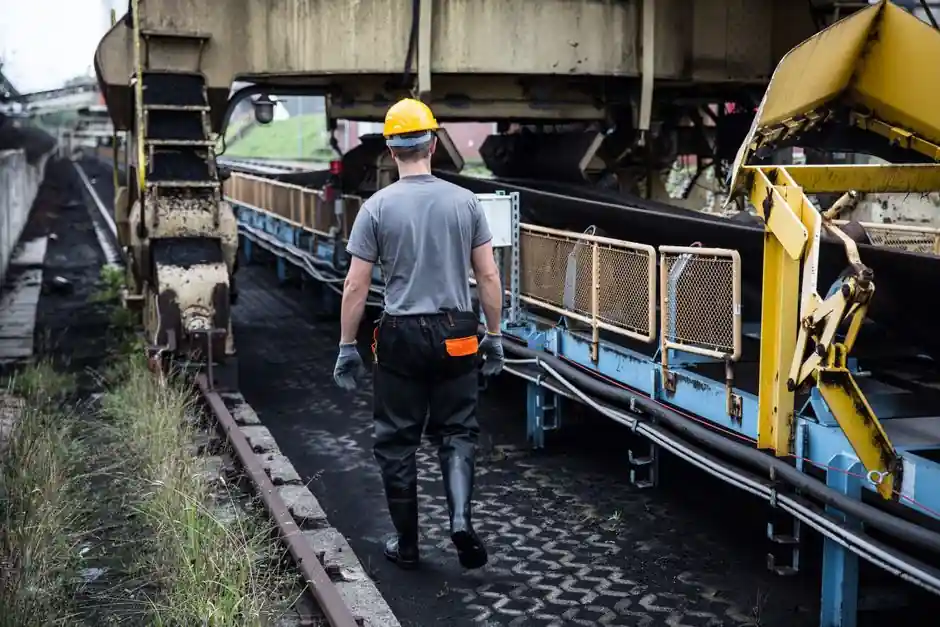
Heat resistant conveyor belts built to DIN 22102 transport material up to 250°C, and Fenner Dunlop heat-resistant covers extend service to 300°F (150°C) for coarse lumps ≥2 in. and 250°F (120°C) for abrasive fines [S8][S9]. Fire resistant belts are a separate compound class: per the U.S. Department of Labor MSHA Schedule 2G, an underground coal-mine belt must average less than 60 seconds afterflame and less than 180 seconds afterglow on a small-scale flame test [S4].
The two ratings solve different problems. Heat resistance fights thermal ageing of the cover rubber; fire resistance fights flame propagation after ignition. A belt can be heat resistant without being fire resistant, fire resistant without being heat resistant, or both, as Bando's FR7000 series does for steel-mill sinter and cement dry-clay lines [S2].
Heat Resistant Belt Ratings and Temperature Bands
Heat resistance is a function of the elastomer system, not a fire rating. Fenner Dunlop's heat-resistant compound is rated for material temperatures up to 300°F (150°C) on coarse lumps 2 in. (50 mm) or larger, and 250°F (120°C) on abrasive fines, per the manufacturer's published compound data [S9]. DIN 22102 heat-resistant covers cover a wider ceiling of 250°C, the standard upper bound cited by Gteek for hot-material service [S8].
Bando's Heat Carry™ heat-resistant belt targets ambient above 60°C with belt surface temperatures of 100 to 200°C, framing it as a cover-rubber durability play, not a fire play [S2]. For steel mill sinter, coke transfer, cement dry limestone, and dry clay lines, the failure mode is cover hardening, cracking, and ply delamination from sustained heat, not flame spread.
Fire Resistant Belt Ratings and Test Methods
Fire resistant ratings are governed by small-scale and large-scale flame tests, plus drum-friction and electrical-resistance tests in some jurisdictions [S4]. MSHA Schedule 2G's small-scale test specifies specimen count, orientation, ventilation, ignition source, exposure time, afterflame time, and afterglow time, with the acceptance thresholds of 60 seconds afterflame and 180 seconds afterglow [S4].
Large-scale gallery tests use full-width belts in lengths up to 60 m with ignition sources of 100 kW or more to measure flame spread rate, conditions MSHA's small-scale test does not capture [S4]. Fenner Dunlop reports an average self-extinguishing time under one second on its Netherlands-manufactured fire resistant covers, compared to the permissible pass rate of up to 7.5 seconds per test sample [S1]. Dunlop also publishes cover grades: BV K/S for inflammable/explosive materials, BVA K/S for highly abrasive inflammables, V/VT for covered or underground applications, BVM K/S for animal/vegetable oils, and BVR K/S for mineral oils [S1].
Criteria Comparison: Heat Resistant vs Fire Resistant
On temperature ceiling, heat resistant belts win: 250°C per DIN 22102 versus fire resistant belts, which are rated by flame-test outcomes, not continuous service temperature [S8][S4]. On self-extinguishing performance, fire resistant belts win: under 1 s average on Dunlop covers versus no defined flame-out time for a standard heat resistant cover [S1][S2].
On standards basis, heat resistant belts are graded to DIN 22102 elastomer performance [S8], while fire resistant belts cite MSHA Schedule 2G for U.S. underground coal, plus regional equivalents and customer specs in mining, biomass, and coal handling [S4][S1]. On typical application, heat resistant fits sinter, coke, clinker, dry limestone, and dry clay [S2][S9], while fire resistant fits coal mines, biomass conveyors, grain elevators, and any combustible-dust line requiring flame propagation control [S1][S5]. A dual-rated product like Bando FR7000 is a heat resistant belt with added flame retardant for fire spread suppression, explicitly for steel-mill sintered ore, coke transfer, and cement dry-material lines [S2].
Selection Criteria: Match the Belt to the Failure Mode
Specify a heat resistant belt when the duty is sustained high cover temperature with no significant combustible-dust cloud. Cover cracking from thermal ageing is the dominant failure mode, and the right metric is the elastomer temperature ceiling (120 to 250°C depending on compound and lump size) [S8][S9]. For belt conveyor service in clinker cooler discharge or hot sinter transfer, heat resistant covers are the correct primary spec.
Specify a fire resistant belt when the duty involves combustible dust, hot fines with ignition risk, or any underground/covered conveyor handling coal or biomass. Per Pooley, every flame resistant belt will burn if defenses are overwhelmed, so fire resistant is a propagation control, not fireproofing [S4]. Pair the fire rated cover with slippage switches, sequence switches, zero-speed controls, and bearing thermal sensors, the layered safety stack that Pooley lists alongside belt selection [S4].
Limitations, Misconceptions, and Failure Modes
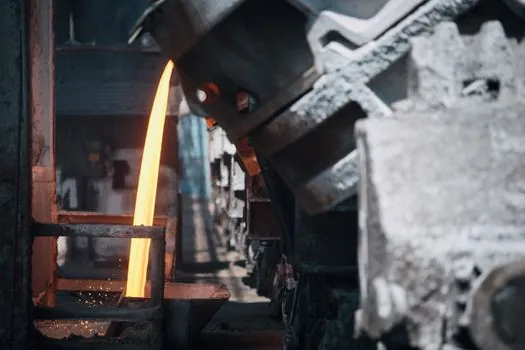
No conveyor belt is fireproof. Fenner Dunlop states this directly: belts will burn under sufficient naked flame because the polyester and nylon carcass plies are themselves inflammable; the rubber cover and skim are where the fire defense lives [S1]. Fenner Dunlop adds the chemical mechanism: additives release gases during combustion that starve the flame of oxygen, achieving self-extinguishment [S1].
Frictional heating is a separate ignition path that flame tests do not always replicate. Frozen idlers, poor tracking, and drive slippage can all ignite a belt independent of any external fire source [S4]. BulkInside's 2024 guide restates the engineering rule: a fire resistant belt will not continue to burn without an external fire source, which means a belt is rated for self-extinguishment, not for never igniting [S5]. Fenner Dunlop also states heat resistance is elastomer-dependent, and a single 'heat resistant' label does not guarantee a fixed temperature ceiling without checking the compound data sheet [S9].
Relevant Standards and Sourcing Notes
DIN 22102 is the cited standard for heat resistant rubber textile conveyor belts, with the 250°C material-temperature ceiling used in manufacturer data [S8]. MSHA Schedule 2G is the cited U.S. code for underground coal-mine belt flame resistance, with the 60 s afterflame / 180 s afterglow acceptance criteria [S4]. ASTM D-378 is cited by Sparks Belting for its fire-retardant belt testing regime [S6]. JIS standards are cited by Bando for the FR7000 series' combined flame retardancy and heat resistance [S2]. MSHA's small-scale test is roughly 500 W of energy, while gallery tests reach 100 kW or more to capture flame spread rate, a scale gap the industry has not closed [S4].
For a mesh belt conveyor running through a heat-treatment furnace, neither heat resistant nor fire resistant rubber belt ratings apply directly, so the specifier should pull the furnace OEM's belt data sheet rather than default to a conveyor-belt cover grade. A belt tensioner on either belt class still needs the standard take-up range, but the tensioner does not change the cover's fire or heat rating.
The 2024 BulkInside guide and 2024-08 Sparks post are the most recent dated industry write-ups in the current research set [S5][S6].
This topic is covered further in A48 vs A536: Gray Iron and Ductile Iron Grade Selection Map.