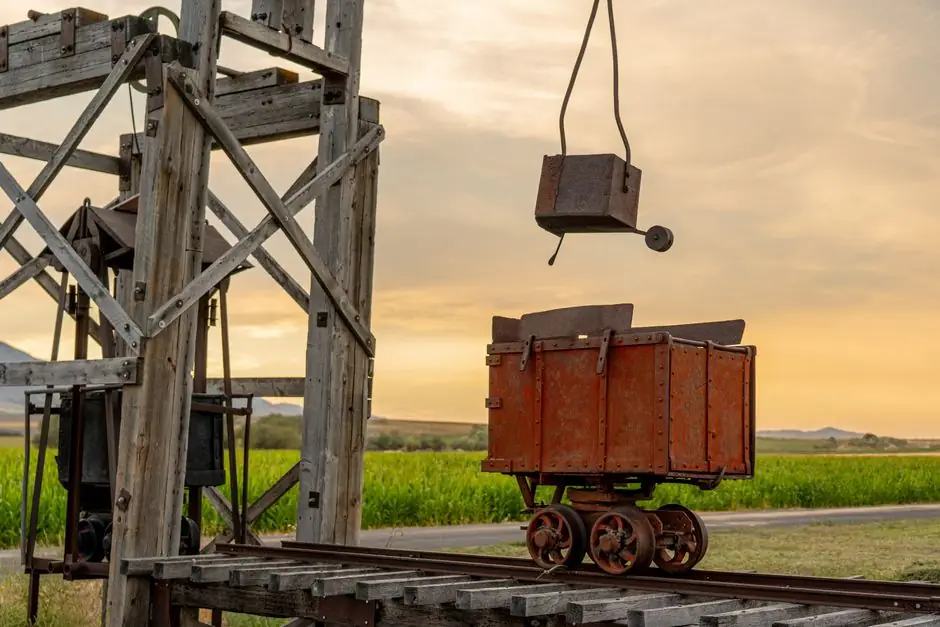
For lifts up to about 50 m at 50-500 t/h, EP (polyester-nylon) fabric belts remain the default bucket-elevator carcass, with stated cost-performance advantages and pulley compatibility down to 300-850 mm diameters [S1]. Above 60 m, or where near-zero elongation and impact-heavy cement, mining, or power-station service apply, steel cord belts take over because EP would otherwise require excessive plies to hold the working tension [S1].
The decision is not about belt material cost in isolation; it is driven by four mechanical inputs: required belt tension, available take-up travel, minimum pulley diameter, and loading-zone severity [S3]. Once those are locked, EP vs steel cord becomes a straightforward tradeoff between flexibility and high-modulus strength, with the structural envelope of the elevator setting the boundary.
Where EP fabric wins on tall bucket elevators
EP fabric belts deliver industrial-grade strength at lower cost than steel cord for lifts up to 50 m, wrapping smaller pulleys in the 300-850 mm range and reducing both head and tail equipment cost [S1]. Damage tends to stay localized in the textile plies rather than propagating catastrophically, and the synthetic fibers do not absorb water, so performance stays consistent in humid grain, fertilizer, or outdoor silo service [S1][S2].
On the construction side, EP and NN carcasses combine a polyester warp with a nylon weft, giving high tensile strength with elongation at break around 0.7-0.9% for the solid-woven PVC/PVG tier used in lighter-duty elevators [S2]. Field splicing is faster and simpler on EP, hot vulcanization, cold bonding, and mechanical fasteners all being practical, which cuts installation downtime per operating hour on shorter elevators where the joint is replaced more often [S1][S3]. For a typical 40-50 m grain or cement elevator, EP is described as the standard choice in roughly the majority of bucket-elevator applications worldwide, and is the carcass most end users are comfortable specifying and repairing in-house [S1][S5].
Where steel cord is the correct specification
Steel cord belts become mandatory once vertical transport exceeds about 60 m or throughput crosses 500+ t/h under continuous heavy loading, because at that point EP would need too many plies to hold the working tension and the take-up travel becomes unmanageable [S1]. Steel cord elongation is 0.3% versus 4% on NN textile belts, so the take-up can be designed shorter, tension stays stable, and tracking problems on ultra-tall elevators drop out [S5].
The mechanical case is reinforced by a factor-of-safety reduction, from 10 on textile down to 6.67 on steel cord, which lets a lower-rated steel cord belt replace a higher-rated fabric belt, reduces minimum pulley diameter, cuts belt weight, and lowers power consumption [S5]. Adhesion of cover rubber to the steel bonding layer runs 2.7:1 over fabric adhesion, joint efficiency 3.3:1, and flex fatigue resistance 1:4 (slower deterioration on steel), all of which feed directly into longer mean time between failures on a 60 m plus cement or clinker elevator [S5]. For a more general comparison of how fabric and steel-cord constructions diverge on system-level constraints, see the EP vs steel cord conveyor belt decision map in the engineering reference.
Decision criteria side-by-side
The four decision factors below translate the marketing language into a procurement-ready filter. Each row reads as: if your elevator matches the left column, stay with EP; if it matches the right column, move to steel cord [S3][S5].
Center distance and lift: short-to-medium runs under about 50 m at moderate tension favor EP; long overland or tall vertical runs with high working tension favor steel cord [S1][S3]. Elongation and take-up travel: if you have room for take-up travel and tension adjustments, EP is acceptable; if you need stable tension and limited take-up travel, steel cord wins [S3][S5]. Pulley diameter constraints: smaller pulleys (300-850 mm) push the spec toward EP; larger engineered pulleys open the door to steel cord and its lower thickness-to-rating ratio [S1][S5]. Loading-zone impact: impact absorption and fabric give favor EP at transfer points, while steel cord needs engineered top-cover impact protection but pays back in high-strength carcass and long-haul tension capacity [S1][S3].
A secondary comparison, thickness and weight at equal rating, shows the steel-cord advantage grows with rating. A 2000/4 fabric belt at 5+3 mm cover weighs 25.3 kg/m²; the equivalent ST1400 steel cord belt at 6+4 mm cover weighs 23.4 kg/m², a 30% thickness reduction and 8% weight reduction, and that gap widens further at 2500/5 and above [S5]. On troughability, a steel cord belt reaches a 0.18 f/B ratio at 45° troughing angle versus 0.17 on textile, a small absolute number but a step-change in throughput at the same width [S5]. For more on the bucket-and-belt interface itself, the bucket elevator reference page summarizes the head, tail, and boot geometry that sets those constraints.
Service-life and TCO math for tall elevators
Steel cord belts are quoted at 40% or higher service life than textile belts in equivalent duty, with fewer joint failures and less installation downtime per operating hour, which is where the real cost recovery comes from on a 60 m plus elevator [S5]. The Forech comparison lists joint efficiency 3.3:1 in favor of steel cord, flex fatigue resistance 1:4 (steel cord deteriorates slower), and impact energy absorption 1:3, all of which directly map to mean time between unplanned stoppages on a cement, clinker, or power-station elevator [S5].
On a 50-500 t/h bucket elevator, the typical cover temperature limits are -15 to +85 °C for PVC solid-woven, with higher-tier EP covers available in heat-resistant (up to 150 °C), oil-resistant, and flame-retardant compounds for grain silos, power plants, and chemical service [S1][S2]. That range usually covers cement, grain, fertilizer, and mineral powder, and is one reason EP stays in the spec even where steel cord is mechanically preferred: the cover compound, not the carcass, often sets the upper temperature limit. The carcass-vs-cover split is also why the flat belt and chain belt references are useful when the discussion shifts from vertical lifting to horizontal or inclined runs sharing the same cover compounds.
Limits, failure modes, and what the research does not answer
EP failure on tall bucket elevators is rarely a single tensile break; it shows up as a chain of system penalties, including more take-up travel than the structure can absorb, more frequent tension adjustments, and elevated slip risk on the head pulley [S3]. Steel cord's main risks are cord corrosion, cover-cut damage exposing the cords, and much more demanding splice quality control, so the field-splicing simplicity that makes EP attractive does not transfer to steel cord without a trained crew and controlled vulcanizing [S1][S3]. The 90% share figure cited for EP in bucket-elevator service is a directional claim from one supplier and should be read as the installed-base majority, not a measured market share [S1].
The published material also does not pin a specific standard revision or regulatory deadline for either carcass, and does not name a single governing ISO, DIN, or ASME clause for bucket-elevator belt selection; specifiers should treat the duty numbers (lift height, t/h, pulley diameter, temperature) as the controlling inputs and confirm cover-compound certification (flame-retardant, antistatic, food-grade) against the relevant national standard separately. For wider process-equipment context, including how belt-driven vertical lifts compare to chain and Z-conveyor alternatives on product damage, the belt vs chain bucket elevator guide and the belt tensioner reference fill in the adjacent selection decisions. A useful cross-industry pattern, choosing between two competing technologies on duty rather than brand, is laid out in the ENP vs FBE gate-valve internals decision map.
Selection rule of thumb for new tall elevators
Use EP fabric up to roughly 50 m lift at 50-500 t/h with 300-850 mm pulleys, where field serviceability and lower first cost dominate. Move to steel cord above 60 m, above 500 t/h, where take-up travel is constrained, or where impact-heavy cement, clinker, mining, or power-station service makes the 0.3% elongation and 40% longer service life the economic driver. Verify cover compound against the operating temperature (-15 to +85 °C standard, up to 150 °C heat-resistant) and confirm splice method (hot vulcanization, cold bonding, or mechanical fastener) against the maintenance crew's capability before signing the PO. [S3]