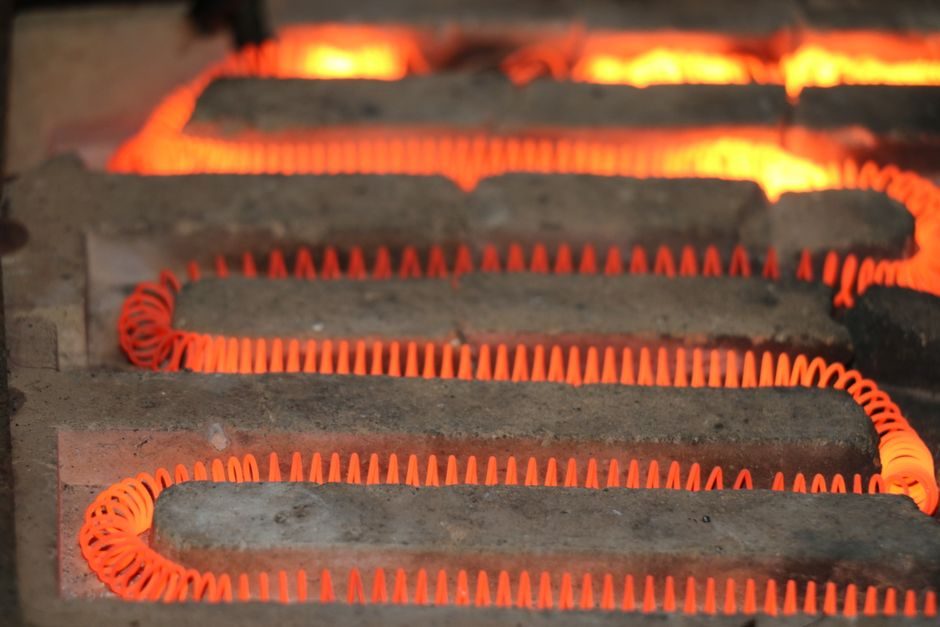
A heat treatment furnace is engineered to hold work-pieces at a target temperature within tight uniformity limits and then deliver them to a controlled cool or quench, with commercial units spanning roughly 150°C to 1,200°C ceiling and ±3°C chamber uniformity at the high-spec end [S1].
Selection is driven by the metallurgical recipe — not marketing — and the same furnace type that solves a forging shop's distortion problem can wreck a thin-wall aluminum extrusion if the quench delay and temperature spread are not specified up front [S1][S2].
Operating envelope and chamber uniformity
Aluminum solution heat treating furnaces on the market reach 650°C (1,202°F) maximum and 150°C (302°F) minimum, with ±5°F (±3°C) temperature uniformity, low-density Incoloy sheathed electric elements, and high-velocity air recirculation through stainless baffles [S1]. That window covers the aluminum T6 / T7 solution band, the magnesium aging range, and most low-temperature stress-relief cycles for steel stampings — it does not cover austenitizing, sintering, or high-temperature ceramic firing, which need 1,100°C+ ratings.
Quench performance is part of the envelope, not an afterthought: a 5-second door-open to quench immersion delay, plus a high-agitation water or PAG (Polyalkylene Glycol) tank, are listed as standard features on the same aerospace-rated build, and the optional PAG management system stabilises cooling rate as the polymer ages [S1]. When uniformity and quench transfer are both locked, post-process hardness spread and grain growth behave as the heat-treatment recipe predicts; when either drifts, the spec sheet is meaningless.
Configuration families and what each does well
Pit furnaces, as offered in HEAT CONCEPT's product line, are designed for vertical loading of long shafts, rolls, and ring-type parts, with optional vacuum purge, oxygen-sensor atmosphere control, CO/CO2 analyser, and temperature recorder interfaces built around the same chamber [S2]. They shine on deep-bore work where box or car-bottom layouts waste floor space and where gravity loading simplifies fixturing.
Box / chamber furnaces cover the bulk of lab and small-batch work, car-bottom furnaces handle heavy tooling and forging dies, rotary hearth and continuous roller-hearth units feed high-throughput forging and extrusion lines, and vertical furnaces address shafts that cannot be laid down [S1]. The rule of thumb: pick the configuration that matches the part's handling geometry first, then size the chamber; getting this backwards is the most common cause of "the furnace works, but production won't".
Aerospace and standards-driven builds
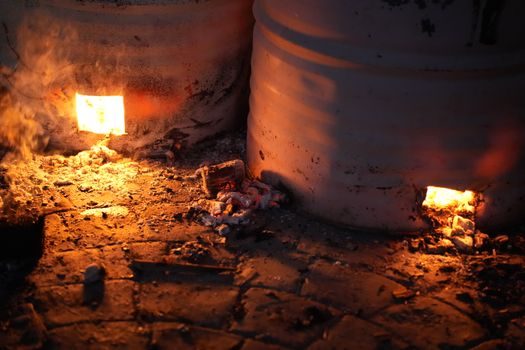
Nutec Bickley's aluminum solution line is stated to meet AMS2750, AMS2770, AMS2771, AMS2772 on the aerospace side, and ASTM B917/B917M plus B918/B918M on the standards side, with both gas-fired (direct or indirect) and electric-heated variants in the catalogue [S1]. That combination is the de-facto ticket for supplying heat-treated aluminum extrusions, castings, and forgings into commercial-airframe Tier-1 supply chains.
Plants specifying to AMS2750 must accept the pyrometric and instrument-calibration overhead the standard imposes — the furnace is only one line item; thermocouple surveys, TUS (Temperature Uniformity Survey) cadence, and instrument calibration records carry the audit weight. A non-aerospace shop can drop those costs and run a simpler control loop, which is why generic "heat treatment furnace" listings on industrial marketplaces rarely quote a [S1] performance envelope. Specifying above the actual market requirement is one of the most expensive ways to over-capitalise on a heat-treatment cell; see ball-screw supply context for the same over-spec pattern on motion hardware.
Energy source and atmosphere trade-offs
Gas-fired systems (direct or indirect flame) deliver fast heat-up, high thermal mass tolerance for heavy loads, and lower capital cost per kilowatt than equivalent electric builds, but they introduce combustion byproducts that complicate controlled-atmosphere work [S1]. Electric Incoloy-sheathed systems are cleaner, easier to zone-control, and integrate more simply with oxygen-probe atmosphere loops, at the price of higher kWh cost and slower recovery after door opening.
For processes that demand atmosphere control — bright annealing, neutral hardening, decarburisation-free heating — the chamber design has to be specified around the atmosphere, not the heating medium: oxygen-sensor-driven control, CO/CO2 analyser feedback, and vacuum purge capability are standard options on pit-type builds [S2]. Skipping that spec layer and expecting an off-the-shelf unit to "just run nitrogen" usually ends with soot, decarb, and a heat-treat that fails metallurgical inspection.
Failure modes and operational constraints
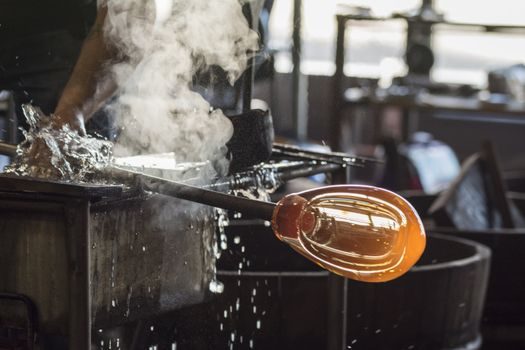
The main failure modes are recoverable but expensive: element burnout on electric units, refractory spalling from repeated thermal cycling, atmosphere leaks that destroy bright-surface work, and quench-tank contamination that drifts cooling curves out of spec [S1]. Preventive maintenance on element resistance, baffle cleanliness, recirculation fan bearings, and PAG concentration is non-optional — a heat treatment furnace running without a logged PM schedule will fail audit and metallurgy at the same time.
Process constraints that regularly bite buyers: the 5-second door-to-quench target is achievable only with electromechanical or hydraulic hoists, not hand-operated doors; PAG quenchant requires active management as polymer concentration drifts; and "soft / low storage" insulation pays off in steady-state losses but degrades faster than dense castable under continuous high-temp duty [S1]. Each of these is a known wear point with a known mitigation; the spec sheet should name the mitigation, not just the headline number.
Selection criteria, side by side
For an engineer writing a purchase spec, the four decisive criteria are temperature range, atmosphere control, quench transfer time, and standards compliance. Pit furnaces score high on long-part handling and atmosphere options; box/chamber furnaces on flexibility and floor footprint; car-bottom on heavy-load loading; continuous roller-hearth or rotary on throughput [S1][S2].
Aluminum solution aerospace builds: 150–650°C, ±3°C uniformity, 5 s quench delay, AMS2750/AMS2770-72 + ASTM B917/B918M compliance, gas or electric heating, PAG quench with management system [S1]. Pit builds for shaft / roll work: lower temperature ceiling, oxygen-sensor atmosphere loop, optional CO/CO2 analyser, vacuum purge, vertical loading [S2]. Continuous / roller-hearth for forging lines: high throughput, gas-fired, often integrated with downstream press or quench conveyor [S1]. Matching the configuration to the part geometry and the audit regime first, then to throughput, is the path that avoids both over-spend and rework.
Historical context and where the technology is going

Heat treatment as a controlled industrial process has deep roots — Chinese foundry records show annealing used during gold-foil hammering in the Shang dynasty (roughly 14th–11th century BCE), white cast-iron malleabilising anneal by the early Warring States period (5th century BCE), and carburising-plus-quench on wrought iron by the late Warring States (3rd century BCE), with later texts describing quenching media selection by water quality and animal-fat bathes [S3]. The metallurgical goal has not changed in three millennia; what has changed is the chamber's ability to hold ±3°C, log every thermocouple, and feed an aerospace audit trail in real time [S1][S3].
The next decision nodes to watch on the buyer side are: tighter PAG-quench management systems as more aluminium aerospace parts shift from water to polymer quench, wider adoption of oxygen-probe atmosphere control on pit-type builds that today only offer it as optional, and the slow rollout of higher-temperature 1,100°C+ continuous furnaces for low-volume aerospace alloys such as titanium solution treating — a feedstock market that itself is under supply pressure, as tracked in titanium sponge capacity, exports, and price signals to July 2026. A spec written today that ignores quench chemistry and atmosphere feedback will look dated within one audit cycle.
For component-level specifications, see heat treatment furnace, heat detector, and crucible furnace.