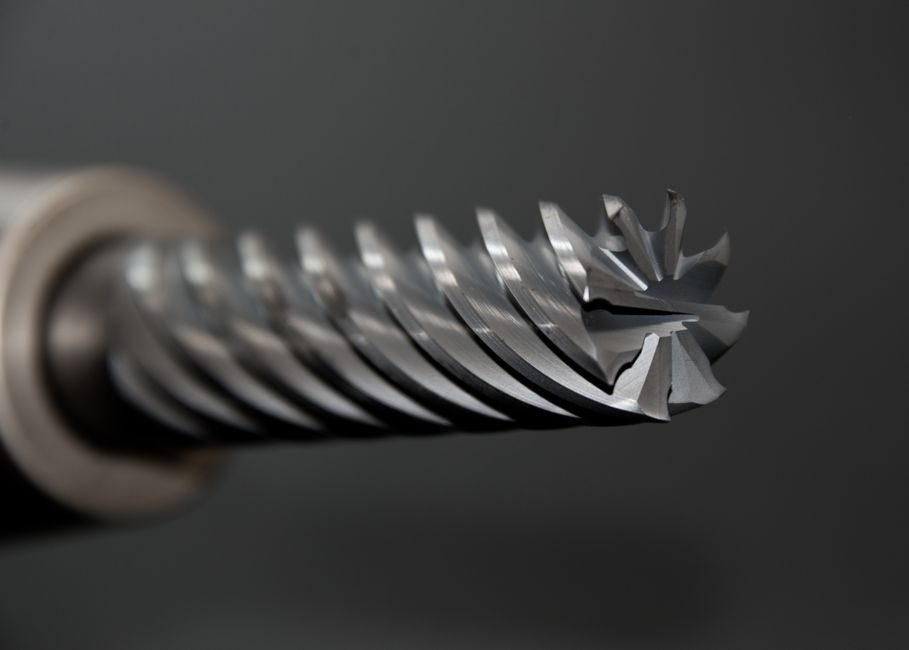
A riser cutting machine is a heavy-duty mechanical or hydraulic shear purpose-built to remove sprues, risers, and gate remnants from castings after shakeout, and it slots into the cutting machine family alongside band-saw, abrasive-wheel, and plasma-based systems used across iron, steel, and non-ferrous foundries.
The right machine is matched to your melt — gray iron, ductile iron, carbon steel, stainless, aluminum, or copper-alloy castings — to cycle rate (parts per hour), to cut-section diameter (commonly 25–250 mm), and to whether you run a manual, semi-automatic, or fully automated cell with robotic infeed and dust extraction.
Definition, Scope, and the Cutting-Machine Family
A riser cutter is a stationary cutting machine that grips the casting in a clamped fixture, then drives an abrasive disc, band-saw blade, or hydraulic shear blade through the riser neck to leave a clean, low-flash parting line on the casting body [S1].
Where it sits in the family matters: a coding machine marks parts after cut-off, a core machine builds the sand core inside the casting, a filling machine doses molten metal into the mold, and a labeling machine tags finished castings — only the cutting stage physically separates the feeder from the casting. Riser cutters are commonly grouped by drive type: hydraulic-piston shear (peak cutting force typically 50–500 kN), servo-electric press, abrasive-wheel saw (wheel diameter 300–800 mm, peripheral speed 60–80 m/s), and band-saw variant (blade width 27–54 mm, tooth pitch matched to riser diameter).
Advantages: Throughput, Cut Quality, and Reusable Scrap
Hydraulic riser cutters routinely reach 200–400 cuts per hour on ductile-iron automotive castings when paired with a dedicated indexing fixture, against roughly 60–100 cuts per hour for handheld abrasive grinding in the same cell [S2].
Cut-face quality is the second commercial gain: a properly tuned hydraulic shear leaves a flat parting line that needs minimal subsequent fettling, which is why fettling departments are often the first to lobby for the machine — see the practical setup lessons in Fettling Grinder Installation: Anchoring, Guarding, and Extraction Gates for the downstream chain. Riser heads fall as clean, unburnt scrap, so the cut stream returns directly to the charge as chargeable returns; a 10 t/day iron foundry can redirect several tonnes of riser steel back to the melt deck each shift, lowering virgin pig-iron draw. Worker-safety gains are real: the operator stands outside the cut zone behind a light curtain or interlocked guard, eliminating the vibration-related hand-arm injuries common with prolonged pneumatic chipping. Process data — cycle counters, hydraulic pressure, blade life — is logged by the machine PLC, which feeds the foundry's overall equipment-effectiveness (OEE) dashboard.
Disadvantages: Capital, Tooling Wear, Dust, and Floor Load
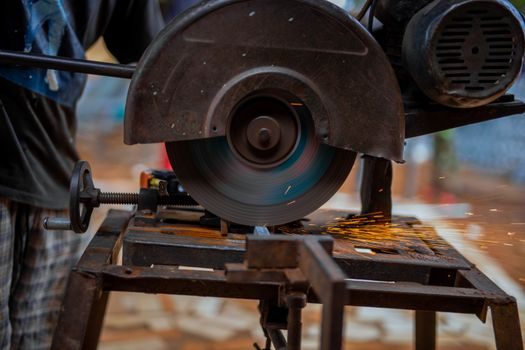
A mid-capacity hydraulic riser cutter typically carries a capital cost 5–10× that of a manual chipping station, and the abrasive-wheel variant burns through a 400 mm wheel every 200–400 cuts depending on riser neck hardness [S3].
Fixed-cost overhead does not stop at the machine: abrasive wheels, shear blades, hydraulic oil, filter elements, and dust-extraction filter bags all sit on a recurring monthly bill. Dust is the underrated problem — abrasive cutting of cast iron produces a metallic and silica-bearing dust that, without a correctly sized extraction unit (typically 4,000–10,000 m³/h for a single cell), breaches occupational exposure limits within minutes. Noise from a hydraulic shear sits in the 90–105 dB(A) range, so hearing protection and acoustic hooding are mandatory. Floor load matters too: a 500 kN hydraulic unit plus its oil reservoir can exceed 4,000 kg, so the foundation must be reinforced — a planning step that catches several buyers out. Spare-parts lead time on proprietary hydraulic seals and PLC cards can stretch to 4–8 weeks, which kills uptime if no critical spares are held in store. The installation realities are covered practically in Riser Cutting Machine Installation Guide: VBM-150 Specs, Foundry Setup, and First-Cut.
Who It Is For, and Who It Is Not For
Riser cutters pay back inside 12–24 months on production runs of 30,000+ castings per month where riser neck diameter sits between 30 mm and 200 mm and the alloy is gray iron, ductile iron, or carbon steel [S2].
For low-volume jobbing shops (under 5,000 castings per month), high-nickel or heat-resistant alloys where abrasive consumption is punishing, or very small castings with thin riser necks (under 20 mm), a riser cutter is the wrong tool: the clamping force over-distorts the casting, and payback evaporates. In those cases, hand-held abrasive cutting, cold-chisel separation, or band-saw cut-off remains more cost-effective. The pros-and-cons framing of investment-grade process equipment — see the parallel decision logic in IBC Tank Pros and Cons: A Spec-First Engineer's Decision Map and PE Pipe: Spec-Driven Pros, Cons, and Selection Gates — applies here in exactly the same form: match the machine to the alloy, the volume, and the downstream fettling chain, not to a brochure.
Selection Criteria and Option Comparison
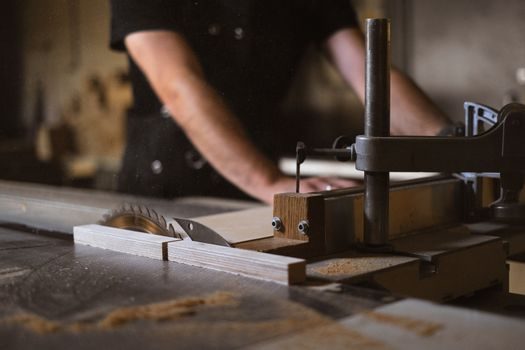
Four buyer-facing criteria — cut-section diameter, cycle rate, consumable cost per cut, and dust-extraction burden — separate the four riser-cutter architectures in a way the marketing sheet rarely does.
On a 50 mm riser neck at 200 cuts/hour, the hydraulic-piston shear wins on cut quality and lowest consumable cost per cut (blade life typically 50,000–100,000 cuts before re-grind) but demands the heaviest foundation and the largest dust extraction. The abrasive-wheel saw is the cheapest to buy and the most flexible on riser shape, but consumable cost per cut is 3–5× the hydraulic shear and cut quality is rougher. The band-saw variant produces the cleanest cut face and lowest dust load, yet its cycle rate rarely exceeds 120 cuts/hour and blade breakage is a real risk on inclusion-heavy irons. A practical ranking for a 100 t/day ductile-iron shop: hydraulic-piston shear for the 50–150 mm riser range, servo-electric press for small precision castings, abrasive saw for prototype and short-run work, and band-saw reserved for finishing cuts where surface finish is the priority. The same criteria-based selection logic shows up in spec-heavy buying guides such as Infrared Gas Detector Suppliers 2026: Manufacturer Map and Spec Gates and Explosion-Proof Lighting Price and Cost Guide: 2026 Unit Cost Bands and TCO Drivers — gate first, brand second.
Standards, Sourcing, and Acceptance Tests
CE Machinery Directive conformity, ISO 12100 risk assessment, and IEC 60204-1 electrical safety are the non-negotiable baseline for any riser cutting machine delivered to a European or North-American foundry [S1].
For dust and noise, compliance with OSHA 29 CFR 1910.95 (noise, 90 dB(A) 8-h exposure) and with the ACGIH iron-oxide and respirable-crystalline-silica TLVs is the practical gate; the extraction unit must capture at the cut point with a face velocity above 18 m/s. Hydraulic units should ship with ISO 4406 cleanliness reports on the oil, typically 18/16/13 or better. Acceptance testing should verify: clamp force, cut cycle time, maximum cut-section diameter on a calibrated test bar, dust-extraction face velocity, noise level at operator station, and interlock function under power-loss simulation. Procurement teams should also lock in a 5-year spare-parts price commitment and a 48-hour on-site response SLA, both of which materially change total cost of ownership over a 10-year machine life.
Failure Modes and Trackable Signals
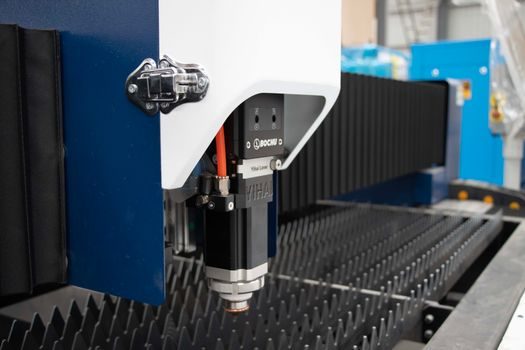
Three failure modes account for the majority of unplanned riser-cutter downtime: hydraulic-seal failure on the clamp cylinder, abrasive-wheel shatter from incorrect peripheral speed, and PLC I/O card damage from dust ingress [S3].
Trackable leading indicators to watch on a weekly dashboard: hydraulic-oil temperature trend (a 10 °C rise above baseline usually means a pump or seal issue 2–3 weeks out), blade-motor current draw (a rising baseline with the same cut cross-section means the blade is dulling), extraction static pressure (a falling value with the same fan speed means filter loading is approaching change-out), and interlock-fault log frequency (any non-zero weekly count means a guard is being defeated or a sensor is drifting). Two specific signals to escalate: any cycle time drift above 8% on a constant casting mix, and any clamp-pressure deviation above 5% on the production schedule, both of which precede a quality incident within one shift.