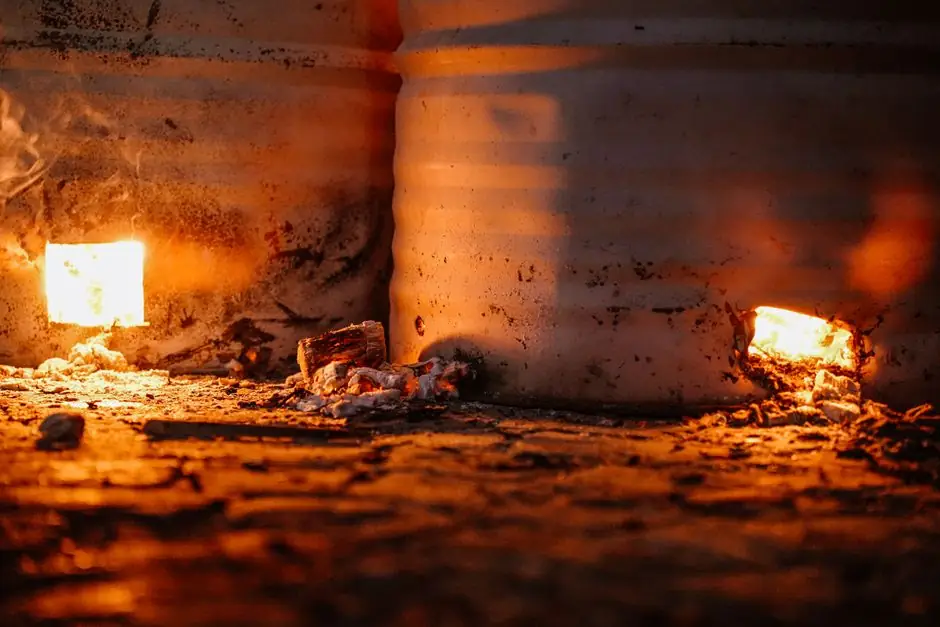
Ipsen USA topped the 2023 North American furnace builder ranking at over $110M USD in sales, roughly double its closest competitor, with vacuum furnaces as the core product and aftermarket parts and service making up about 50% of revenue [S3].
AFC-Holcroft of Wixom, Michigan is widely viewed as the largest atmosphere-furnace builder on the continent, a position the firm has held since inheriting the Holcroft & Company line that dates to 1916 and was consolidated under the AICHELIN Group in 2016 [S3].
Market Structure: Atmosphere vs Vacuum Builders
The 10-firm North American ranking by 2023 sales is split between two distinct technology camps, atmosphere furnaces and vacuum furnaces, and the largest builder in each camp is roughly twice the size of the next firm down [S3]. AFC-Holcroft leads on the atmosphere side with batch IQ and pusher configurations, while Ipsen USA leads on the vacuum side out of Rockford, Illinois; both companies report annual revenue of $20M USD or more, a threshold that also includes the second tier of Vac Aero, Williams, CEC, Lindberg, Abbott, GM Enterprises and Centorr Industries [S3].
The list deliberately excludes brands that design in North America but manufacture abroad, including SECO/WARWICK, ECM, ALD, Nitrex and TAV, and excludes firms focused on steel-mill or foundry furnaces rather than commercial heat treating [S3]. Buyers comparing quotes from these global brands should ask for the country of origin of the pressure vessel, hot zone and refractory, since the North American content directly affects ASME Section IX weld-procedure qualification and CWI sign-off at the receiving site.
Product Type Comparison: Selection Criteria Across the Main Categories
Batch IQ, pusher, roller hearth, walking beam, shaker hearth, rotary hearth, pit, box, crucible and tube furnaces are the configurations a buyer will encounter, and the choice is driven by workpiece geometry, required temperature uniformity, and production volume. The table below lines up the main types against four decision criteria commonly used in 2026 RFQ scoring. [S5]
Lindberg/MPH catalogs 60+ furnace models split across heat treat, non-ferrous melting, and lab use, including a 1700 deg C large-chamber box furnace, a 1500 deg C continuous high-temperature sintering conveyor, and a HYEN endothermic atmosphere generator used for carburizing and neutral hardening [S5]. The breadth of an OEM's catalog is a useful proxy for how many AMS 2750 pyrometric-cone tolerances and CQI-9 audit profiles that builder can already document.
Compliance and Safety: NFPA 86, AMS 2750 and the Audit Trail
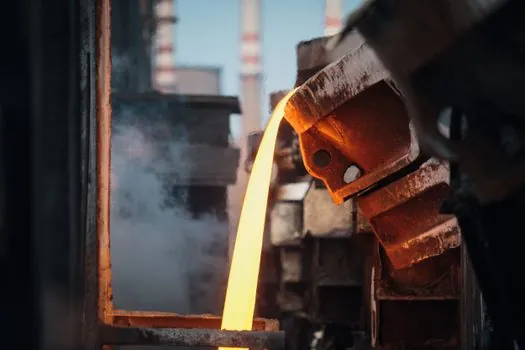
Atmosphere furnace controls in North America are designed against NFPA 86 (Ovens and Furnaces), with CEC's published scope also calling out IRI, DIN, CE and FM requirements for gas, air and hydraulic subsystems [S2]. Pyrometric conformance for aerospace heat treat is typically demonstrated to AMS 2750, which sets the number, type and placement of thermocouples per furnace class and the frequency of system accuracy tests; buyers should request the most recent SAT and TUS reports before signing a FAT protocol.
Vacuum furnace buyers should also confirm hot-zone graphite or molybdenum grade, leak-rate specifications in Pa m^3/s, and partial-pressure control for gas-quench cycles, since these are the variables that differentiate an aerospace-qualified vacuum furnace from a tool-room unit. Cooperheat, which builds post-weld heat treatment furnaces and curing ovens for oil and gas and power generation, applies similar documentation rigor to PWHT service work, where ASME Section IX weld-procedure traceability is mandatory.
Custom Engineering and Capacity: What the Big Builders Actually Build
CEC's published references include 80 ft tall vertical furnaces for aerospace, drop-bottom units that quench 30 ft by 30 ft payloads, and roller hearths that the company says process more than 57 million head, block and wheel castings per year for automotive customers including Nemak, BMW, GM, Tesla, Ford, Mercedes and Volkswagen [S2]. That throughput figure is a useful order-of-magnitude benchmark when sizing a new aluminum heat-treat line, where the bottleneck is typically the solution-treat quench rather than the aging furnace.
Lucifer Furnaces, founded 1946 and based in Warrington, Pennsylvania, reports more than 9,820 furnace and oven chambers designed and delivered, and positions itself in the small-to-medium batch and lab furnace segment that the Tier 1 builders do not cover [S4]. Grieve, operating since 1949, and HeatTek both target the same mid-market slot with box, bench, and conveyor configurations; buyers with sub-$1M budgets and short lead times will find the most competitive quotes in this tier, while orders above that threshold typically route to Lindberg/MPH, CEC or AFC-Holcroft.
Lead Time, Service, and Spare-Parts Footprint
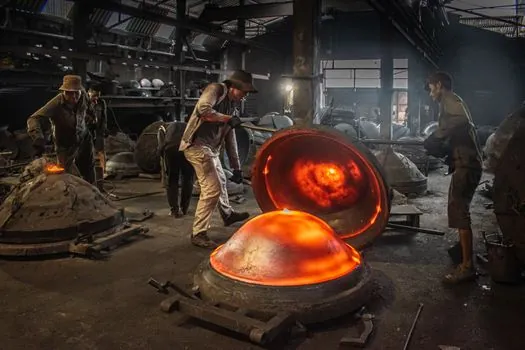
Aftermarket parts, service, hot-zone rebuilds and refractory work typically make up 50% of revenue at the top of the market, which means a buyer's real cost of ownership is governed as much by the local service footprint as by the purchase price [S3].
For a related industrial spec primer that also weighs capital cost against service-life drivers, see the pneumatic silencer TCO spec map; for buyers sourcing heat-treat furnaces into the EV drivetrain supply chain, the E-axle manufacturing quality standards guide covers the case-hardening and induction-hardening gates those programs enforce. Buyers sourcing refractory or alloy consumables for furnace linings will also want to track the ferrosilicon demand outlook, since FeSi is a key deoxidant in the steel heat-treat charge.
Decision Framework: Who the Top Tier Is For, and Who It Is Not For
AFC-Holcroft and Ipsen USA are the right suppliers for annual order values above roughly $5M USD, multi-line integration projects, and any program that requires Nadcap AC7110/12 heat-treat audits; their pricing reflects a documented SAT/TUS process and a U.S.-based field service fleet [S3]. Mid-tier builders such as Lindberg/MPH, CEC, Cooperheat and HeatTek fit custom one-off or short-run installations in the $500K to $5M band, where their application engineering is the differentiator.
Lucifer Furnaces, Grieve and laboratory-focused lines from Lindberg/Blue M (including 1100 to 1700 deg C box, tube and crucible units) are the right call for R&D labs, tool rooms, jewelry and small-batch operations where footprint and electrical service (typically 240 V or 480 V three-phase) matter more than throughput. Buyers should not specify a Tier 1 builder for a $200K box furnace, since the engineering overhead and SAT documentation will not amortize at that scale.
For component-level specifications, see heat treatment furnace, ballast water treatment, and heat detector.