A heavy-duty diaphragm wall grab costs more as trench geometry, hydraulic force, carrier capacity, and control options increase. No supported public source provides a defensible 2026 price per unit.
The comparison should separate the excavating grab from its base carrier, since a complete system combines a DHG-class grab with a duty-cycle crane or dedicated GB carrier [S2].
What Determines a Heavy-Duty Grab Price
Hydraulic cylinder force is the clearest starting point for grading a heavy-duty grab. BAUER specifies 1,200 kN or 1,800 kN for the DHG-V, while the DHG-LT uses two 450 kN cylinders, equivalent to 900 kN of combined nominal force [S2].
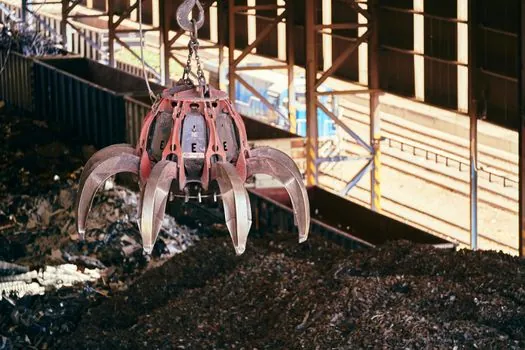
Trench size changes the steel fabrication and tooling requirement. The DHG-LT has a 2,800 mm trench length and an 800–1,500 mm width range, while the DHG-V covers 2,400–3,800 mm in length and 600–1,500 mm in width [S2].
Price also rises with vertical reach, carrier machinery and attachment complexity. A dedicated carrier is not interchangeable with a grab alone, which means a published market value cannot safely be converted into a unit price without a bill of materials.
Price Drivers Ranked by Cost Impact
The first price driver is the configured machine package. Bauer grab systems are coordinated systems comprising Bauer diaphragm wall grabs and base carriers, including an MC duty-cycle crane or GB grab carrier [S2].
The second driver is hydraulic capacity and structural weight. Moving from the DHG-LT configuration of 2 x 450 kN to the DHG-V options of 1,200 kN or 1,800 kN requires a different steel and hydraulic design, and it should not be treated as a low-cost option merely because the attachment looks similar [S2].
The third driver is working depth. The GB 80 S carrier is listed at 310 kW engine output, approximately 18.5 m height, and 80 m depth, while the GB 50 lists 280 or 310 kW output and approximately 17.3 m height [S2].
Lead time and volume tier remain quote-specific because the reviewed sources disclose no unit list price, minimum order quantity, or production lead time for 2026. Freight, taxes, commissioning, training, and local service support also require explicit quotation lines.
Grab Models Compared by Technical Capacity
The DHG-LT is the lower-force configuration within the published BAUER range. Its 900 kN combined cylinder force, 2,800 mm trench length, and 800–1,500 mm width band place it below the 1,200 kN DHG-V on nominal grabbing force [S2].
The DHG-V is the heavier-duty option, offering 1,200 kN or 1,800 kN cylinder force, a 2,400–3,800 mm trench length, and a 600–1,500 mm width range. The wider length range and two force classes give procurement teams more than a single price or capacity decision [S2].
Carrier comparison is equally important. The GB 50 provides 280 or 310 kW engine options, approximately 17.3 m height, and an optional free-fall winch; the GB 80 S provides 310 kW, approximately 18.5 m height, and 80 m depth [S2].
Market Scale Does Not Equal a Unit Price
The wider diaphragm wall equipment market was valued at $4.8 billion in 2025 and is projected at $8.1 billion by 2034, representing a 6.0% compound annual growth rate for 2026–2034 [S4]. These values cover a market, not an average selling price for one heavy-duty grab.
Hydraulic grabs represented 42.3% of that equipment market in 2025, construction applications accounted for 38.5%, and Asia Pacific held 41.2% of regional revenue [S4]. Those shares describe market composition, not unit economics for a configured rig.
The page was protected by a verification layer during collection, so its figures should be used cautiously rather than treated as a quotation basis.
What a Comparable 2026 Quote Must Contain

A comparable offer should identify one exact grab model, one force class, and one trench-width configuration. For example, a DHG-V quotation should state whether it includes 1,200 kN or 1,800 kN cylinders and whether the required panel falls within the 600–1,500 mm width range [S2].
The carrier scope must also be explicit. A GB 50 request should identify the selected 280 or 310 kW engine option and whether the optional free-fall winch is included; a GB 80 S request should state the 80 m depth basis and 310 kW engine rating [S2].
Commercial terms should separate the grab, carrier, hydraulic hoses and power pack, control package, measurement or assistance systems, installation, commissioning, training, warranty, spares, and annual service. Optional measurement technology and assistance systems are factory options, but the reviewed material does not assign them a separate price [S2].
For technical sizing, the diaphragm wall grab power pack calculation is the relevant starting point because hydraulic force is published in kN, while carrier engine output is published in kW [S2].
Applicability, Constraints, and Failure Modes
A heavy-duty hydraulic grab is suitable for excavated diaphragm walls where the contractor needs trench excavation from a purpose-built carrier or compatible crane. It is not a stand-alone complete rig, and a grab-only price cannot be compared with a carrier-mounted package without normalization. [S2]
Excavation conditions remain a critical limitation.
Two mechanical-control approaches are available. A Kelly-guided hydraulic grab uses the rig's Kelly system for mechanical guidance and stable panel excavation [S6]. The Ecan DHG-V documentation describes a grab system offered in multiple sizes and configurations, indicating that width, length, force, and application requirements must be matched rather than assumed from one catalog model [S7].
A major construction risk is pairing a grab with a carrier lacking the required working depth, pull force, hydraulic flow, or stability. A second risk is buying nominal width without confirming the structural and slurry-management requirements of the intended panel.
Total Cost of Ownership, Not Purchase Price Alone
Purchase price is only one component of the economic decision. The operating budget must cover carrier fuel or power consumption, hydraulic oil, filters, grab and tooth wear, cable and hose replacement, inspections, and planned servicing. [S2]
Productivity changes the effective cost more than catalogue options do. Bauer identifies measurement technology and assistance systems as mechanisms for improving operator workload, quality, and productivity, although no quantified savings are published in the reviewed material [S2].
Downtime risk also carries a cost. A deep 80 m carrier configuration has more value attached to uptime than a shallower package because idle equipment can suspend trench excavation, panel preparation, and concrete placement schedules [S2].
A useful monthly comparison should divide the total acquisition and operating cost by productive trench metres or accepted panels, then subtract a documented allowance for downtime. The related diaphragm wall grab rental rate method provides a practical way to compare ownership with rental exposure.
How to Obtain a Defensible Price Per Unit
A 2026 procurement request should issue separate price schedules for the grab, carrier, factory options, delivery, commissioning, service, and warranty. It should also specify the project trench length and width, required force, working depth, soil profile, and target production rate. [S2]
For the heavy-duty class, ask for the exact DHG-V force class and a carrier depth suitable for the excavation. The published benchmark is 1,200 kN or 1,800 kN for the grab and up to 80 m for the GB 80 S carrier [S2].
Requiring at least three technically equivalent quotations is more useful than accepting a single market-value figure. Normalize every offer to the same force class, width range, carrier depth, engine rating, hydraulic package, control package, delivery scope, and warranty duration.
The next trackable procurement signal is the first model-specific quotation: the DHG-V force class, trench width, carrier depth, engine rating, delivery country, and stated price per configured unit will turn this specification into a defensible comparison.