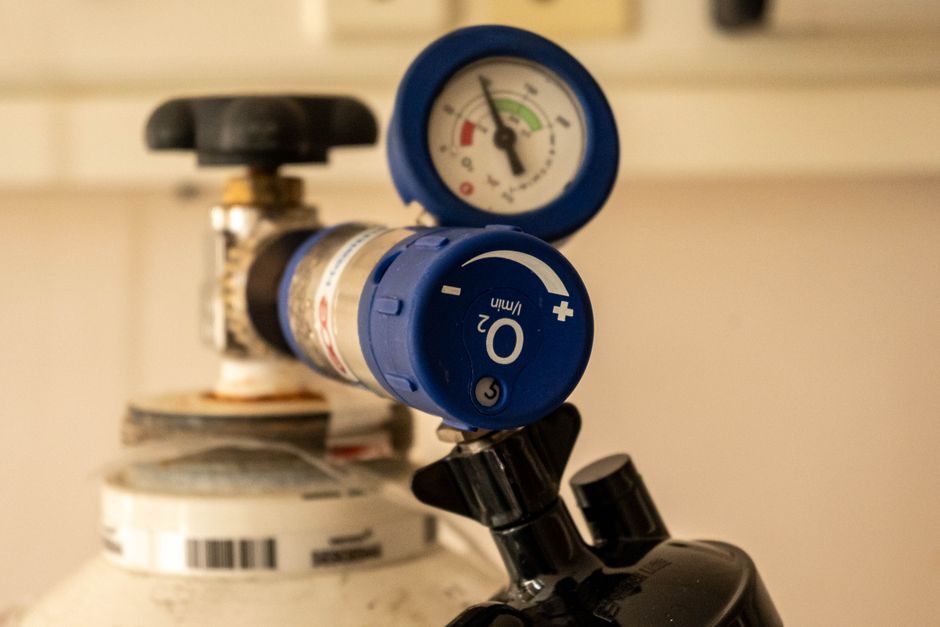
A high-pressure gas-line hydraulic valve RFQ hinges on one decision: whether the spec actually belongs to a hydraulic valve family or is a process-gas pressure-control valve being routed through hydraulics shops. Gas-duty hydraulic work usually means a safety relief valve or directional/pressure-control hydraulic valve downstream of an intensifier or accumulator, where the line fluid is nitrogen, CO2, or a process gas at 200–700 bar.
The OEM supply chain in 2026 is dominated by Chinese hydraulic-valve specialists — HanShang, Longli, Haihang, Shandong Yikaide — running 25–3600 psi product lines alongside distributors like Tri-State Hydraulics and Hydraulic Solutions of Wisconsin for North American sourcing [S4][S5][S6][S7][S8][S9][S10]. Specifying on the RFQ with that supply mix in mind is the difference between three valid quotes and seven back-and-forth clarifications.
RFQ Line 1 — Working and Proof Pressure, Spelled in Bar, Not PSI Alone
Working pressure is the only number Chinese catalogues publish unambiguously, and the 2026 spread is wide: 21 gpm directional spools rated 3600 psi (~250 bar) at Hydraulic Command Valve, 25 gpm/11 gpm dual-rated relief valves at the same 3600 psi tier [S8], and pressure-flow controllers from Hawe that pair a p-setpoint with a Q-setpoint on proportional valves with standby pressures around the standby-pressure band [S2]. Shandong Yikaide posts hydraulic balance valves for crane duty in the 33–37 USD FOB range — the cheap tier that will fail at 250 bar if a gas RFQ is misrouted there [S10].
Write the line as: <i>Working pressure P_work = ___ bar (g); Proof pressure P_proof = 1.5 × P_work; Burst = 4 × P_work</i>. For a 350 bar gas job, the proof test must be stated explicitly — omitting it invites a 1.0× proof-rated body that cracks on first hydrotest. Pump-side p-Q controls referenced in the Hawe fluid lexicon establish that a closed-load standby of roughly the order of 10–20 bar above tank is the lower bound, which matters when sizing a pressure reducing valve upstream of a gas-charged accumulator [S2].
RFQ Line 2 — Gas Service Compatibility and the Certification Stack
High-pressure gas is not the same fluid envelope as hydraulic mineral oil. RFQs that list only "hydraulic oil" get an oil-rated elastomer set (NBR/FKM) that has no business in a nitrogen or hydrogen line. Haihang Times explicitly markets "explosion-proof valves" and "pipeline safety" valves with 20+ years of valve expertise in the same product family, signalling that the Chinese hydraulic sector has split a parallel gas/explosion-proof line [S6].
The cert stack buyers should demand on the RFQ: PED 2014/68/EU for the European gas side, ATEX 2014/34/EU group II cat 2 for hazardous-area electric solenoid coils, and a material traceability cert to EN 10204 3.1 for body and trim. HanShang and Longli both publish certification pages and list a directional-control / pressure-control / flow-control product split, which is the structure a buyer should mirror on the RFQ header so the quote desk routes the line to the right engineer [S4][S5].
RFQ Line 3 — Body and Trim Material, Seated vs Metal-to-Metal
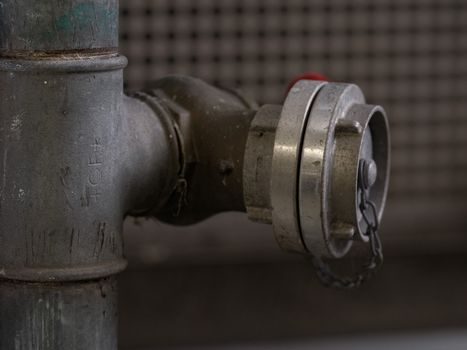
Body material drives the next 40% of price variation after pressure. Carbon steel (WCB) and 316 stainless are the practical envelope for gas hydraulics, with carbon steel dominating the 250–420 bar directional/relief lines (Shandong Yikaide balance valve, Longli directional manifolds) and stainless showing up in 17-4PH or 316L for sour-gas and H2 service [S4][S5][S10]. HanShang's industrial hydraulic valve range is described as covering directional, pressure, and flow control with corresponding material variants, but the alloy grade should be requested line-by-line, not inferred from the marketing page [S4].
Seat and seal pairing is the more failure-prone decision. Soft seats (PTFE, PEEK) give Class VI bubble-tight shutoff but cap out at roughly the 200–250 °C and 250–350 bar band. Metal-to-metal (Stellite-faced 17-4PH) is mandatory for 350 bar+ gas duty where adiabatic temperature rise during a seat-lift event destroys polymer seats on the first cycle. RFQ text should read: <i>Seat class: IV / V / VI per FCI 70-2; Seat material: PTFE / PEEK / Stellite 6; Body: WCB / 316L / 17-4PH</i>. A safety relief valve for a gas accumulator on the line above 350 bar should be specified metal-to-metal at set pressure ±3% tolerance with a 5% blowdown, not soft-seated with ±5%.
RFQ Line 4 — Flow Sizing: Q-max, CV, or Orifice Diameter
Two valid conventions exist in the market, and the RFQ has to pick one. Chinese OEM catalogues use nominal flow at rated pressure drop (e.g. 25 gpm at 3600 psi, 21 gpm at 3600 psi, 11 gpm/13 gpm dual-gpm valves from Hydraulic Command Valve) [S8]. Hawe's p-Q proportional-valve documents use a flow-rate setpoint Q as a control variable alongside a pressure setpoint p, with the superimposed performance map determining real loss [S2].
US- and EU-anchored buyers (Tri-State, Hydraulic Solutions of Wisconsin, GlobalSpec-listed hand-operated cylinder lines) tend to publish both flow and pressure rating, and the hand-operated 4-way spool valve series with spring-centered pressure-port-blocked neutral has been a benchmark reference for the flow-rating convention [S1][S7][S9]. The RFQ should require: <i>Q_max = ___ L/min at ΔP = ___ bar with fluid ___, OR CV = ___ at 1 bar ΔP per ISA 75.01.01, OR orifice diameter = ___ mm</i>. Mixing two of these conventions in the same line item is the most common cause of a requote.
RFQ Line 5 — Actuation, Fail-Safe Position, and Solenoid Certification
Gas duty forces a hard fail-safe default. Loss of pilot pressure on a gas-actuated hydraulic actuator cannot be allowed to leave the valve in an undefined state. The RFQ line must read: <i>Actuator type: solenoid / pneumatic / hydraulic pilot / manual override; Fail-safe: closed / open / last position; Solenoid voltage: ___ VDC/VAC; Coil enclosure: IP65/IP67; Hazardous area: ATEX cat __ / IECEx zone __</i>. Longli's LL265 directional solenoid directional manifold valve set with emergency manual control lever is the pattern a high-pressure-gas line should mirror — the manual override is non-negotiable on isolation duty [S5].
Power consumption and duty cycle are the silent quote inflators. Continuous-duty solenoid coils at 24 VDC and ATEX cat 2 costs roughly 3–5× a standard IP65 coil; omitting the duty-cycle field on the RFQ forces the supplier to assume continuous, which is what they will price, and you end up overpaying for an on/off block that only operates twice a shift. The Hawe p-Q control strategy explicitly defines standby pressure (about 1 bar above tank in the low-pressure standby case) and that standby behaviour is what dictates whether the hydraulic actuator needs a continuous-duty or intermittent-duty solenoid [S2][S6].
RFQ Line 6 — End Connections, Porting, and Mounting
End-connection mismatch is the most expensive single-source-of-requote in the supply chain listed. Hydraulic Command Valve publishes 3600-psi directional and relief valves in BSPP (British Standard Pipe Parallel) threading across the 11–25 gpm range [S8]. Longli and HanShang run BSPP and NPT parallel product lines, with the LL003-2L hydraulic large-flow aluminium lifting block pattern indicating a SAE-flange or cartridge-metric subfamily on the high-flow side [S4][S5].
Write the RFQ line as: <i>Port size: ___ ; Thread standard: BSPP / NPT / SAE J1926 / metric ISO 6149 ; Mounting: in-line / manifold / subplate per ISO 6264 ; Flange class: 600# / 900# / 1500# per ASME B16.5</i>. A high-pressure-gas line at 350 bar is past the ASME 600# envelope and into 900# or 1500# territory — an RFQ that lists "ASME flange" without the class number pulls in a 300# standard for the quote and a 1500# upgrade as a change order two weeks later.
RFQ Line 7 — Documentation, Test, and Traceability
High-pressure gas valves ship with a test packet, not just a datasheet. Tri-State Hydraulics' 45-year repair and replacement footprint on pumps, motors, valves, and cylinders points to a market that does hydrostatically test every repair, and buyers should expect the same envelope on new units [S9]. Required line items: hydrotest certificate at 1.5× working pressure, seat-leak test per FCI 70-2 Class ___ on every unit, material certs to EN 10204 3.1, NACE MR0175 compliance for sour service, and functional test of solenoid/pilot at 10/100 cycles.
Haihang Times' "6 national patents" claim, HanShang's certifications page, and Longli's product breadth all signal that the Chinese supply base is willing to ship this documentation packet — but only if the RFQ asks for it. An RFQ that ships without the EN 10204 3.1 line gets a commercial cert 2.1 packet, which is rejected at goods-in by most gas-side EPCs [S4][S5][S6]. The next step is to attach the valve's mating equipment spec — the hydraulic cylinder bore, stroke, and rod-side-to-blank-end ratio, since a 350 bar gas-side cylinder that the valve feeds will set the dynamic flow that the directional-control valve must handle.
This topic is covered further in EV Battery Cell Quality: 2026 Spec Map for Slurry, Coating, and Formation.