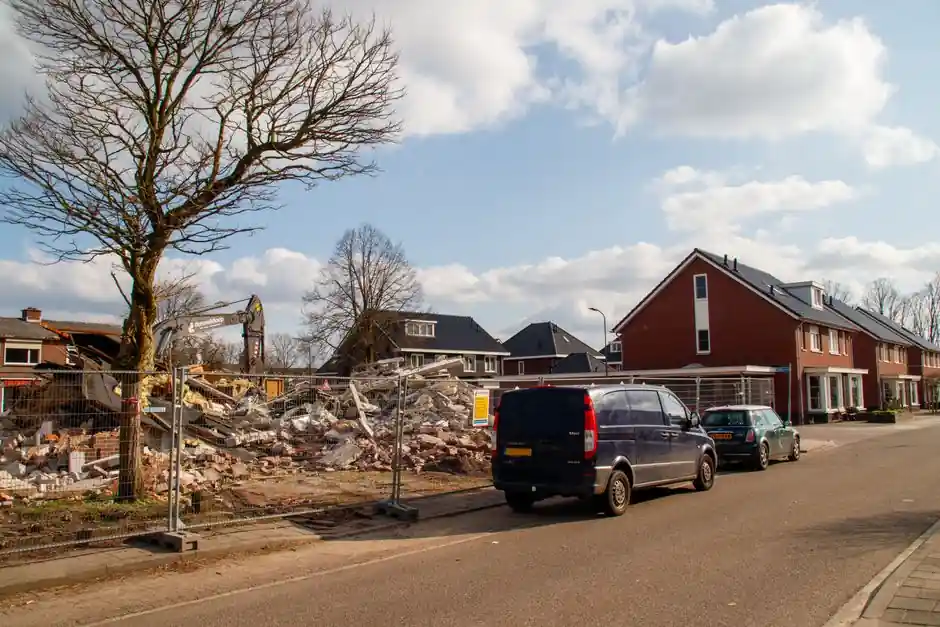
A high-reach demolition excavator is defined by an extended, multi-section boom reaching 60–100 ft or more vertically, with reinforced upper structure, modular boom, and added counterweight sized for top-down structural demolition [S5].
Long-reach excavators extend horizontal digging radius to 40–100+ ft from a standard 25–35 ft base, and are commonly used for dredging, slope work, and lower-rise demolition where a long arm sweeps rather than towers over a structure [S2][S6]. For project planners, the choice is driven by reach geometry, attachment side-load capacity, and stability envelope rather than raw boom length.
Reach Geometry and Primary Work Envelope
The defining engineering split between the two is the work envelope: high-reach excavators are optimized for vertical reach-at-height, with multi-piece front assemblies (boom, intermediate boom, stick) and modular boom sections reconfigured for different building heights [S5]. Long-reach excavators, in contrast, extend horizontal radius and stick depth for earthmoving, often paired with tiltrotators on slope work [S3].
For demolition of multi-story structures, the high-reach design pulls down upper stories in a controlled sequence from the top down, replacing wrecking-ball methods on tall work [S3]. For lower structures (under ~6 stories) and access-constrained sites, a long-reach arm with a shear or processor can complete the teardown without the cost of a modular boom swap [S2]. Reference framing for general machine categories is covered in the excavator overview.
Stability Systems and Counterweight Strategy
High-reach demolition excavators carry significantly more rear ballast than standard machines of the same base size, using fixed heavy counterweights, hydraulic or removable counterweight stacks, and extended tail designs to increase leverage behind the swing center [S5].
Undercarriages are extended or hydraulically adjustable, with longer track frames, heavier track chains and rollers, and optional bolt-on track extensions to broaden the base and reduce ground-pressure swings [S5]. The upper structure, swing bearings, frames, and boom foot areas are built to absorb the shock loads from breaking concrete and cutting steel, with Falling Object Guards (FOGS), polycarbonate windows, and guarded cylinders/hoses as standard operator-protection content [S5]. Long-reach excavators face a different stability problem: they are unstable at large radius and cannot accept the high side-twisting forces of demolition attachments, which is why many are fitted with electronic cut-off devices that restrict operating radius [S3].
Attachment Compatibility and Tool Limits

Tooling weight is tightly coupled to boom reach. A 60 ft high-reach front on a Hitachi/John Deere 300/350 class carrier or a Cat 330/336 class carrier is rated to handle a 5,500 lb tool when extra counterweight is fitted, per published package data [S4]. Ultra-high front ends reach 20–280 ft across the LRHR modular range, with a 220 ton carrier paired to a 67 m (220 ft) reach package representing the top end of the catalog [S4].
Demolition attachments (crushers, shears, processors) generate reaction forces that long-reach booms are not engineered to absorb, so specifying a long-reach arm for heavy demolition work risks boom failure regardless of lifting capacity [S3]. The reverse case is also true: a high-reach demolition front is overkill for a 15 ft ditching job and adds transport and setup cost the project does not need. Side-by-side force management on rotating attachments is similar in principle to the demolition hammer duty cycle, where peak back-pressure and idle time govern carrier sizing.
Decision Matrix: Which Machine Fits the Job
Specifiers should weight four criteria: reach direction (vertical vs horizontal), attachment side-load rating, transportability, and cost-per-meter-of-reach. A high-reach demolition excavator scores on vertical reach (60–100+ ft), attachment durability, and modular reconfiguration, but loses on transport width and capital cost [S5]. A long-reach excavator scores on horizontal reach (40–100+ ft), lower transport height, and lower purchase price, but is constrained by attachment side-load limits and electronic radius cut-offs [S2][S3][S6].
For industrial demolition above ~6 stories, tower-block takedowns, or controlled top-down sequences, the high-reach is the correct call. For river and lake dredging, pond and canal work, slope finishing, two-to-three story demolition, and over-water access, a long-reach arm is the more economical answer [S2][S3]. A 3-piece demolition boom for under-10 ton carriers offers 35 ft reach for low-rise building demolition in tight spacing environments, occupying the niche between the two extremes [S4].
Failure Modes and Operational Constraints
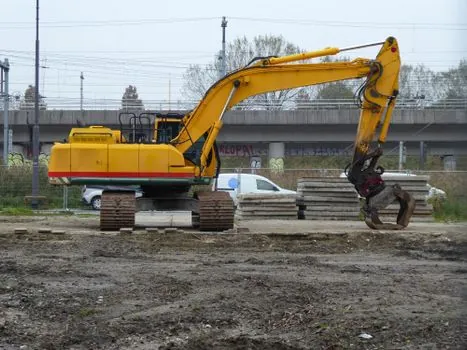
The dominant failure mode on high-reach demolition is overturning at full extension when the combined boom, attachment, and debris mass exceed the stability envelope, which is why modular counterweight and undercarriage extension are not optional [S5]. Hydraulic load monitoring and electronic radius cut-offs are now standard on long-reach machines to prevent operators from slewing into an unstable radius [S3].
Transport is a recurring constraint: ultra-high front ends (UHD) reach up to 48 m (157 ft) in operation, and machines up to 67 m (220 ft) have been delivered, which means lowboy permits, escort vehicles, and route surveys are part of the project plan, not an afterthought [S3]. Counterweight logistics, modular boom section changes, and FOGS compliance also push setup time on a high-reach job to a full shift, versus roughly half a day for a long-reach boom swap on the same carrier.
Carrier Sizing and Front-End Selection Rules
Modular demolition front attachments for excavators above 40 metric tons (88,000 lb) use a detachable main boom for transport and reconfiguration, while smaller carriers use non-modular 3-piece designs with shorter reach envelopes [S4]. An 85 ft, 3-piece ultra-high demolition front has been fitted to a Komatsu PC400 LC-7, while a 60 ft front maps to 30–35 ton class carriers with extra counterweight [S4].
Specifying a high-reach front onto an under-classed carrier is the most common procurement error: one published 80-ton high-reach package in fact requires a 120 ton carrier or larger to stay within stability limits, and OEM bulletins correct this upward [S4]. For general excavator duty-cycle framing and carrier-class selection logic, the encyclopedia entry covers the baseline size classes.
Track the next signal: UHD front ends above 70 m remain a single-vendor niche, and the 2026 delivery pipeline from European and Japanese OEMs will set the price floor for modular 60 m class booms used on standard 80–100 ton carriers. Watch for ASCE/NIOSH fall-zone guidance updates for high-reach demolition, since current practice is largely OEM-driven rather than code-driven.
Detailed specification references: reach truck.
See also our earlier report, Constantan vs Nickel-Chromium Foil Grids in Strain Gauges: A Spec-Based Selection Guide.