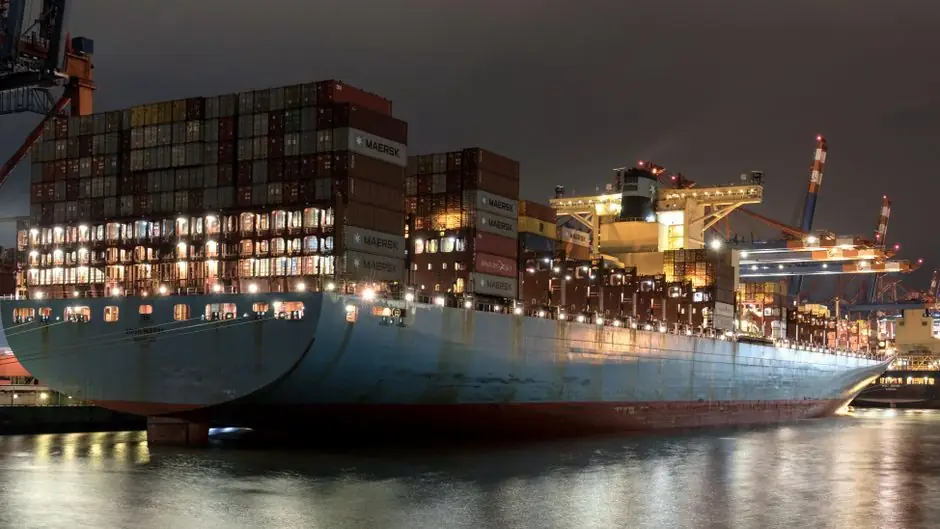
At 1 January 2026 the global tank container fleet stood at 899,044 units, up from 882,023 a year earlier, a net addition of roughly 17,000 tanks, or 1.93% year-on-year growth, per the ITCO 2026 Global Tank Container Fleet Survey reported on by Leschaco [S5].
That headline fleet number is the sum of 28,521 new tanks produced in 2025 and 11,500 units retired or pulled into static storage, with the residual net sitting at the 17,000 figure [S5]. The same survey confirms that 2024 production reached 42,123 units against 8,500 disposals, which fed 33,620 tanks to the 1 January 2025 fleet of 882,023 [S2].
Fleet Size by Year: 1992 to 2026
ITCO has tracked the global tank container fleet since 1992, with the 1 January 2021 reading at 686,650 units, 1 January 2022 at roughly 745,000, 1 January 2023 at 801,800, 1 January 2024 at 848,400, 1 January 2025 at 882,023, and 1 January 2026 at 899,044 [S2][S5][S7][S8]. Growth peaked above 8% in 2022 (8.65% on ITCO's 11th Annual Fleet Survey) before decelerating to 3.96% in 2024 and 1.93% in 2025 [S5][S9].
The deceleration tracks the chemical-industry cycle: the ITCO 2025 report cited a 6.6% decline in European chemical production in 2023, a modest 1.9% rebound in 2024, a 0.6% North American contraction in 2023 followed by 3% growth in 2024, and persistent overcapacity in Chinese petrochemicals pressuring Asian tonnage demand [S2].
Annual Production: From 54,650 in 2022 to 28,521 in 2025
Annual output has compressed across three consecutive years. The 2022 build totalled 54,650 new units, the 2024 build totalled 42,123 units, and the 2025 build totalled 28,521 units, the lowest 12-month output in 15 years per ITCO's 2026 survey [S3][S5].
Seven manufacturers concentrated in China, with one large South African plant, accounted for 93% of global tank container production in the 2022 reference year: CIMC, NT Tank, Welfit Oddy, Singamas, JJAP, CRRC, and CXIC [S3]. New supply in 2025 was bought predominantly by leasing companies rather than operators, continuing a multi-year shift in who finances the fleet [S3].
Operator and Leasing Concentration
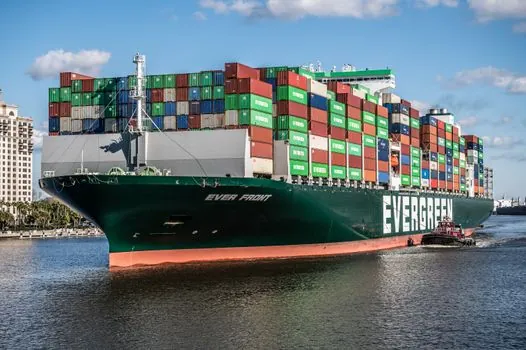
Operator consolidation is now structural: the top 10 tank container operators control just over 52% of the global operator fleet, and the top 10 leasing companies hold roughly 85% of all leased tanks at the start of 2026 [S5].
Idle inventory is a real drag on effective supply. Around 59,800 TEU, equivalent to slightly over 15% of leasing fleet capacity, sat idle at the start of 2026, marginally higher than a year earlier, reflecting repositioning friction, maintenance cycles, and delayed demand recovery rather than pure structural oversupply [S5]. Tank container disposals also lifted from 8,500 in 2024 to about 11,500 in 2025, indicating that the older cohorts of the late-1990s/early-2000s builds are now reaching replacement age [S2][S5].
Market Sizing and Forecast Bands
Three published market models bracket the tank container opportunity. Maximize Market Research puts the global tank container market at USD 1,490 million in 2025 with an 8.13% CAGR to 2034 [S3]. Mordor Intelligence sizes the ISO tank container subset at USD 297.32 million in 2026, growing at 6.65% CAGR to USD 410.19 million by 2031 [S6]. The wider container fleet market (vessels, not boxes) was USD 13.2 billion in 2024 and is projected at USD 22.3 billion by 2034 at a 5.4% CAGR, with 0.5% of vessels idle as of June 2025 and the top 10 ocean carriers controlling around 85% of the global container fleet [S4].
For chemical and food-grade shippers the practical read is that new-build lead times for standard tank container units are easing as the seven-factory China cluster cuts run-rates, and that leasing penetration continues to rise as operators prefer rental over balance-sheet capex [S3][S5].
Selection Implications for 2026 Buyers
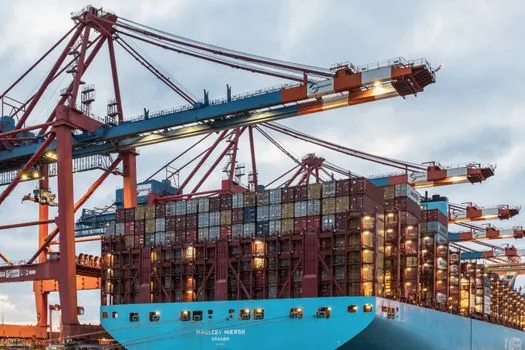
Specification work in 2026 is being reshaped by three verifiable shifts: production discipline, regulatory tightening, and a tilt toward leasing. Buyers specifying new equipment should expect easier availability of standard ISO 20 ft tank container frames than at any point since 2021, but tighter scrutiny on ADR/RID documentation and the planned phase-out of dual certification noted in the ITCO commentary [S5].
For shippers that handle food-grade or specialty chemicals, the more relevant spec axes are lining system compatibility (since the coatings industry sees thousands of new tanks entering service each year as a steady demand base), leasing rate floors (low lease rates have pulled 3PL/4PL entrants into the market on shorter lease periods), and certification scope, which has direct implications for IBC tank cross-border movement and any tank cleaning machine qualification the operator has to validate [S3][S5]. Buyers should match their scope to chemical-industry regional fundamentals: Europe is contracting, North America is stable-to-growing, and Asia is capacity-heavy but with pockets of strong inter-Asia and China-domestic demand [S2].
Limits of the Dataset
ITCO's series is the only consistent public source for the tank-container-specific fleet count and the disposal number; the USD-value figures from Maximize and Mordor use different scope definitions (full market vs ISO tank subset) and are not directly additive [S3][S5][S6]. The 1.93% fleet growth for 2025 is a net figure; gross production fell more sharply (28,521 new builds against 11,500 retirements implies a near-halving of build pace from 2024) [S5]. Operator and lessor fleet shares are headline concentrations, not audited market shares, and idle-leasing-fleet ratios can shift quickly with chemical demand [S5].
Trackable signals for the next read: ITCO's 2027 survey will report the 1 January 2027 fleet, the 2026 production total, and any change in the 11,500 retirement run-rate; ADR/RID dual-certification phase-out guidance will clarify whether the regulatory tightening flagged in 2025 becomes a binding spec change for new builds; and Chinese petrochemical capacity rationalisation will determine whether Asia's 2026 net additions stay positive [S5].
Background reading: Industrial Adhesive Batch Mixing and QC Testing: Selection, Specs, and Process Controls.