
A heavy-duty HMI’s total cost of ownership extends beyond its purchase price and includes costs such as operation, maintenance, and end-of-life management [S2][S3].
The analysis applies to industrial touch panels used for machine control, process visualization, and operator input, especially where touch response, ingress protection, optical bonding, and failure consequences affect plant performance.
What HMI Touch Panel TCO Includes
Total cost of ownership is a lifecycle calculation covering direct and indirect costs from acquisition through end of life, including procurement, operation, maintenance, replacement, upgrade, and disposal [S2][S4][S7]. For an HMI touch panel, acquisition comprises the hardware price, installation, staff training, and commissioning, while operating costs include energy, consumables, and license fees [S3].
Maintenance covers preventive work, repairs, and replacement parts, and disposal includes dismantling, recycling, and disposal fees [S3]. Downtime must also include lost production and the site-specific cost of restoring operations, not merely the cost of replacing a failed screen. Future costs should be discounted through net present value because payment timing changes their financial weight [S3].
A defensible comparison needs at least 3 common inputs: the planned service period, the discount rate, and the cost of one hour of production downtime. It also needs consistent treatment of energy, training, software, and replacement cycles. Without those parameters, two quotations can produce materially different totals from the same equipment [S2][S3].
Purchase Price Is Only One Cost Driver
That premium buys a different failure exposure and maintenance profile, so it must be tested against expected downtime and replacement costs.
System integration costs often represent 20%–50% of total touchscreen project expenses [S6]. This makes enclosure design, panel mounting, electrical connections, PLC or SCADA connectivity, software configuration, commissioning, and operator acceptance central to TCO. A lower-cost display that needs additional rework or engineering hours may therefore be more expensive after deployment [S2][S6].
Hardware-versus-software panel examples include runtime licenses of $2,500 per server, installation labor of 2 hours at $150 per hour for one configuration and 4 hours for another, and a five-year analysis period [S8]. These entries illustrate why a complete TCO model must include license, integration, and maintenance lines rather than quoting hardware alone [S5][S8].
Air-Gap Versus Optically Bonded HMIs
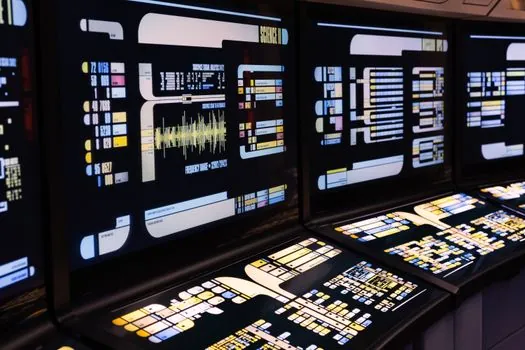
Optically bonded HMIs also remove the air gap that exposes internal condensation and makes dust accumulation more visible, reducing a named maintenance burden [S3].
The decision depends on 4 criteria rather than price alone: acquisition premium, environmental exposure, cleaning frequency, and downtime risk. Air-gap construction wins on acquisition price and remains relevant for indoor, controlled, low-consequence installations. Optical bonding fits washdown, dusty, high-availability, or mechanically exposed applications where display failure can stop a production line [S3].
For a costly line, even one avoided failure can outweigh the premium, but the calculation must use measured plant downtime rather than a generic estimate. The comparison also links panel construction to the wider industrial display selection process, where enclosure and environmental requirements narrow the viable options.
Hardware, Software, and Licensing Choices
Hardware panels can reduce integration effort, but their purchase price does not remove the need to budget configuration, communications, spares, repair, and eventual replacement [S8]. Software-based panels can increase flexibility, yet the comparison must include runtime licenses, server infrastructure, engineering labor, and administration; the example license value of $2,500 per server belongs in a 5-year model [S8].
The main options compare on 4 criteria: upfront hardware cost, integration hours, per-server licensing, and administration. A hardware approach can simplify deployment when a fixed machine function is known, while a software panel can suit fleet-wide configuration and multi-machine support. Neither is automatically lower in TCO because setup labor and licensing can offset a modest difference in display price [S8].
At the plant level, the HMI also consumes engineering effort from SCADA software integration. The TCO should count tag mapping, alarm configuration, communication setup, user access changes, and validation. A panel that works electrically but creates extra configuration hours can carry a higher operating cost than its invoice suggests [S5][S8].
Downtime, Maintenance, and Energy
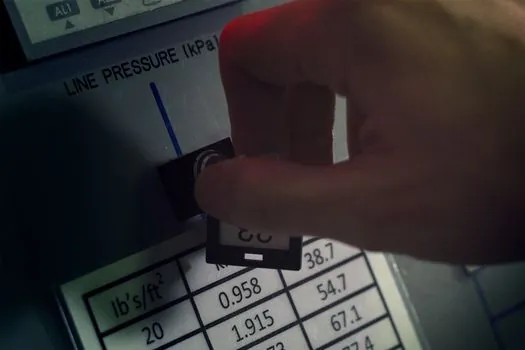
The largest TCO risk is often the cost of production interruption, including lost output, opportunity loss, and the labor required to diagnose and restore the system [S3]. The analysis should record panel age, observed failure rate, mean time to repair, spare stock, response time, and downtime cost per hour. A replacement calculation is defensible when it uses the site’s own incident history rather than an assumed interval.
Preventive maintenance, cleaning, repair, replacement parts, and disposal all belong in the lifecycle total [S3]. Optically bonded HMIs can reduce visible dust accumulation in the former air gap, potentially lowering cleaning demand, while their higher optical transmission can permit lower backlighting power [S3]. Energy savings remain small relative to machine production loss, so they should be modeled separately rather than used to conceal weak downtime assumptions.
Replacement and upgrade costs must also be scheduled across the asset life [S4]. A five-year panel that requires replacement in year 4 cannot be compared with a five-year panel supported for 8 years using the same acquisition line. The working HMI touch panel installation guide for reliable commissioning addresses commissioning quality, but commissioning time and rework belong in the TCO record because poor setup can become maintenance and downtime cost.
Building the Cost Model
A practical model separates acquisition, operation, maintenance, downtime, and disposal, then multiplies recurring costs by service years and discounts future cash flows using net present value [S3]. For each option, record the panel price, mounting and integration labor, training hours, annual energy, annual licenses, preventive maintenance, repair frequency, spare parts, downtime hours, upgrade year, and disposal charge.
Use at least 3 scenarios: baseline operation, higher-cleaning or higher-maintenance operation, and an early-failure case. Each scenario should preserve the same service period and discount rate. This makes the result auditable and prevents a favorable downtime assumption from hiding inside an apparently precise total [S2][S3].
Procurement gates also improve consistency. Chaffey College applies TCO review to technology and equipment requests above a $50,000 purchase point and tracks hardware, software, end-user expenses, and labor for long-range budgeting [S4]. A plant can adopt a simpler threshold, but the threshold, approver, and required cost lines should be fixed before quotations are compared.
Which HMI Option Fits the Application
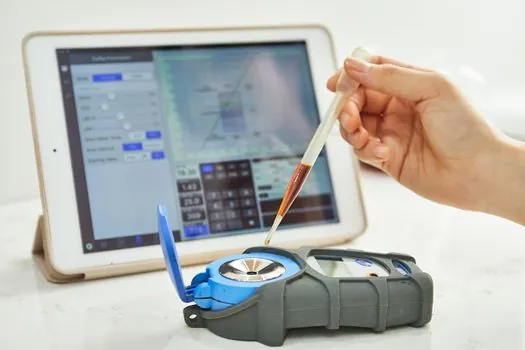
The lowest-TCO HMI is not automatically the lowest-price panel. A machine-mounted, low-consequence operator station may favor standard hardware when integration and environmental exposure are limited. A washdown or dusty application should compare a premium optical-bonded assembly against cleaning, replacement, and downtime exposure rather than purchase price alone [S3][S6].
This approach is suitable for procurement, controls engineering, maintenance, and operations teams that can share outage and labor data. It is not a substitute for functional safety validation, hazardous-area assessment, or machine risk analysis. An HMI used as an emergency-control device requires engineering review beyond commercial TCO, because the cheapest lifecycle result does not establish suitability.
Optically bonded HMIs are a stronger economic candidate when contamination or downtime carries material operating cost, but their 10% to 30% acquisition premium must be tested against the site’s own failure and cleaning record. Standard panels can remain the rational choice for controlled installations with low consequence. The procurement decision should be based on a documented 5-year or site-defined model with discounted cash flows, validated downtime hours, and named ownership for every cost line [S2][S3][S8].