
Remote I/O becomes more cost-effective when long point-to-point wiring, installation labor, and future expansion dominate the installed cost of a distributed control system [S4][S5].
The analysis must include modules, network infrastructure, engineering, commissioning, maintenance, energy, downtime, and cybersecurity, then compare those costs against centralized local I/O for the actual plant layout [S2][S6].
Remote I/O TCO Scope and Decision Boundary
Remote I/O modules move input and output points closer to field devices such as sensors, actuators, motors, and valves, and communicate with a central PLC or controller over a network connection such as Ethernet, Modbus, or a fieldbus protocol [S5].
The market value of remote I/O systems was USD 3.8 billion in 2025, with hardware representing 58.4% of revenue and industrial automation representing 41.5% of application revenue [S2]. These figures establish the scale of the hardware category, but they are not project price benchmarks and should not be used as a module quotation.
A defensible TCO model covers five cost groups: field wiring and installation, network and control hardware, engineering and commissioning, operation and maintenance, and risk allocation. Remote I/O is appropriate when I/O is geographically dispersed, the plant has many field points, or later expansion is expected. Local I/O is usually more suitable for a compact machine or process area where low latency, short wiring, and a small change envelope dominate [S4][S8].
Installed-Cost Drivers: Cable, Conduit, and Labor
Centralized I/O requires a dedicated field wire for each sensor, switch, valve, or actuator, while remote I/O can consolidate nearby points into a module and connect it through one network cable [S5].
Wire and cable purchase price is only one component of this saving. Installation labor rises with cable length, bends, terminations, tray congestion, conduit routing, and field access. Remote I/O modules place input and output points closer to field devices rather than routing every wire back to a centralized PLC cabinet, which can reduce wiring costs and installation time [S5].
Remote I/O does not remove field wiring. Each remote station still needs field cable, power, grounding, protective devices, enclosure space, and installation labor [S4][S5]. The material-cost saving therefore appears only after the complete branch is counted, not when a controller cabinet receives one network cable instead of many point wires.
For a defensible comparison, use the same field-device list for both designs, include the same number of channels and functional requirements, and price cable pulls to actual routes. A network link may reduce copper and conduit, but the module, network switch or gateway, power supply, and engineering configuration remain cost items [S2][S6].
Hardware and Protocol Selection
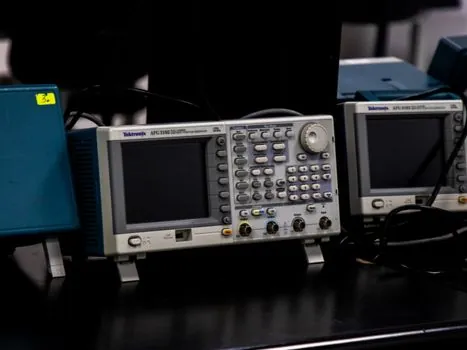
Remote I/O options must be compared on channel count, protocol compatibility, environmental rating, communications architecture, and lifecycle support, not module price alone [S6].
A fieldbus gateway can add flexibility, but it also introduces integration, configuration, and lifecycle responsibilities.
Channel density should be evaluated against the 8 vs 16 vs 32 channel remote I/O module selection criteria. A high-density module can reduce enclosure count and network endpoints, but unused channels, mixed signal requirements, spare capacity, and thermal performance determine the real installed value.
Operating Cost, Maintenance, and Downtime Risk
Remote I/O supports real-time monitoring and distributed control, which can improve fault visibility and reduce the time technicians spend tracing individual field wires [S3][S5].
Maintenance cost is not zero. Each field station may require physical inspection, module replacement, firmware or configuration management, network troubleshooting, and documentation. A network failure can also affect a group of remote channels rather than one isolated field device, so network redundancy, segment design, and diagnostic capability should be priced as risk controls rather than optional extras [S3][S6].
Energy cost is usually secondary to installation work for a small machine but can accumulate across many distributed stations and long operating cycles. The TCO model should include module power, network-equipment power, cooling, and any separate power-conversion losses. Without validated nameplate values or measured consumption, these costs should remain line items with operating assumptions rather than an unsupported universal energy percentage.
Downtime cost can dominate both maintenance and hardware cost. A failed remote module may interrupt multiple points, but local diagnostics can shorten fault isolation and replacement time [S3][S5]. Include expected spare-module stock, mean time to diagnose, mean time to repair, response time, and the production value affected by an outage in the model.
Cybersecurity also belongs in lifecycle cost. Remote I/O extends the control network closer to field equipment, making network segmentation, access control, firmware management, and device description file maintenance part of ownership risk. Protocol-specific engineering assets can be compared through the EDS versus GSD/GSDML guidance.
Cost Model for a Remote I/O TCO Decision

The strongest business case compares two complete installed designs over the same period, using net present value for capital work and annual operating costs rather than comparing catalog prices [S1][S2].
For the remote option, calculate module and chassis cost, network switches or gateways, mounting and power hardware, field cable, conduit, engineering labor, commissioning, spare parts, maintenance, energy, and downtime exposure. For local I/O, calculate rack expansion, dedicated field wiring, conduit, terminal work, engineering labor, commissioning, and the incremental space required in the control cabinet.
Three variables drive the result. First, distance and route complexity determine cable and labor savings. Second, I/O density determines how many remote stations, power supplies, and network endpoints are needed. Third, expected expansion determines whether a modular network architecture avoids future cabinet modifications and disruptive cable installation [S4][S5].
Volume affects module pricing, but the research does not provide a defensible numeric discount, so buyers should request channel and project quotations rather than extrapolate from the USD 3.8 billion market estimate [S2]. Certification, environmental ruggedization, cybersecurity features, and multi-protocol flexibility can increase module cost, while potentially reducing integration labor and lock-in risk [S2][S6].
Lead time belongs beside price because it affects installation scheduling and production disruption. The supplied research establishes that remote I/O systems expanded from a USD 3.8 billion market value in 2025 toward USD 7.1 billion by 2034 at a 7.2% CAGR, with a forecast period beginning in 2026 [S2]. Those market figures show continued supply-chain relevance, not a guaranteed delivery period or price trend.
Where Remote I/O Does Not Deliver the Expected Return
Remote I/O loses its main installation advantage when the field devices are already close to the controller, the point count is small, or the application cannot tolerate network-dependent control behavior [S4][S8].
Three failure modes recur in TCO analysis. The first is incomplete pricing, where the network cable is counted but the remote enclosure, power, switch, gateway, and field terminations are omitted. The second is false expansion value, where unused channels are treated as guaranteed future capacity despite changes in signal type or load. The third is underestimated support effort, where configuration files, spares, diagnostics, and cybersecurity controls are excluded from operations budgets [S3][S6].
Remote I/O is also not a universal replacement for local hardwired I/O. A time-critical process may justify local modules for low-latency behavior, while remote stations handle less sensitive signals elsewhere in the plant. A remote I/O module connected through EtherCAT also requires a deliberate network design rather than a simple cable substitution.
For high-density or distributed plants, the purchase decision should be based on installed cost, commissioning effort, change cost, maintenance access, and downtime exposure. For compact machines, compare the remote architecture with local I/O on a full project basis before accepting the extra hardware and network dependency.
A trackable procurement record should include cable-route lengths, I/O counts, station count, protocol choice, module pricing, engineering hours, outage assumptions, and the assumed service life. Revalidating those inputs after installation converts the TCO model into an audit trail rather than a static equipment comparison.