
Stepper motor TCO should be calculated across acquisition, installation, operation, maintenance, downtime and disposal, because a low purchase price can conceal higher lifecycle spending [S5].
The analysis applies to open-loop and closed-loop motion systems, including the stepper motor, stepper drive, power supply, mechanics and process downtime.
What Stepper Motor TCO Actually Measures
Total cost of ownership is the sum of direct and indirect costs incurred from acquisition through disposal, including installation, training, operating expenses, maintenance, repairs, downtime and decommissioning [S5]. Total cost of ownership extends beyond the purchase price to include installation, training, operating expenses, maintenance and repairs, downtime losses, and decommissioning costs [S5].
The general formula is Acquisition Cost + Installation Cost + Training Cost + (Annual Operating Cost × Years) + (Annual Maintenance Cost × Years) + (Annual Downtime Cost × Years) + Disposal Cost − Salvage Value [S5].
Actual allocation varies by asset type, industry and operating environment [S5].
Cost Drivers That Move the Purchase Price
The motor package price itself should be separated from the complete actuator package because a lower motor price can be offset by a more expensive drive, cabling, encoder, gearbox or mounting hardware.
Volume tier affects the acquisition quote, but technical requirements often have a stronger influence on part selection. Torque, speed, step angle, frame size, shaft dimensions, electrical limits and encoder requirements determine whether an existing catalog motor can be used or a custom configuration is required [S3].
A stepper system may therefore cost more to install than the motor because of mounting rework, cable routing, grounding, cabinet changes, alignment and commissioning tests.
Lead time should be evaluated alongside quoted price. A nominally lower-cost motor with a delivery delay that stops production can carry a higher total cost because engineering changes, expedited freight and lost output accumulate before the asset enters service.
Energy, Cooling and Drive Selection

For a stepper motor, energy demand depends on electrical configuration, commanded motion, load, speed, acceleration profile, duty cycle and drive efficiency, so a nameplate wattage alone cannot support a defensible comparison.
Motor selection begins with the stepper motor types compared for accurate selection, using torque-speed requirements rather than frame size alone. The drive must then match the motor voltage, current, phase arrangement and required motion profile; a mismatched stepper drive can increase losses, limit usable performance or cause repeated thermal trips.
Closed-loop operation adds sensing and control hardware but can reduce lost-step consequences and make fault detection more practical. It is not automatically cheaper: the comparison must include encoder cost, commissioning effort, cable requirements, drive settings and avoided downtime [S3]. Open-loop systems remain suitable for many stable, moderate-load applications where holding position and predictable operation justify their simplicity.
Cooling is part of the energy and installation case. A motor operated close to its thermal limit may require a larger frame, additional heat dissipation, cabinet ventilation or derating, each of which adds capital or operating cost. The economic choice is the smallest package that satisfies torque, speed, duty cycle and thermal requirements across the real load profile.
Stepper, Servo and Frameless Motor Options Compared
Hybrid stepper motors combine permanent-magnet and variable-reluctance behavior to provide precise angular positioning, while frameless torque motors remove the conventional housing and bearing systems so the stator and rotor can be integrated directly into the driven mechanism [S3]. The comparison depends on 4 decision criteria: initial investment, positioning performance, maintenance burden and lifecycle operating cost [S3].
This comparison excludes motion-control equipment costing more than USD 50,000 at Chaffey College’s formal review threshold, illustrating where a documented TCO review can materially affect capital approval [S4]. The threshold belongs to that institution’s process, not to a universal procurement rule.
Installation, Maintenance and Downtime Economics
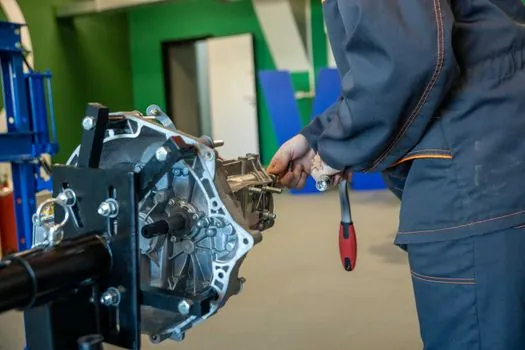
These categories should be modeled separately because a motor with a modest price increase can produce a material lifecycle advantage when it avoids repeated alignment work, replacement parts, emergency freight or production interruption.
The largest modeled cost should not be assigned automatically. Continuous process equipment with no redundant capacity can make downtime dominate, while a low-duty-cycle laboratory axis may have a different cost profile [S5]. Engineers should therefore calculate downtime using actual line rate, contribution margin, restart duration, backup strategy and the probability of failure or lost motion.
Maintenance planning should identify what physically wears, what can be inspected, and what requires electrical or control-system diagnosis. Stepper motors have no commutator, while their bearings, couplings, gears, belts and feedback hardware can still require service. A drive fault can also create motor replacement demand without physical motor damage, so troubleshooting labor and spare-parts strategy belong in the model.
Training is usually 1–5% of TCO, but its practical value depends on fault response [S5]. A small team trained to recognize overload, mechanical binding, encoder faults and drive alarms can shorten diagnosis and reduce unnecessary motor swaps. Conversely, if commissioning instructions are incomplete, the same training category can expand through repeated supplier support.
Use Cases, Constraints and Failure Modes
Stepper-motor TCO is strongest for positioning axes, indexing mechanisms, laboratory equipment, valves, feeders and other applications where incremental motion and repeatable final position matter more than continuous high-speed efficiency. A cost-benefit comparison of frameless torque motors and hybrid stepper motors specifically identifies initial investment, operational efficiency, maintenance requirements and TCO as the core evaluation dimensions [S3].
The stepper system is not the preferred economic choice when the load continuously demands high speed, regeneration, rapid reversing or substantial power loss reduction. A servo system may justify its additional control hardware when the value of dynamic performance, fault detection and avoided downtime exceeds the added acquisition and commissioning cost.
Common failure modes to price include motor overheating, lost steps under an incorrectly modeled load, mechanical misalignment, bearing or coupling wear, encoder mismatch, drive overcurrent, communication loss and unexpected duty-cycle changes. Each should map to a responsible component, preventive task, diagnostic response and production consequence before the final TCO is approved.
Uncertainty should be handled through scenarios rather than hidden assumptions. Model nominal, high-load and high-downtime cases, then test the result against energy-price changes, repair delays, duty-cycle growth and salvage-value changes. This produces a decision range that procurement and engineering can review without pretending that one forecast is exact.
How to Build the Purchase Case
A defensible stepper motor business case records the 7 lifecycle categories, evaluates at least 2 configurations, and calculates present value over the expected service period [S5]. The comparison should include motor, drive, power supply, encoder or controller, mounting hardware, mechanical transmission, electrical installation, training and disposal assumptions in one consistent boundary [S3][S5].
Start with 4 measurable design inputs: required torque, required speed, duty cycle and allowable thermal rise. Add 4 financial inputs: equipment price, installed labor, annual operating hours and cost per production hour lost. Then add 3 reliability inputs: preventive-maintenance hours, expected corrective events and mean time to restore service. These values connect engineering decisions directly to the TCO result.
Vendor quotations should be normalized for freight, commissioning, taxes, warranty and required accessories. A lower quote that excludes encoder integration, shaft adaptation or thermal hardware is not comparable with a turnkey package. TCO also supports repair-versus-replacement decisions because energy, repair frequency and downtime remain visible beside the replacement price [S5].
For a deeper control-side calculation, the stepper drive TCO lifecycle decision framework extends the same acquisition, energy, maintenance and downtime logic to the drive and power electronics.
The next engineering checkpoint should be a signed cost register containing motor and drive model codes, installation hours, annual run hours, energy assumptions, preventive intervals, downtime scenarios and service life; disagreement over any of those inputs is a specification issue before it is a purchasing issue.