Industrial holding furnaces in 2026 list on Made-in-China from roughly US$1,000 for small box-type electric units up to US$300,000 per set for large melting-and-holding combinations, with 1 Set MOQ and CE/ISO certification as the common baseline [S2][S3][S4].
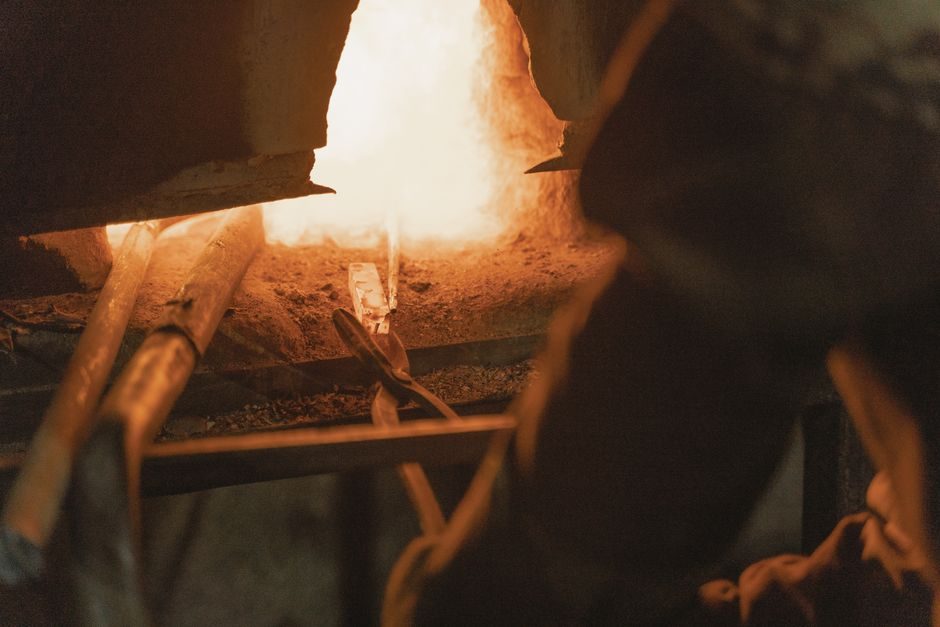
A holding furnace is a thermally insulated vessel — electric, gas, or induction heated — that keeps molten metal at pouring temperature between the melting stage and the casting/die station; the Japanese term holding furnace / holding furnace appears across JST patent corpora for both aluminum and ferrous service [S6]. This guide walks through type selection, capacity sizing, refractory class, burner/element choice, and the 2026 sourcing picture.
Definition and Scope: What a Holding Furnace Actually Does
A holding furnace does not melt a cold charge from scratch in most foundries — it buffers molten metal tapped from a primary induction furnace or crucible furnace, trimming temperature variation before the metal hits the die [S6].
2026 product listings separate three functional families: small benchtop box-type units (US$100–US$17,379.24/piece, ISO-certified, 4×16-segment programmable controllers, Type S thermocouple monitoring) [S4]; mid-size induction-heated holding units tied to continuous casting (US$10,000–US$30,000/set, copper/bronze/brass service) [S3]; and large industrial melting-holding combinations at US$44,000–US$45,000/set for gold/silver/copper and US$300,000/set for steel [S2]. Output figures from a Foshan supplier put homogenizing-furnace throughput at 5 sets/month capacity, FOB Guangdong, with L/C and T/T terms [S3].
Selection Criteria: Five Gates Before You Spend a Cent
Gate 1 — Melt type and chemistry: aluminum, copper-alloy, zinc, and ferrous melts each have different refractory attack profiles; the Japanese patent corpus explicitly distinguishes aluminum melting holding furnace (aluminum), metal casting holding furnace (casting metal), and crucible-type melting holding furnace (crucible-type) as separate design classes [S6].
Gate 2 — Capacity vs holding power: 2026 mid-size units run 1 Set MOQ at US$10,000–US$30,000 for copper/brass/brass continuous-casting duty; large 2026 industrial melting-holding furnaces sit at US$44,000–US$45,000/set for non-ferrous and US$300,000/set for steel [S3][S2]. Picking a 5-ton class holding unit when you only need 1 ton inflates refractory and burner cost for zero process benefit.
Gate 3 — Energy source: gas-fired horizontal box furnaces with steel-molding duty list at US$5,000–US$20,900/piece with CE/ISO [S4]; vertical electric induction units for steel-melting holding sit at US$300,000/set with CE and ISO [S2]. Electric units win on emissions and indoor siting; gas wins on kWh cost where natural gas is cheap.
Gate 4 — Refractory and lining life: high-alumina, silicon carbide, and magnesia-based linings dominate, but the choice is chemistry-driven, not price-driven — aluminum attacks silica, basic melts attack alumina, and a wrong lining cuts campaign life from years to weeks.
Gate 5 — Certification and QA: CE plus ISO 9001 is the default in 2026 Chinese industrial listings [S2][S4]; TUV-marked Saftherm units also appear in the box-furnace category at US$1,000–US$36,800/piece for buyers who need the third-party mark [S4].
Type Comparison: Box, Induction, Gas, Crucible, Homogenizing
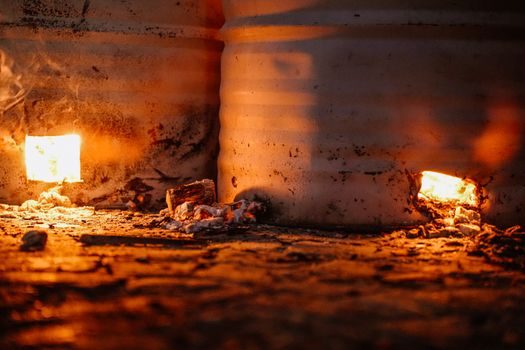
Box-type electric (benchtop to industrial): horizontal or vertical chamber, resistance-element heated, US$100–US$36,800/piece, CE/ISO/TUV options, 4×16-segment programmable, Type S thermocouple, manual or top exhaust [S4]. Best for heat-treatment, lab, and small-batch aluminum holding.
Induction-heated holding + continuous casting: medium-frequency coil around a refractory-lined shell, US$10,000–US$30,000/set for non-ferrous continuous casting lines [S3]. Pairs naturally with a separate induction furnace for melt + hold duty.
Gas-fired industrial holding: US$5,000–US$20,900/piece horizontal configuration for steel molding, plus dedicated gas-fired units for aluminum melting-and-holding in the US$258,000–US$300,000/set range with L/C, T/T, FOB Foshan, 5 sets/month throughput [S4][S2].
Crucible-type: small-batch crucible-type (crucible) holding is a distinct patent class in the Japanese record and is the typical geometry for jewelry, gold, silver, and short-run copper-alloy work where metal volume is small and changeover is frequent [S6].
Homogenizing furnace: technically a different thermal-soak function (longer dwell, narrower ΔT) but is often sold on the same supplier line as holding equipment — Foshan pricing sits at US$253,000/set for 3+ sets, US$258,000/set for 1–2 sets, with the supplier shipping 5 sets/month [S3].
Use Cases: Which Job Goes to Which Holding Furnace
Aluminum die-casting cells: a small gas-fired or electric holding unit paired with a crucible furnace melt source; the holding furnace's job is ±5 °C bath control at the launder, not melt throughput. 2026 supplier data shows multiple Chinese mills offering CE/ISO aluminum-melting-and-holding combinations in the US$258,000–US$300,000/set bracket [S1][S2].
Copper and brass continuous casting: induction-heated holding plus casting machine packages list at US$10,000–US$30,000/set, 1 Set MOQ, Shanghai supply base [S3]. The induction coil handles both temperature trim and stirring, which matters for brass to avoid zinc-rich segregation.
Steel-mill tundish and mold buffer: large electric or gas-fired units at US$300,000/set with CE/ISO, vertical placement style, industrial range — these are not "holding" in the small-shop sense, they are 50–200 t class buffers between EAF/BOF and continuous caster [S2].
Heat-treatment and aging: small box-type electric furnaces with programmable 4×16 segments and Type S thermocouples handle low-temperature aluminum aging (T6) and precipitation work; 2026 pricing is US$100–US$17,379.24/piece with TUV options for European buyers [S4].
Limitations, Failure Modes, and Sourcing Reality
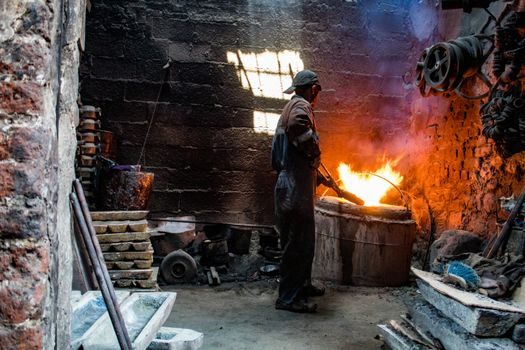
Refractory attack is the dominant failure mode — melt chemistry mismatch halves lining life, and 2026 sourcing data does not surface lining composition in the public listing; you must request it in the technical datasheet (common to all reviewed Made-in-China product cards) [S1][S2].
Energy cost asymmetry: 2026 residential-furnace U.S. pricing (US$2,000–US$14,200 installed) is irrelevant to industrial buyers, but the cost-of-installation framing still applies — refractory dry-out, burner commissioning, and stack-test add 10–25% above the listed furnace price [S5].
MOQ and payment friction: 1 Set MOQ is standard, but large melting-holding combinations (US$258,000–US$300,000/set) usually ship L/C or T/T with FOB terms and 5 sets/month capacity, so lead time is production-window-bound, not stock-bound [S3][S2].
Cross-vendor comparison: Jiangsu Huahong Technology and Shanghai AXD Heavy Machinery both list 1-Piece / 1-Set MOQ at US$10,000–US$59,000 for metal-recycling-machine category holding units, with Diamond Member and Audited Supplier status; the 2026 Made-in-China supplier count for "electric furnace" alone is 16,296, so filtering on certification, refractory disclosure, and post-sales service is the only way to cut noise [S1][S2].
Standards, Specifications, and Where to Lock the Spec
CE marking (European conformity) and ISO 9001 (quality management) are the two certifications that recur across every reviewed 2026 industrial holding-furnace listing [S2][S3][S4]. TUV appears on higher-end box-furnace units and matters for German/EU end-users [S4].
For aluminum-line retrofit and extrusion-mill sourcing economics, the broader 2026 aluminum market — extrusion pricing, container-house tube supply, and furnace retrofit cycles — is tracked in our aluminum industry 2026 extrusion pricing brief, which complements this guide on the holding-furnace side. For the upstream melt source that feeds the holding furnace, the line-frequency induction furnace 2026 buying guide and the gas-fired aluminum melting furnace 2026 buying guide cover the matching capacity and burner gates.
Inside the spec, lock the following before signing a PO: melt chemistry, hourly throughput, holding temperature window (typical 660–720 °C for Al, 1150–1250 °C for Cu-alloy, 1500–1600 °C for steel), refractory material and lining thickness, burner/element type and rated input kW or Nm³/h, control architecture (segment count, thermocouple type, atmosphere or top-exhaust), CE/ISO/TUV certificates, and refractory dry-out / commissioning scope.
Trackable signals for the next sourcing cycle: 2026 holding-furnace lead times on US$258,000+ melting-holding combinations running at the 5 sets/month capacity disclosed by Guangdong suppliers [S3]; any change in CE/ISO disclosure rate on box-type listings above US$20,000 [S4]; and the spread between 1–2 Set and 3+ Set pricing on homogenizing-furnace bundles, which currently sits at a US$5,000 delta at the Foshan supplier [S3].
For component-level specifications, see holding furnace.