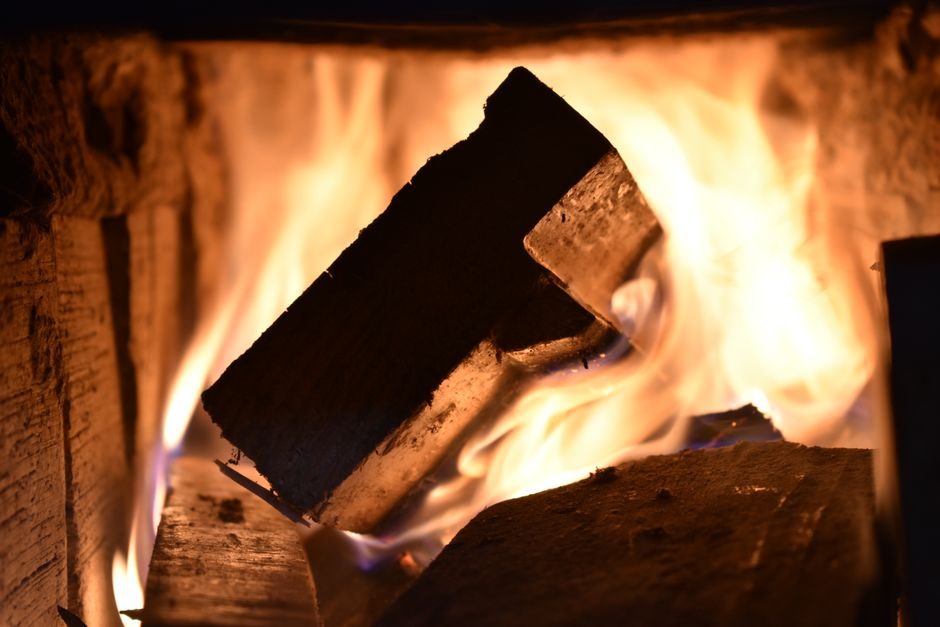
Gas-fired aluminum melting furnaces specified for 2026 production runs typically deliver 0.5-10 t/h melt rate from a 700-1250°C working zone, with natural gas or LPG burners sized to the bath area and refractory-fiber plus fired-brick composite linings rated for cyclical aluminum service [S2].
The format dominates secondary smelters, die-casting foundries, and remelt shops because gas fuel gives the lowest kWh-equivalent cost per ton of aluminum at sustained 800-1000°C bath temperatures, provided NOx and CO emissions fit the local air permit. Buyers in 2026 need to lock alloy mix, hourly throughput, NOx cap, and the question of reverb versus crucible geometry before they even look at burner OEM lists. Cross-reference the melting furnace reference first, then narrow to gas aluminum melting furnace variants.
Reverberatory vs Crucible vs Stack: Geometry Choice Sets Everything Else
Reverberatory (reverb) furnaces fire over a shallow bath from an end- or side-mounted burner and recover 35-55% thermal efficiency in 5-30 t holding-melt applications, making them the default for casthouse operations running 6061, 6063, A356, and ADC12 [S2]. Crucible (shaft or pot) units use a replaceable SiC or cast-iron crucible charged from the top, fit 0.1-2 t batches, and are standard for die-casting cells and small job shops. Stack melters (shaft + reverb hybrid) push 60-70% efficiency on clean scrap by preheating charge on the way down to the bath, but they demand consistent scrap sizing and a higher capital outlay.
For an aluminum alloy melt with high Mg or Be content, a reverb with low-iron hearth refractories avoids oxide pickup. For foundries running A380 / ADC12 with high Cu, the higher iron pickup of a steel-clad crucible is irrelevant to the spec, so the lower-cost crucible route wins. Throughput target is the deciding metric: below 1 t/h, crucible; 1-5 t/h, reverb; above 5 t/h with continuous feed, stack or twin-chamber reverb.
Burner System, NOx Ceiling, and PLC Control Stack
Natural-gas burners on 2026-spec gas-fired melting furnaces use staged air-fuel or oxygen-enriched geometry, with PLC-controlled pulse-firing or modulating valves holding bath temperature within ±5°C. The gas-fired reverberatory example published by a Chinese OEM shows a 12000×7000×4200 mm chamber, 1200°C rated temperature, 350 t max charge, and 12 high-speed auto-controlled burners fed by compressed natural gas (CNG), computer-controlled via PLC [S2]. Smaller reverb units typically run 4-8 burners and modulate via motorized butterfly valves on a 4-20 mA loop.
European and California foundries in 2026 face NOx caps in the 50-100 mg/Nm³ range at 3% O₂ for new installations, which forces low-NOx burner geometry (staged or flameless) and often a recuperative air-preheat to 300-450°C. Chinese and Southeast Asian sites without aggressive NOx limits still specify conventional burners, but almost every 2026 OEM offers an SCR-ready PLC rack and O₂ trim as a standard option. Buyers should confirm CE / GB / NFPA 86 burner-management compliance before signing a PO.
Refractory Lining: Fiber Face + Fired-Brick Backup is the 2026 Default
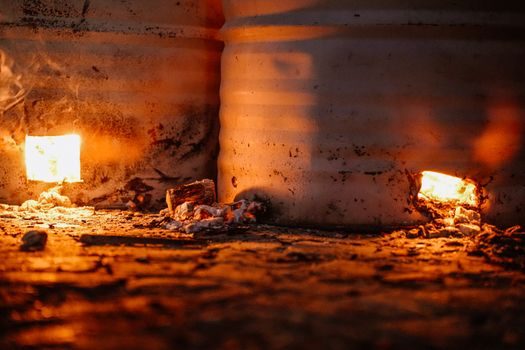
The published 2026-era gas-fired furnace spec uses a steel-bar-and-plate frame, refractory-fiber inner lining, and a hearth of refractory bricks (often fireclay or high-alumina) backed by ceramic-fiber board [S2]. The split exists because the bath zone sees molten aluminum contact plus dross attack, where dense fired-brick resists metal penetration; the wall and roof zones see only radiant heat, where 1400-1600°C ceramic-fiber modules cut shell loss and shorten heat-up time. For full refractory reference, see the fired-brick data page.
Buyers should treat the lining as a wear part: campaign life on a reverb hearth runs 12-36 months depending on bath temperature, dross-skim frequency, and Fe contamination in the charge. A 100 mm fiber module + 230 mm high-alumina brick on the hearth + 50 mm microporous board behind the steel is a representative 2026 build. For cast-iron crucible units, the crucible itself is the consumable — specify SiC for higher bath temperatures and longer life, cast-iron for lower cost and easier replacement.
Throughput Math, Energy Cost, and 2026 Sourcing Levers
Gas-fired reverberatory furnaces typically consume 60-90 Nm³ natural gas per ton of aluminum melted from cold charge (60-75 Nm³/t on hot-charge reverb), versus 600-700 kWh/t for an equivalent electric induction melter. At 2026 industrial gas prices in the $0.30-0.45/Nm³ band, that puts gas-fuel cost at $18-40/t melted — roughly one-third to one-half of an equivalent electric-arc or induction melt, before capex amortization [S2].
Sourcing levers in 2026: Chinese OEMs (Made-in-China, Alibaba Industrial) list 0.5-10 t/h reverb units at roughly $80,000-450,000 ex-works depending on tonnage, lining tier, and burner OEM; European builders (StrikoWestofen, OTTO Junker, Italimpianti) sit 1.5-3× higher but ship with CE documentation, low-NOx burners, and integrated O₂/CO trim. For buyers weighing induction alternatives, the induction furnace 2026 cost guide is the natural cross-reference point. Lead time is 12-20 weeks for Chinese units, 26-40 weeks for European, and 8-14 weeks for North-American rebuilds of used equipment.
Spec Comparison: Three Furnace Types Across Four Buying Criteria
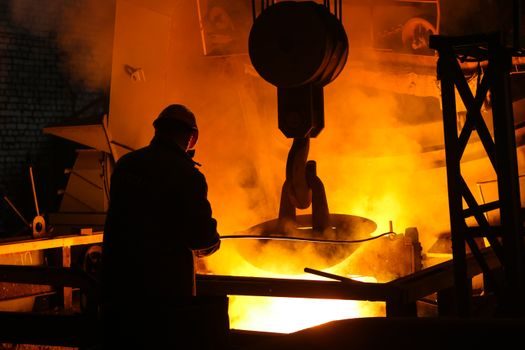
Reverberatory units dominate the 1-30 t/h band for casthouses running 6063 extrusion billet, A356 wheel-foundry ingot, and ADC12 die-cast melt, with refractory-fiber + fired-brick linings and PLC burner staging as the default spec [S2]. Crucible furnaces fit the 0.1-1 t/h die-casting-cell range with simple top-charge geometry and replaceable SiC pots. Stack melters (shaft + reverb) win on continuous-feed scrap-remelt operations above 5 t/h where preheated charge economics beat the simpler reverb. Electric induction competes wherever power cost is below $0.05/kWh or where the shop needs clean, low-turbulence melt for high-Mg alloys.
Buyers running clean extrusion scrap should pick stack; buyers running mixed automotive shred should pick reverb; buyers running 24/7 die-cast cells should pick crucible with two pot positions for hot swap.
Standards, Permits, and Buyer Checklist for 2026 POs
For 2026 deliveries, North-American buyers should specify NFPA 86 (oven and furnace safety), ASME Section I or VIII pressure-code compliance for the combustion chamber, and EPA NSPS Subpart Cf for new or reconstructed affected facilities; European buyers should confirm CE Machinery Directive 2006/42/EC, ATEX zoning on the burner enclosure if dusty, and the EU Industrial Emissions Directive 2010/75/EU for emission ceilings. Chinese-built units exported to Europe typically need retrofit on burner-management (usually a Siemens LM14 or Honeywell EC7890 replacement) to clear CE inspection. [S1]
Final pre-PO checklist: (1) confirm bath dimensions match existing pit or floor footprint plus 1.0-1.5 m clearance on each side for dross-skim and launder access; (2) lock burner OEM and NOx guarantee at 3% O₂ dry; (3) confirm PLC platform (Siemens S7-1500, Allen-Bradley CompactLogix, or domestic equivalent) and remote-diagnostics option; (4) verify lining sub-supplier and campaign-life warranty in writing; (5) request a third-party thermal-efficiency test under ISO 13577 or equivalent at site acceptance. Plants running 24/7 should also spec a second burner train for hot standby, which adds 15-25% to capex but eliminates single-point-of-failure shutdowns on a multi-million-dollar melt deck.
For adjacent buying decisions in 2026, see the helical gear reducer 2026 buying guide, which covers the burner-air-fan drive train that sits behind every gas-fired melter.