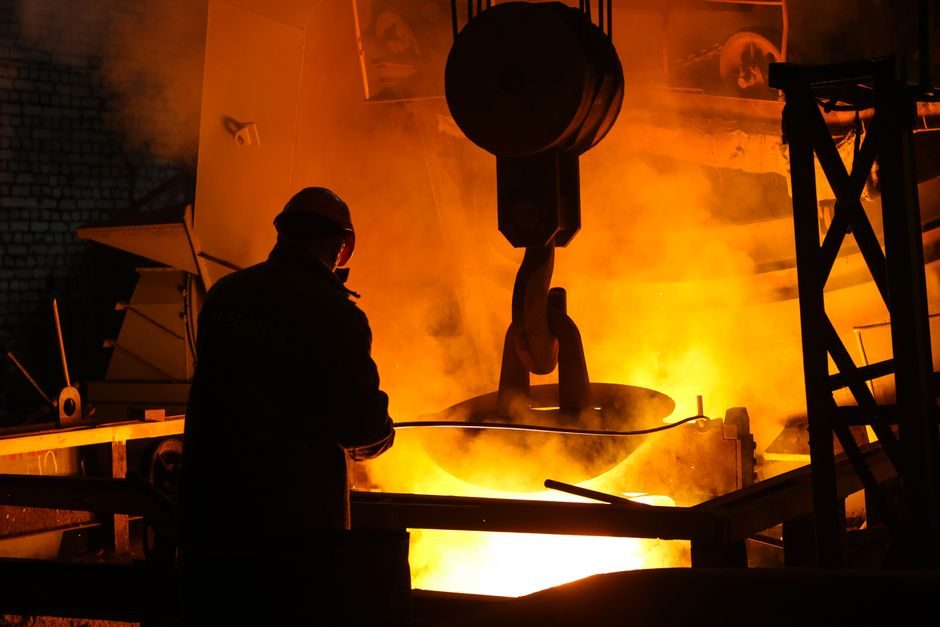
Line frequency induction furnaces (LFI) operate directly on mains 50 Hz or 60 Hz supplies without an intermediate frequency converter, delivering typical batch capacities of 0.1 t to 10 t for iron, steel, copper, and aluminium melting under 1250 °C, with a simpler drive train and lower capital cost per kW [S1][S3].
Melting furnaces in the broader B2B sense cover induction, gas, and resistance-fired units; against a line frequency induction furnace, a generic melting furnace spans smaller laboratory crucibles up to 50 t holding furnaces, with energy consumption commonly in the 550–700 kWh/t band for LFI iron and 380–500 kWh/t for gas-fired aluminium [S2][S4].
Operating Frequency, Capacity Range and Power Density
Mains-frequency units built around 50/60 Hz work on 380 V, 415 V, 600 V or 6 kV–10 kV supplies; inductor current density is held below typical medium-frequency figures to avoid molten metal lifting against the coil, so LFI furnaces ship in larger physical casings than medium-frequency equivalents of the same capacity [S1].
Standard LFI offerings on the export market are quoted from 0.1 t laboratory crucibles through 0.5 t, 1 t, 2 t, 3 t, 5 t up to 10 t batch sizes, with 1-ton medium-frequency units often listed as 250 kW–500 kW at 1 kHz–20 kHz in the same product pages [S2][S4].
For comparison, the induction furnace family splits into three frequency bands: mains 50/60 Hz, medium 1 kHz–20 kHz, and high 50 kHz–500 kHz; only mains units eliminate the rectifier-and-inverter stage that drives mid-band capital cost up 25–40% [S6].
Selection Criteria: Metal, Batch Size, Power Budget
LFI is the right answer when the production mix is dominated by cast iron, carbon steel, or large aluminium ingot/billet remelting, batches run above 1 t, and the plant has a 600 V or 6 kV–10 kV bus plus tolerance for electromagnetic stirring; it is the wrong answer for small jewellery casters, thin-walled die casting alloys sensitive to bath motion, or shops lacking a high-voltage tap. [S1]
Medium-frequency units win for batch sizes below 1 t, for super-alloy and stainless grades needing low-turbulence melts, and for foundries running four or more furnaces that need to share a single medium-frequency converter and match melt rates to a downstream molding line.
A side-by-side LFI vs medium-frequency vs gas-fired gas aluminum melting furnace on the same 1 t aluminium batch puts the line-frequency unit at roughly 500–600 kWh/t electrical, medium-frequency at 420–480 kWh/t, and gas at 38–45 m³/t of natural gas, with electrical LFI purchase price typically 10–20% below medium-frequency at equal furnace tonnage [S2][S3].
Real Use Cases Drawn from 2024–2026 Export Catalogues
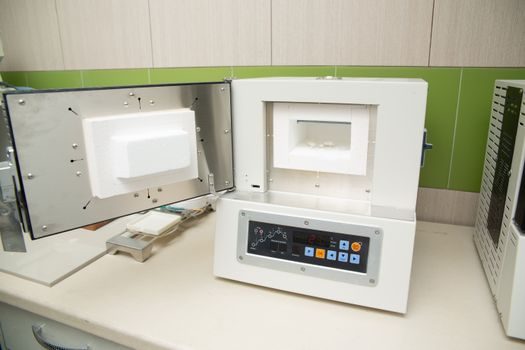
Customs export records for HS heading 8714 1000 90 list a "nonferrous crucible energy saving line frequency induction aluminium melting furnace" as an active category, with manufacturers specifying crucibles sized 0.5 t–5 t for aluminium [S3].
Okorder product listings for "medium frequency induction furnace induction melting furnace 1 ton" advertise 25–120 day delivery windows and plywood-case export packing, indicating the medium-frequency 1 t class is the most heavily traded segment globally in 2025–2026 [S2].
A second Okorder entry for the medium frequency induction furnace melting furnace reiterates that medium-frequency units are the default class for melting steel and cast iron when the foundry's mains connection cannot absorb a 0.5–2 MVA LFI load in one drop [S4].
Limitations, Stirring, and Refractory Life
LFI baths exhibit strong electromagnetic stirring because of the low operating frequency, which is an advantage for alloy homogenisation but a disadvantage for alloys with high dross formation: aluminium foundries have measured dross losses 1.5–2× higher on LFI than on gas-fired reverb [S3].
Refractory life on a LFI iron furnace lining typically runs 200–400 heats versus 300–500 heats on a comparable medium-frequency coreless unit, with the difference driven by deeper coil-side bath penetration of the 50/60 Hz field; furnace bodies are correspondingly larger, so footprint per ton of capacity is 1.2–1.5× that of a medium-frequency shell of equal nominal tonnage [S1].
Equipment selection must also account for the automatic molding line throughput downstream: when moulds demand a steady 4 t/h–6 t/h of liquid iron, two 3 t LFI shells powered alternately are typically cheaper than four 1 t medium-frequency furnaces on a shared converter, even at higher per-ton energy use.
Sourcing, Standards, and 2026 Procurement Reality
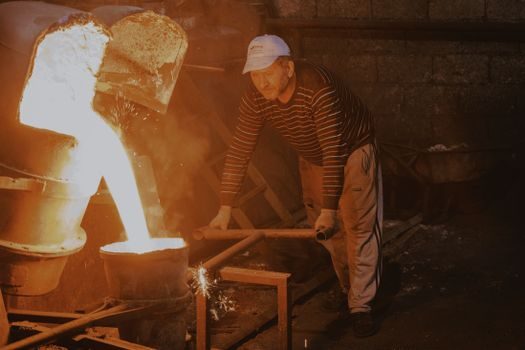
Export packaging for both classes follows plywood-crated, nude-frame standards with delivery 25–120 days, customs HS code 8514 10 for induction furnaces and 8514 30 for other industrial furnaces, and shipping classed as plywood-case for FCL and nude for flat-rack depending on the order [S2][S4].
For the broader selection flow inside a 2026 procurement cycle, the practical pre-RFQ gates are covered in the line frequency induction furnace selection 7 gates before RFQ walkthrough, and the parallel line frequency induction furnace 2026 buying guide mains-frequency class capacity digests the same class at catalogue level.
Foundries already leaning toward cupola or medium-frequency induction instead of LFI can cross-check with the induction furnace vs cupola furnace spec cost and selection cut reference, which lines up emissions, capex per ton, and refractory life on the same axes used here.
Decision Verdict and Trackable Signals
Choose LFI when mains 50/60 Hz is available, batch size is above 1 t, the metal mix is cast iron or standard aluminium alloys, and capex per ton is the binding constraint; choose medium-frequency when batches drop below 1 t, alloy sensitivity to bath motion is high, or the plant needs to share one power supply across multiple furnaces. [S2]
Watch two trackable signals in the second half of 2026: customs declarations under HS 8514 10 for LFI aluminium crucibles in the 0.5 t–5 t band, and delivery lead-time drift on 1 t medium-frequency Okorder listings beyond the current 25–120 day range [S2][S3][S4].