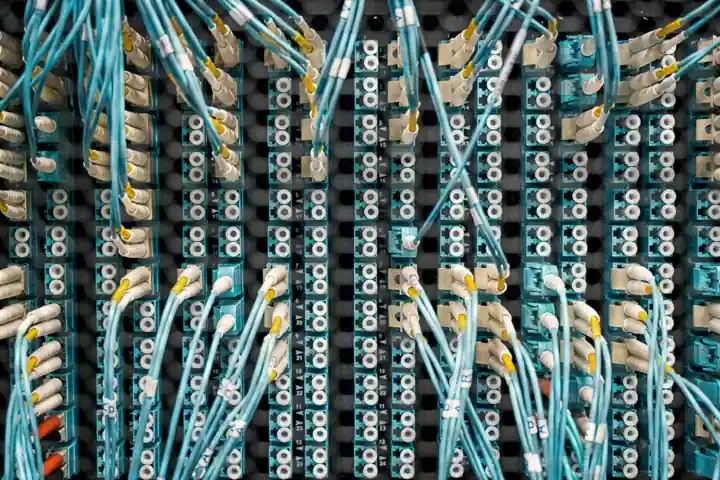
Specifying a holding furnace for a telecom enclosure die cast cell is a low-tonnage, high-cleanliness problem: most outdoor enclosures (cabinets, RRU housings, base-station chassis) are cast in Al-Si alloys such as A380 or A383, which melt near 577-660 °C and are typically held at 660-720 °C before shot, and the holding furnace becomes the last thermal and metallurgical buffer between the melter and the cold-chamber die cast machine [S2][S5].
Telecom volume is moderate (often 200-2000 kg/h molten metal demand per cell), so the unit must hold rather than melt, and selection criteria are bath-temperature uniformity, inclusion settling behaviour, refractory life, and footprint inside a clean factory room, not raw melting throughput [S1][S2].
What the furnace must do in an Al-Si enclosure line
For non-ferrous Al-Si alloys, the classic definition of a holding furnace is a refractory-lined vessel that holds molten aluminium at a controlled temperature, ready to feed the die cast machine at a steady rate; it is not a melter, and it is normally sized at 0.5-3 t capacity for a single enclosure cell [S4][S5].
Aluminium holding furnaces in the 2026 China export catalogue are listed at US$108,000/set for 1-2 sets, dropping to US$103,000/set at 3+ sets FOB Foshan, with a quoted monthly production capacity of 5 sets per supplier; payment is normally L/C or T/T, and 1-2 month lead time is typical for build-to-order [S1]. Fixed (non-tilting) designs are the common case for Al-Si enclosure work, paired to a launder or dosing furnace feeding the shot sleeve [S4][S5].
Selection criteria mapped to enclosure quality
Pick the furnace on four engineering gates, not on price: alloy compatibility, capacity vs cycle, temperature uniformity, and clean-metal performance. Aluminium holding furnaces are explicitly marketed for non-ferrous melting and holding, and for supporting die casting operations in particular [S5].
Capacity rule of thumb: size the bath at 1.5-2× the hourly die cast demand so that a 30-60 min holding window is available for inclusion settling and temperature recovery after a ladle transfer. For a 600 kg/h Al-Si enclosure cell, that points to a 1.0-1.5 t bath, which is the dominant size band shipped out of Guangdong for cast aluminium duty [S1][S5].
Temperature uniformity: specify ±5 °C across the bath, because Al-Si alloys in the 660-720 °C working window are sensitive to silicon-rich primary phase precipitation if the bath drifts low, and to hydrogen pickup and oxide formation if it drifts high; resistance-heated (electrical) and gas-fired reverberatory designs are both used, with electric resistance favoured in indoor telecom plants for clean-room noise and emission reasons [S5].
Clean-metal performance: for pressure-tight or RF-tight enclosure castings (e.g. RRU housings, filter cans), select a stationary, shallow-bath design that promotes gravity settling of non-metallic inclusions, because deeper induction baths are stirred electromagnetically and behave against Stokes settling, as documented in Pechiney CRV work on Al holding [S2].
Stationary vs tilting vs induction: the three main options
Three holding-furnace architectures compete for telecom enclosure duty: stationary (fixed) resistance or gas-fired, tilting resistance, and induction. Each maps to a different trade-off in cleanliness, footprint, and temperature control. [S2]
Comparison on the four gates that matter for an Al-Si enclosure cell: (1) Stationary resistance/gas-fired: lowest cost (the US$103-108k Foshan price band applies here), shallow bath that aids Stokes settling, simple refractory, but needs a separate launder/dosing furnace to feed the die cast machine; (2) Tilting: convenient for direct pour into the shot sleeve on small cells, but tilting disturbs the settled metal layer, so settling time is lost every cycle; (3) Induction: compact, precise ±2-3 °C control, deep bath, but electromagnetic stirring keeps inclusions in suspension and reduces the benefit of holding time, so it is generally chosen only when space is tight and metal cleanliness is verified upstream [S2][S5].
For most telecom enclosure work, the stationary resistance-held bath plus a small dosing/transfer furnace in front of the cold-chamber machine is the conservative default, because it gives the 30-60 min settling window the Pechiney study showed as necessary for non-metallic inclusion drop-out, while keeping temperature inside ±5 °C [S2][S5].
Standards, refractory, and furnace-room layout
For a 1-2 t Al-Si holding furnace, the realistic utility demand is 30-60 kW connected for electric resistance heating, 3-phase 380 V (or 400 V EU/415 V export), plus compressed air or electric actuator for the dosing furnace spout, and a small extraction hood (~0.5 m³/s) if gas-fired. Floor loading works out to roughly 4-5 t/m² for a 1.5 t unit including refractory and steelwork, so most existing telecom-grade casting shops can accept it without piling [S1][S5].
Limits, failure modes, and what the holding furnace cannot fix
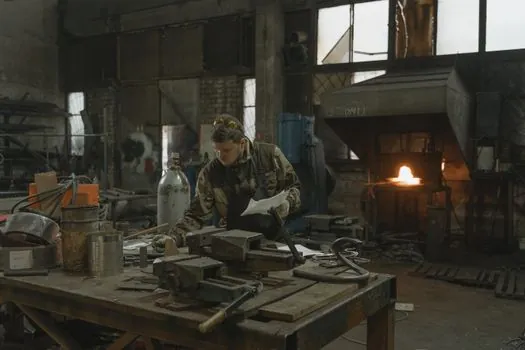
The 1990 Pechiney CRV work made a hard point that still applies in 2026: holding is not a substitute for upstream cleanliness, and the settling behaviour does not follow Stokes's law because thermal convection keeps inclusions in motion, so absolute filter claims on the holding stage are unjustified [S2]. Translated to a modern enclosure line, the holding furnace is a buffer and a settling stage, not a purifier; dirty metal in still means dirty castings out, and the practical ceiling on inclusion reduction is set by bath geometry, hold time, and convection pattern rather than by the furnace brand [S2].
Common failure modes in service: (1) refractory erosion at the bath sidewall after 12-24 months in a 1.5 t Al bath held above 720 °C, (2) bath crusting and skulling when temperature falls below 640 °C, (3) hydrogen pickup if the bath is held above 730 °C for prolonged periods, and (4) thermocouple drift giving false temperature readings and triggering overshoot; these are routine maintenance items, not selection blockers, but they are why temperature control accuracy, bath depth, and hold time, not sticker price, should drive the spec [S2][S5].
Cross-checked view from related process-engineering articles
For pump and valve foundries, the same selection logic (capacity at 1.5-2× hourly demand, ±5 °C control, shallow bath for settling) is applied to higher-tonnage copper and iron baths, which confirms that the pattern generalises beyond aluminium; see the holding-furnace spec map for pump and valve work for that comparison. [S1]
For enclosure shops that also do steel cabinet hardware, the upstream process chain differs markedly: a rebar threading machine or rebar straightener is downstream of steel stock preparation, not downstream of a melting/holding line, so rebar equipment belongs on a different work cell than the Al holding furnace. The two functions rarely co-exist in a single telecom-enclosure plant.
Trackable next signals for a 2026 procurement decision: (1) confirm the supplier's monthly production capacity versus your cell ramp, because the 5 sets/month quote from one Foshan supplier is a real constraint if more than 2 cells are being built per quarter [S1]; (2) ask the vendor for measured ±°C bath uniformity data, not just set-point accuracy, before accepting the spec; (3) verify refractory brand and rated service temperature against the planned 660-720 °C operating window, and budget for a refractory reline at 18-24 month intervals based on the 720 °C Al-bath duty [S2][S5].
For the relevant spec sheets and selection criteria, see crucible furnace, and cupola furnace.