
In the Hot Box foundry process, the resin-sand mix is injected into a core box preheated to 180-250°C, where contact with the hot tool surface hardens the binder by polymerization within seconds [S1]. A typical Hot Box cycle uses 1.4-2.3 parts of resin plus 0.25-0.45 parts of hardener per 100 parts of washed, dried, alkali-free quartz sand, with shooting pressure around 6 atm (around 0.6 MPa) to ensure complete mould fill [S1].
This 180-250°C window is not arbitrary: it sits well above the cure onset of common foundry resins yet stays below the point where sand-binder breakdown becomes uncontrollable. For comparison, one-part structural epoxies used outside foundries need only 250-350°F (121-177°C) for several hours to sustain cure [S2], while SLA 3D-print resins are post-cured near 60°C to stay below their heat-deflection temperature [S3]. The Hot Box hot box core machine therefore operates roughly 100-130°C hotter than typical composite oven cures, and about 170-190°C hotter than UV-resin post-cure chambers.
Resin Family Selection Inside the 180-250°C Window
Three binder families dominate Hot Box cores, and the choice reshapes both the cure temperature needed and the downstream shakeout behaviour [S1]. Phenolic resins demand the upper end of the 180-250°C band plus a more powerful catalyst, and are picked for thin cores or high surface hardness, but they resist shakeout. Urea resins cure faster and accept milder catalysts, so the core box can run cooler, but cold strength drops while hot strength stays workable, and the binder is the cheapest of the three. Furan resins sit in the middle on cure speed and cold strength, and most Hot Box installations use a phenolic-furanic blend where the resin and catalyst system is ammonium-salt based [S1]. The same temperature window thus supports very different cycle times: a urea-bonded core may bench-cure in tens of seconds, while a phenolic core may need closer to a minute of box contact to reach handling strength.
Pressure, Cycle Stages, and Sand Specification
Hot Box is a five-stage operation: mix, transport, shoot at roughly 6 atm, in-box cure against the heated wall, then bench post-cure of the core centre for 2-3 hours to drive off residual volatiles before pouring [S1]. Skipping the bench rest is a known source of casting defects, since gas evolving from an incompletely cured core centre forms bubbles and metal-penetration veins (so-called "rat tails") against the sand mould. The resin-sand ratio window of 1.4-2.3 parts resin per 100 parts sand is the lever operators use to push strength up or cure time down, but it cannot rescue a sand that still contains alkalis or fines: Hot Box explicitly requires washed, dried, alkali-free quartz sand, otherwise the alkali neutralises the acid catalyst and cure stalls even at 250°C [S1].
How Hot Box Compares to Cold Box and Other Core Processes
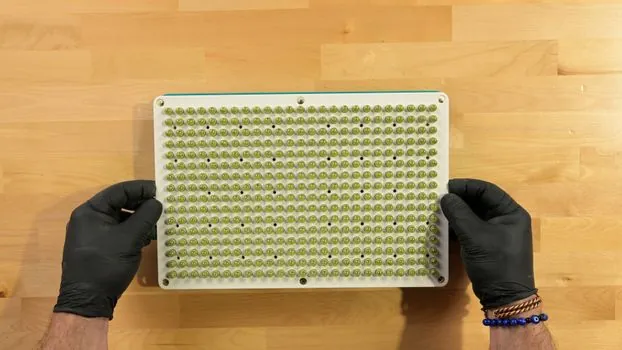
The cleanest way to position Hot Box is against its sibling processes, because each trades energy, gas handling, and cycle time differently. Hot Box is heat-driven: 180-250°C core box, electric or gas heaters, immediate strength out of the box, but high energy draw and some combustion by-products [S1]. A cold box core machine does the opposite: cores are blown cold and hardened by gas-borne catalysts (amine or SO2), so there is no box heater but the process needs a gas generator, scrubber, and amine handling. On energy, Hot Box pays per cycle in kWh of heating, while cold box pays per cycle in catalyst gas and tail-gas treatment; on equipment footprint, Hot Box needs heavy duty heating and ventilation, while cold box needs gas-safety and VOC abatement. Shell moulding sits in between, using a hot pattern (around 250-300°C) to form a thin thermoset skin, but the bulk of the core is uncured sand. For high-volume thin-section cores where shakeout is acceptable, phenolic Hot Box wins on strength; for iron and steel castings where gas-related defects are the limiting factor, furan Hot Box or phenolic-urethane no-bake is often chosen instead.
Material and Process Limits Operators Hit First
Three constraints dominate real Hot Box work, and the 180-250°C band is the joint where they all pinch. First, resin selection: higher cure temperature forces higher wall temperatures, which then forces higher tool-steel grades to resist oxidation and thermal fatigue, and any cooling-water channel placed too close to the cavity face will create a cold streak and a soft patch in the core. Second, gas evolution: phenolic and phenolic-furanic systems release gas during pour, and cores that did not rest the full 2-3 hours will show subsurface porosity or rat tails in the casting; furan-only systems gas less but are more brittle and prone to crack-driven penetration. Third, energy: keeping a 180-250°C tool mass hot between cycles is the dominant kWh draw in a foundry core room, and the box is normally only worth running at full duty, which pushes foundries to schedule similar cores back-to-back rather than mix them. Compared with a room-temperature-curing synthetic resin system (for example, a furan no-bake that gels at 24-30°C, similar to the 75-85°F band used in art-resin work [S5]), Hot Box sacrifices that energy budget for cycle time measured in tens of seconds instead of hours.
Tooling, Heat-up, and the Curing Exotherm
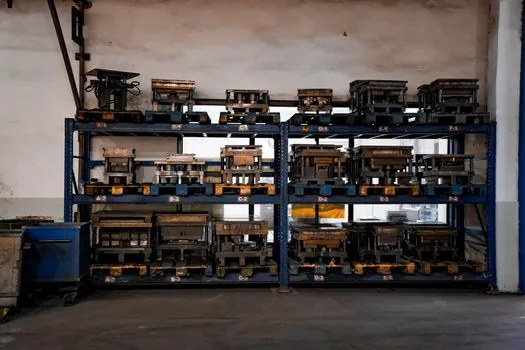
Operators routinely confuse "core box at 180-250°C" with "core at 180-250°C", and the difference is where most of the field problems sit. The tool is held at 180-250°C by electric cartridge heaters or gas burners, but the sand-resin mix is blown in at ambient temperature and is heated only by contact with the box wall plus the exotherm of polymerisation; the core centre typically runs 50-100°C cooler than the wall during the in-box dwell. After ejection, the core continues to cure on the bench as the centre warms toward the wall temperature and the residual exotherm dissipates, which is exactly why the 2-3 hour rest is non-negotiable for any but the thinnest sections [S1]. Temperature uniformity is therefore the controlling variable, and a poorly placed thermocouple, a water-cooled ejector pin, or a worn heater cartridge will show up as a soft spot on the core before it shows up as a temperature drop on the controller.
Sourcing and Standards Anchor Points
Published technical references for the 180-250°C core box band remain the Hot Box process primers from equipment builders, with Primafond's 2023-03-23 process page the most quotable for sand-to-resin ratio (1.4-2.3:0.25-0.45 on 100 parts sand), shooting pressure (~6 atm), and bench-rest duration (2-3 hours) [S1]. Composite-resin cure guidance from Powerblanket is the standard reference for one-part epoxy cure at 250-350°F (121-177°C) [S2], and SLA 3D-print post-cure data from Formlabs' 60°C white paper is the cross-check for low-temperature cure behaviour [S3]. For shop-floor cross-referencing, CNCKitchen's 2025-05-22 high-temperature cure study (40°C vs 60°C sample sets, 20-minute dwell) [S4] and ArtResin's 2025-03-04 cold-weather hotbox note (75-85°F / 24-30°C first 24 hours) [S5] give the low end of the resin-cure spectrum. The dielectric cure-monitoring methods used in aerospace composite work, surveyed in Dielectric Sensor Choices for Epoxy Cure Monitoring, translate directly to tracking the in-box polymerisation front, while the thermal layout of an adjacent tool, heated mold base design for LSR injection, is the closest published analogue for cartridge-heater placement and thermocouple siting on a 180-250°C core box.