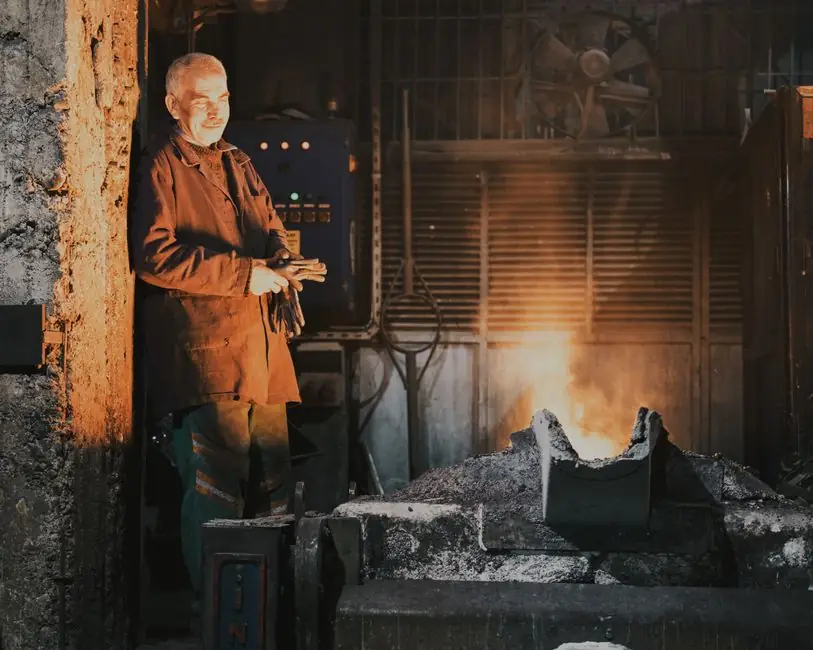
For aluminium HPDC supply lines, bath-temperature stability of roughly +/- 5 deg C around a 630-680 deg C pouring set-point is the practical floor for repeatable shot weight, and it is achieved with immersion thermocouples feeding closed-loop PID trim on the holding furnace, not on the central melter [S1][S6].
Holding, melting and dosing are three distinct functions in a die-casting cell, and conflating them is the most common reason a furnace line runs hot, oxidises alloy, or fails to keep the shot sleeve filled at the right temperature [S2].
Function split: melter, holder, doser, and where bath control belongs
A melting furnace converts solid charge (ingot, clean returns) into molten metal; a holding furnace keeps that metal inside the process window; a dosing furnace stores metal and meters a defined shot volume into the cold-chamber sleeve [S2]. In a coordinated line, the central melter pushes metal forward and the cell-side holder does the temperature work that the cold-chamber die casting machine actually feels.
The die-casting process is intolerant of bath swings: a 10-15 deg C drift in the holder shows up as either cold-shuts (too cold) or higher dross generation, oxide inclusions and increased melt loss (too hot), with direct scrap-rate consequences on structural automotive castings [S3][S4]. That is why most modern cell-side holders are sized for throughput stability, not nominal capacity, and are run with continuous bath-level and continuous bath-temperature measurement rather than periodic dip checks [S1][S4].
Sensor placement and PID trim: where the +/- 5 deg C comes from
Closed-loop bath control on a holding furnace uses Type K or Type N thermocouples immersed in the bath (sheathed, protected from direct flame impingement), feeding a PID controller that modulates either gas burner firing rate or, on electric holders, thyristor-firing on resistance elements [S1][S4]. Dynamo specifies that its cell-side electric and gas holding furnaces are designed to maintain a stable bath within the set process window for HPDC, LPDC, gravity and permanent-mold cells, with control systems integrated as part of the supply package [S1].
For aluminium, the practical supply target is 630-680 deg C measured at the holder outlet / launder or in the bath near the dosing well; 680 deg C is cited as the upper operating target in an EU energy-saving retrofit of an electric holding line [S6]. Shibaura Machine frames this as "precise temperature control" being the cornerstone of modern die-casting metal melting, with advanced sensors maintaining metal quality and reducing casting defects [S3].
Comparison of the three furnace functions against four process criteria
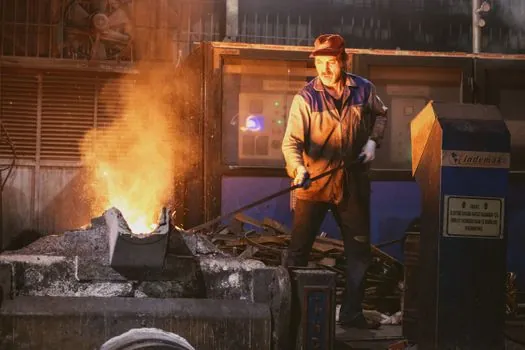
The three furnace functions are not interchangeable, and the table below is the most useful mental model for specifying a new line or auditing an existing one [S2][S4].
Function vs. criteria: (1) Primary task: melter = convert solid to liquid; holder = maintain bath within window; doser = meter shot volume. (2) Typical location: melter = central melt deck; holder = cell-side adjacent to die casting die area; doser = on or next to the machine, between holder and shot sleeve. (3) Critical control variable: melter = melt rate and bath level; holder = bath temperature and alloy chemistry; doser = shot weight repeatability. (4) Failure mode if misapplied: melter used as holder = bath drifts, dross rises; holder used as doser = shot weight varies cycle-to-cycle; doser used as holder = temperature stratifies and shot sleeve fill is inconsistent [S1][S2][S4].
Selection criteria and what "good" looks like on a holding furnace
Selection of a cell-side holding furnace for die-casting metal supply should be driven by four criteria, in this order: (a) rated bath capacity matched to roughly 1.5-2x the per-hour metal consumption of the cell, so a cell stop does not freeze the bath; (b) heating source matched to the alloy (electric resistance holders are preferred for magnesium and for tight +/- 5 deg C control, gas-fired radiant-roof holders are common for aluminium for throughput); (c) refractory and lid design that limit radiative losses; (d) controls package with immersion-thermocouple PID, bath-level instrumentation, and a documented interface to the cell PLC or to a stand-alone die casting temperature control unit for the die itself [S1][S4][S5].
A die-casting temperature control unit (TCU) for the die is a separate loop from the holder: Delta T Systems specifies its die-casting TCUs at -18 deg C up to 288 deg C (0 deg F to 550 deg F) process-water range, which sits on the die-cooling side and does not directly govern bath temperature [S5]. Conflating TCU set-points with holder set-points is a frequent spec error; the two loops must be tuned independently, with the holder loop the slower of the two.
Use cases, limits, and what goes wrong when bath control is sloppy
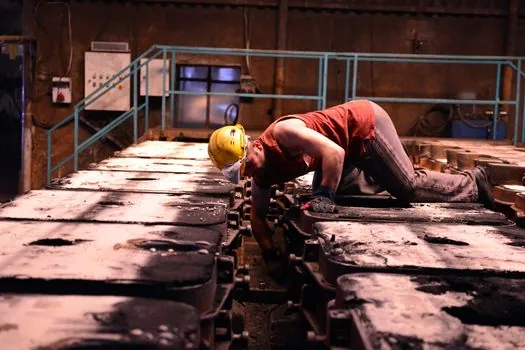
For thin-wall automotive structural castings on HPDC, a holder that holds bath within +/- 5 deg C of set-point is the minimum to keep fill behaviour consistent shot-to-shot; the EU electric-retrofit project (EE.-00092-81) demonstrated that an electric holding furnace "would accurately control the supply source temperature to the various holding furnaces" at normal casting temperature 630-680 deg C, replacing gas top-up and reducing on-temperature variation [S6].
Limits: every holder drifts when (1) the bath is drawn down below the lower thermocouple, (2) return metal is charged cold, or (3) dross is allowed to build up as an insulating layer on top of the bath, biasing any roof-mounted pyrometer. The fix is process discipline, not a better controller: skim schedule, minimum bath level enforced in the PLC, and return-metal preheat on the launder [S3][S4]. Aluminum die casting machine cells running structural parts should not share a holder with a high-magnesium die casting machine cell on the same loop; magnesium requires sealed, flux-protected handling and electric resistance holding for safety, and mixing the two in a common bath is a chemistry and safety violation [S2][S4].
Standards, sourcing, and what to verify on a vendor data sheet
No single ISO or ASTM standard pins the +/- 5 deg C figure: it is an engineering rule of thumb that emerges from the die-casting process window for aluminium (pouring 630-680 deg C, in-line with the EU retrofit project) and from generic furnace-control instrumentation standards that cover Type K / Type N thermocouple calibration, PID loop tuning and refractory design [S6]. The applicable reference documents are ASM's monograph chapter on aluminium alloy melting, holding and dosing furnaces, and OEM application notes for the specific holder design [S1][S4].
On a vendor data sheet, verify four items before signing: (1) thermocouple type, immersion depth, and stated control accuracy in deg C, not just "PID controlled"; (2) heating source and maximum heat-input ramp; (3) refractory and lid configuration plus rated cold-start time to set-point; (4) controls interface (analogue, fieldbus, or PLC tag list) and whether the bath-level and over-temperature interlocks are hard-wired or software-only [S1][S3][S4]. Gravity die casting machine cells, in particular, are more sensitive to bath drift than HPDC cells because fill is gravity-driven and there is no high-pressure after-fill to compensate for a cool shot.
The two trackable signals for 2026-2027 are: (1) wider adoption of integrated holder + dosing furnace packages from single OEMs, replacing the older melter-then-ladles architecture on HPDC structural lines [S1][S2]; (2) T6 solution treatment of the resulting castings, where furnace control discipline is also critical, with a separate decision tree on soak temperature and time documented for the heat-treatment side of the workflow.
Related analysis: Triplex Plunger Pump Specs for Well Service: 2026 Sizing Field Guide.