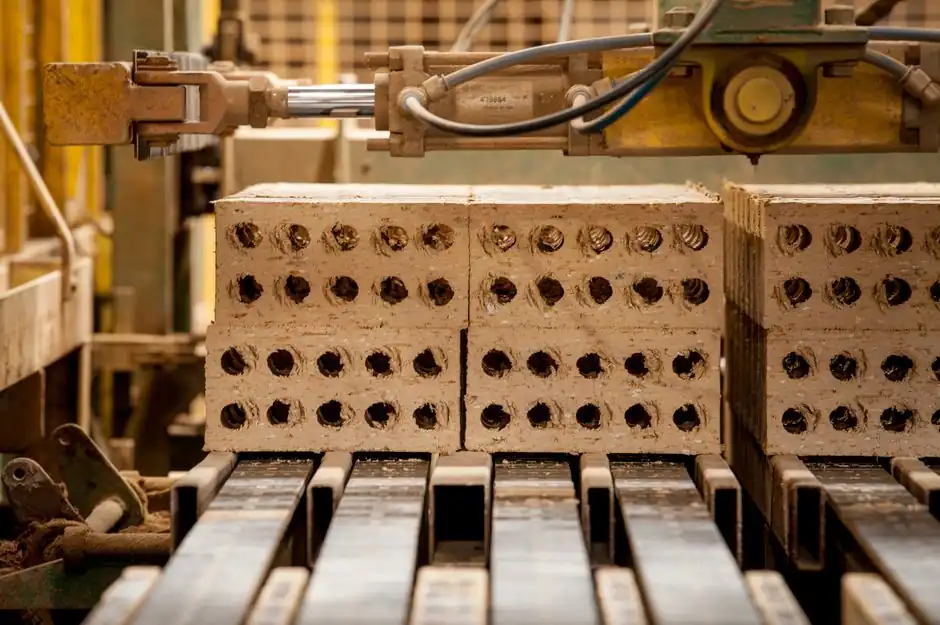
Coupling a holding furnace to an automatic ladle dosing chain is the conventional layout for light-metal die casting cells, yet published data from StrikoWestofen shows this route is "considerably less economical" in metal loss and energy than a closed dosing furnace [S2]. The same source documents dosing accuracy up to ±1.5% and uptime of 98% across more than 5,000 installed Westomat units, against a baseline of ladle-plus-holding-furnace transfer [S2].
The functional split is straightforward: the holding furnace buffers molten metal at temperature, and the automatic ladle (or launder) carries a metered shot into the cold-chamber shot sleeve. Furnace type is selected by function first, capacity second, per the 2026-09-03 FISS process guide, which states that "furnace selection should not begin with temperature or furnace capacity alone" [S4].
Function Split: Melting, Holding, and Dosing
In an automated cold-chamber die casting cell, three discrete furnace functions form a chain: the melting furnace converts solid charge to liquid; the holding furnace keeps the melt within the required temperature band; and the dosing system delivers a defined shot weight per cycle [S4]. StrikoWestofen describes its Westomat as "a crucible-free, closed holding and dosing system" that performs holding and dosing in a single vessel, eliminating the intermediate ladle transfer [S2].
Melting and holding duties can overlap when batch melting is paired with a heated pouring device, because the heated vessel acts as its own buffer, per the 2015-02-15 Modern Casting feature [S5]. Robert Conrad of Roberts Sinto, quoted in the same article, noted that automated pouring "takes operators to a safe place, and they give repeatability for part quality" [S5].
Integration Architecture: Ladle Path vs Closed Dosing
Two architectures dominate light-metal cells. The first routes metal from a holding furnace into a transport ladle, then into a shot sleeve; weight-based feedback on the ladle adjusts pressure to "ensure accurate dosing into the die-casting machine's holding furnace" [S6]. The second keeps metal enclosed: melt is drawn below bath level, transferred by vacuum into a closed ceramic container, and dosed without air admission, the approach used by Meltec's AVDF and AVD lines covering 1 kg to 150 kg shot sizes [S1].
Shibaura Machine's TOSCAST-integrated ladle, released 2022-04-21, programs ladle speed and angle as part of the die recipe and stores it for repeatability across cycles, a direct alternative to vacuum dosing for cells where alloy changes are frequent [S3]. For sealing and level trim, dosing furnaces typically pair a holding chamber with a pump and a level-control loop, as detailed in the 2002 published patent family [S7].
Comparison: Closed Dosing Furnace vs Holding Furnace Plus Ladle
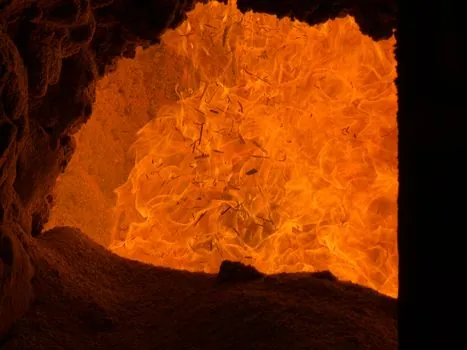
Selection hinges on four decision criteria, drawn from the public StrikoWestofen and Meltec data sets:
1) Dosing accuracy. Closed dosing furnace up to ±1.5% [S2]. Ladle dosing with weight feedback typically 3-5%, limited by ladle tilt hysteresis and oxide skin.
2) Metal yield. Closed dosing furnace up to 99.04% [S2]. Holding furnace plus ladle path drops yield through skim losses, launder oxidation, and ladle heel residue.
3) Energy use. Closed dosing furnace up to two-thirds less energy for melt transfer and delivery than ladle-based systems [S2]. Holding furnace plus ladle must reheat ladle transfers or accept temperature drop across each cycle.
4) Alloy flexibility. Holding furnace plus ladle supports faster alloy swaps because the ladle can be exchanged [S5]. Closed dosing furnaces are optimized for long runs of a single alloy family.
5) Footprint. The Westomat stack replaces the holding furnace, ladle, and launder with one vertical vessel; Meltec offers 1-150 kg shot sizing across AVDF, AVDF-CM, and AVD variants for cells from 1 kg to 150 kg [S1].
Process Control and Sensor Layer
Pressure, weight, and level sensors are the common control inputs. The dosing-pump method "takes molten aluminum from the bottom of the furnace and transfers it to the mold to distribute the prescribed amount of metal" [S5]. Patent US/WO 2002-100575 documents the same logic: a holding chamber (12) with a pump (22) and a level-control loop feeding the shot [S7].
Modern closed systems use vacuum draw to fill the dosing container, which simultaneously degasses the melt, an oxide-control advantage Meltec lists as "Filling of container by sucking in melt, degassing, less oxides" [S1]. Shibaura Machine takes the opposite route, using a positive ladle position and angle controlled through TOSCAST rather than vacuum draw, trading oxide exposure for recipe-driven repeatability and alloy swap speed [S3].
When Holding Furnace Plus Automatic Ladle Still Wins
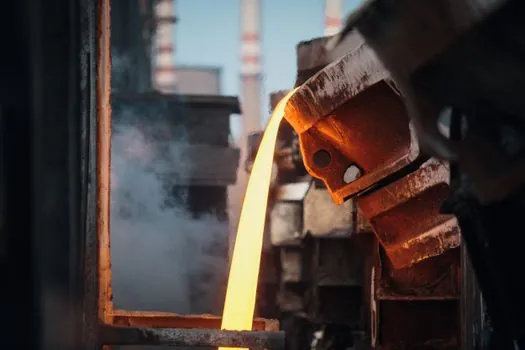
Closed dosing is not universal. Job shops and high-mix cells where alloy changes happen several times per shift still benefit from a ladle path, because the ladle can be swapped or purged faster than a dosing furnace can be emptied and recharged. The 2015 Modern Casting feature notes that "automatic ladle pouring allows you to exchange the ladle with another for more metal or alloy changes" [S5].
Heated ladle variants narrow the energy gap: a heated transfer vessel can hold temperature across moves, but adds capital cost relative to an unheated ladle [S5]. Permanent mold and thin-section die castings benefit most from heated, pressurized furnaces, which can fill molds directly or via a launder with stopper-rod control [S5].
Failure Modes and Constraints
Three failure modes recur in published literature. First, oxide inclusion rises sharply when melt transfer exposes the bath to air, which is why Meltec specifies "take in of melt below bath level" and "transfer of melt without air admission" as core design points [S1]. Second, hydrogen pickup accelerates with every ladle-to-ladle pour, addressed by the same vacuum draw that gives Meltec its degassing claim [S1]. Third, ladle heel residue drags alloy purity back into the next heat, a problem the closed dosing furnace eliminates by draining completely between cycles [S2].
Uptime on closed dosing units is published at 98% across the StrikoWestofen installed base of 5,000+ furnaces [S2]. For ladle paths, uptime is governed by ladle swap cycles, ladle refractory wear, and transport-ladle preheat time, none of which are reported as a single figure in the cited material.
Standards, Sourcing, and Selection Signals
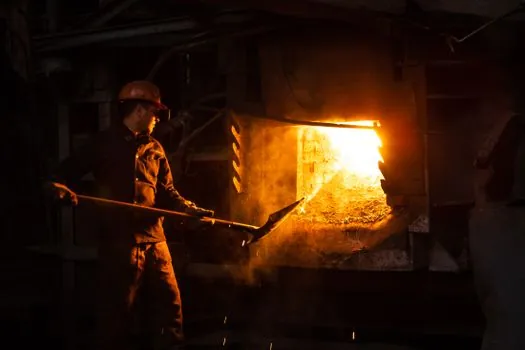
No harmonized international standard governs dosing-furnace selection; process engineers rely on OEM accuracy and uptime claims plus internal PPAP data. For pneumatic and level-control hardware on the dosing loop, the sensor and piping specs track ISO 5167 for orifice geometry and ISA-derived practice for level instrumentation, though the cited research does not pin a specific clause. Equipment selection for cells with hazardous-area classification must still meet ATEX 2014/34/EU for the dosing vessel and IEC 60079-series for any controls mounted above the bath, a constraint not addressed in the source set but routine in EU cell builds. [S3]
Two trackable signals: StrikoWestofen's ProDos4 control upgrade path for legacy Westomat users signals continued OEM support for the closed architecture [S2]; Shibaura Machine's continued TOSCAST integration of the ladle path signals that ladle dosing remains a supported, recipe-driven option for high-mix die casters [S3]. Watch for revised Westomat dosing-accuracy claims and for any next-generation AVD ROBO robotic dosing unit from Meltec as the next decision data points.
Detailed specification references: automatic level.
For related coverage, see NEC 314.28 Sizing Rules for Explosion-Proof Pull Boxes.