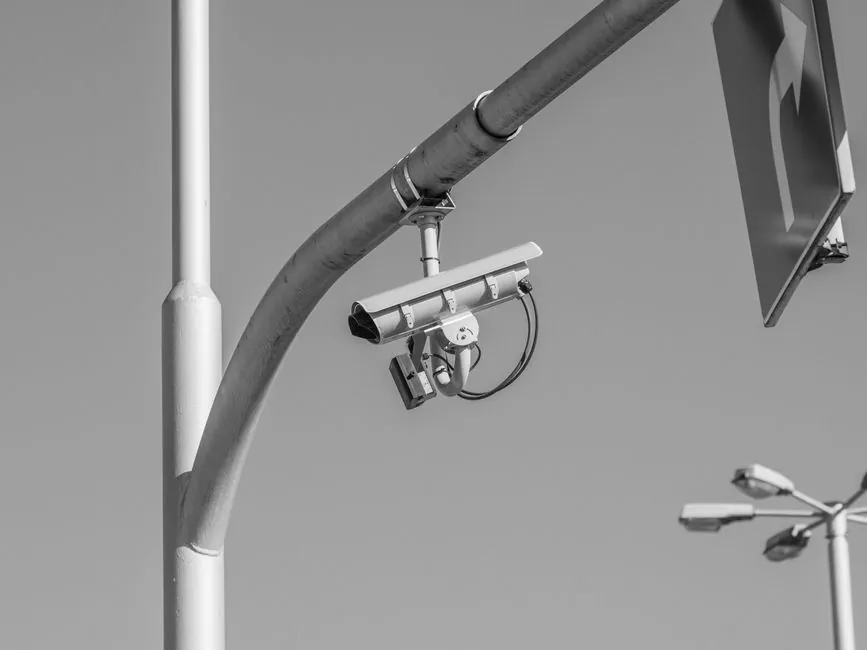
Computer vision can monitor workers 24 hours per day, detect unsafe acts, and alert managers with the accident location and intensity [S2].
The technology combines cameras, object detection, behavior analysis, and workflow alerts across construction, manufacturing, warehouses, logistics, and other workplaces [S1][S4][S6].
Core Detection Methods and Coverage
Computer vision safety systems analyze video from strategically positioned cameras to identify workers, vehicles, equipment, and visible hazards, then send alerts to supervisors or safety staff [S2][S3][S4]. One construction study developed three separate object-recognition models: one to determine whether workers were present, one to assess fall risk at elevated positions, and one to check whether workers wore safety helmets and vests [S1].
Industrial vision extends beyond personal protective equipment. Applications include machine-guarding compliance, restricted-zone access, improper tool use, hazardous chemical leaks, fall detection, poor lifting posture, repetitive motion, and proximity between workers and moving equipment [S3][S5][S8]. The National Safety Council describes the technology as camera or video analytics that uses machine learning and AI to identify abnormalities in workplace video feeds [S4].
Computer vision is best suited to visible, spatially defined risks. PPE, guard placement, zone entry, floor conditions, and proximity to forklifts can be assessed from imagery, while exposure to invisible gases, structural weakness inside equipment, and chemical toxicity generally require complementary instruments [S3][S5].
PPE, Falls, and Unsafe Behavior
Helmet and vest detection provides a direct compliance check, with alerts raised when required protective equipment is absent [S1][S5]. The construction models combined site imagery with synthetic images from a virtual environment, including transfer learning, allowing fall scenarios that are difficult to reenact safely with workers to be tested algorithmically [S1].
Falls can be detected through changes in a worker's position and movement, followed by an alert to a supervisor or safety team [S3][S5]. Ergonomic monitoring adds posture and movement analysis, identifying poor lifting techniques and repetitive motions that may contribute to musculoskeletal disorders [S3][S5]. These outputs support intervention, but a detection event is evidence for review rather than proof that an injury or violation occurred.
Camera-based systems do not require workers to wear an IoT device, which is a practical advantage where personal tags are inconvenient or unsuitable [S1]. A fixed camera can monitor several people simultaneously, while worker location data from wearable or UWB systems remains a separate technical approach for collision prevention [S1].
Vehicle, Machinery, and Restricted-Zone Risks
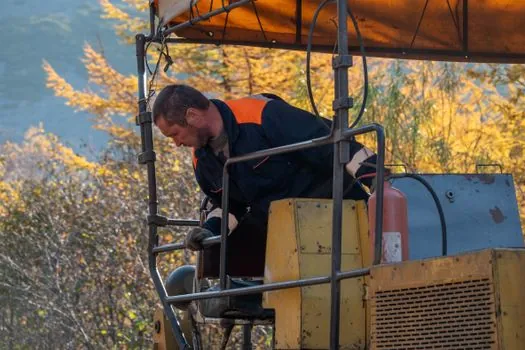
Vision analytics can track people, forklifts, trucks, and autonomous robotic devices, then warn operators when a worker enters a vehicle path or comes too close to heavy machinery [S3][S6]. This combination is especially relevant in warehouses and logistics facilities, where worker-to-vehicle interactions create both collision and restricted-access hazards [S3][S6].
Industrial systems can also monitor machine guarding, unauthorized access, and unsafe equipment handling across production lines [S5][S8]. In an active accident sequence, the system is intended to report the location and intensity of the event so that the affected production area can be stopped and employee safety can be addressed [S2]. This makes vision an event-detection layer connected to operating procedures, not a substitute for emergency response.
Machine guarding remains a physical safety control even when a safety barrier is monitored by a camera. A camera can identify an opened guard, missing barrier, or person in a restricted zone, but it does not physically prevent access, absorb impact, or isolate hazardous energy. Vision can therefore complement, rather than replace, guard design, interlocks, and lockout procedures.
Alerting, Evidence, and Response Integration
Safety deployments typically follow five engineering steps: define hazards and behaviors, position and calibrate cameras, run object and behavior detection, generate alerts, and establish a feedback loop for false positives, false negatives, and privacy compliance [S5]. This sequence matters because camera placement directly affects which hazards can be observed, while calibration determines whether an event is classified correctly.
Alerts may be routed to managers, safety personnel, or a control room, and the application can retain incident footage for review [S2][S7]. A robust implementation should record the camera identifier, timestamp, detected class, confidence, zone, and response status rather than relying on an unqualified “danger” message. The digital panel meter concept translates broadly here: an operator-facing display should expose the alarm, event location, and acknowledgement state without hiding critical context.
Computer vision can be connected to operational control through a safety PLC, but the safety function must be assessed independently. A non-safety-rated camera analytics alert may support supervision, while any protective stop that relies on it requires a documented risk assessment and an appropriate safety architecture. The safety barrier and the logic controlling it must not depend solely on an ordinary video stream.
Technology Options by Operating Requirement
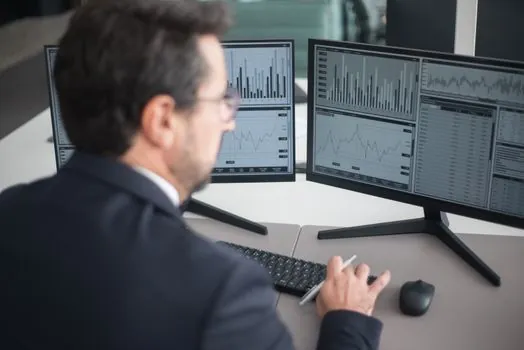
The principal options are fixed camera analytics, wearable-assisted vision, and sensor-fusion systems. The comparison depends on observable risks, worker burden, coverage, and response requirements, rather than on a universal claim that one technology is safer. [S3]
Fixed camera analytics cover broad work areas and require no worker-worn device, but they can lose sightline coverage because of blind spots, occlusion, lighting, and camera placement [S1][S4]. Wearable-assisted vision can supply first-person or body-linked views, but it introduces device management and worker acceptance issues. Sensor fusion combines video with tags, geofencing, gas detection, or machine signals, adding context when a visual event is ambiguous, yet increasing system complexity and maintenance.
For PPE compliance, fixed cameras are the straightforward choice because the required helmet, vest, or goggles remain visible in the scene [S1][S5]. For vehicle separation, camera tracking of workers and forklifts can cover a traffic zone without a tag on every person [S3][S6]. For invisible hazards, video should be paired with a dedicated gas or chemical monitor because the camera cannot infer concentration or toxicity from appearance alone [S5].
Data Quality, Privacy, and Failure Modes
Detection reliability depends on usable image data, representative training examples, correct camera calibration, and continued handling of false positives and false negatives [S1][S5]. The construction study used real construction-site image data plus synthetic virtual-environment data and transfer learning, showing a practical route to validate difficult fall conditions without staging dangerous events [S1].
Common failure modes include poor lighting, obstruction, low camera angles, crowded scenes, similar-looking objects, and rare hazards underrepresented in the training set [S1][S3]. A system trained mainly on normal daytime work may not perform consistently at night, through dust or rain, or during emergency movement. These are engineering acceptance issues that should be tested with the actual cameras, work zones, lighting conditions, and workforce variations.
Visual worker monitoring also creates privacy, labor-relations, and data-governance exposure. Deployment requires clear limits on camera fields of view, retention periods, incident access, disclosure, and the use of footage beyond safety investigation [S5]. A well-designed specification should record why each camera exists, which event classes it may detect, and who can approve or change that scope.
Selecting Cameras, Lighting, and Detection Hardware
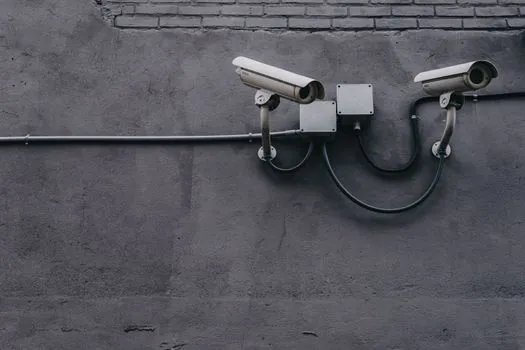
Camera selection should begin with hazard geometry: each camera must cover a defined zone, viewing distance, and target size, with minimum blind spots documented rather than assumed [S3][S5]. Lighting must expose helmets, vests, body movement, guard position, and vehicle boundaries under the site's actual conditions. A dedicated vision light source may be required where ambient illumination cannot support consistent detection, but it should not create glare or mask the hazard being measured.
For tasks that require reading labels, badges, or placards, an industrial barcode scanner can be a better tool than a general surveillance camera. PPE classification normally requires semantic recognition rather than barcode decoding, while restricted access may combine a code reader with a vision controller that accepts the code event and evaluates zone state.
Acceptance testing should use a defined event matrix covering true violations, safe work, occlusion, lighting changes, camera outages, network loss, and alert escalation. Each test needs an expected classification, expected recipient, and expected acknowledgement path. Without that matrix, a demonstration of object detection does not establish a dependable worker-safety system.
The first procurement trackable signal is the number of hazards mapped to a specific camera, algorithm, alert destination, and corrective action. The second is performance in the site's worst lighting and worst blind-spot conditions, not only the vendor demonstration scene.