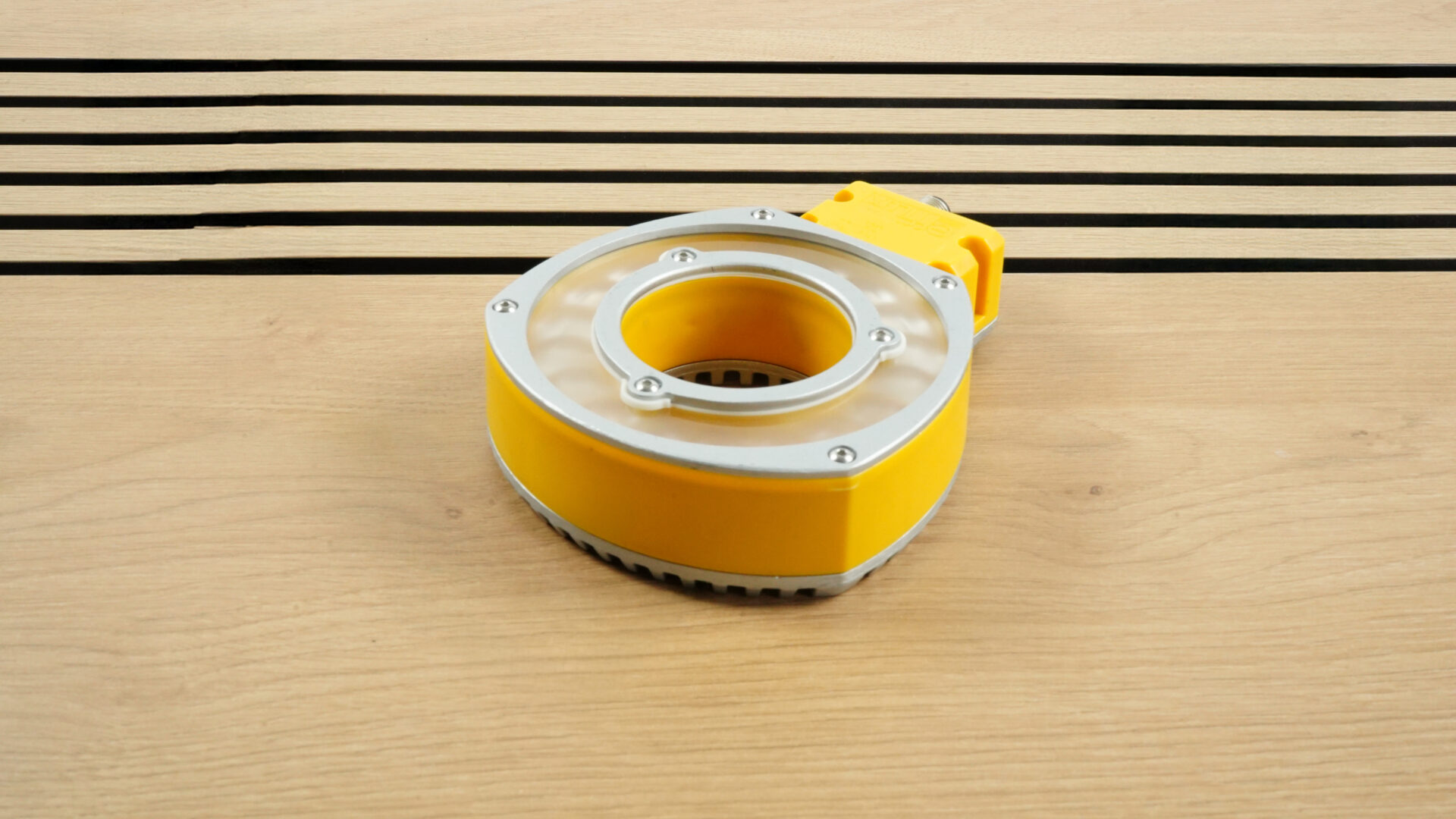
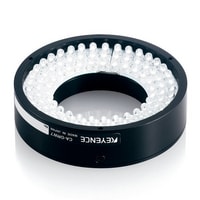
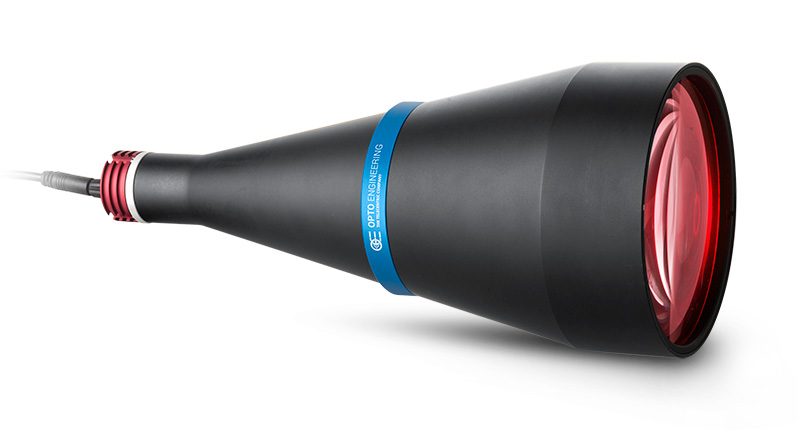
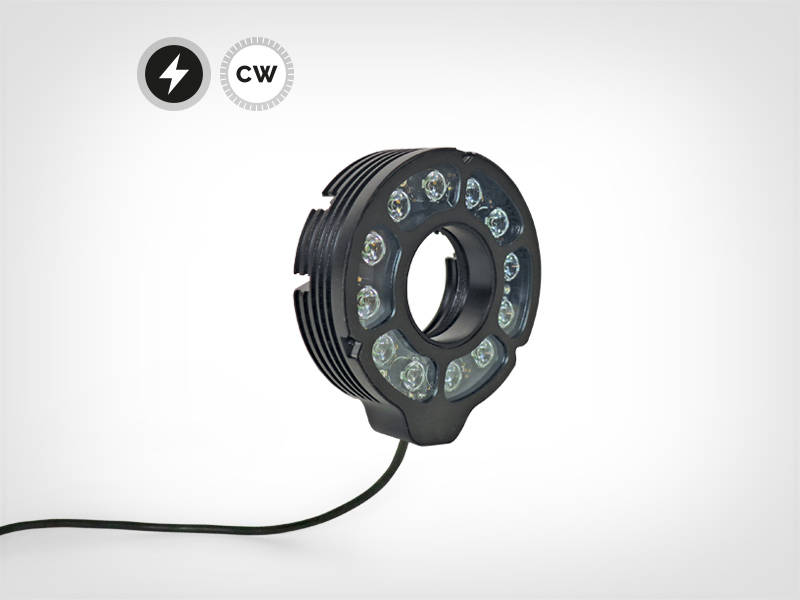
A vision light source, also called machine vision lighting or illumination, is the controlled light that creates contrast between a part and its background so a vision camera can extract a feature reliably. In factory inspection it is treated as a measurement component, not decoration: its geometry, wavelength, intensity, and timing are specified alongside the lens and camera. Poor lighting is the single most common root cause of unstable vision systems, because no amount of software can recover information the optics never captured.
This category covers the LED-based illuminators that dominate modern machine vision: ring, bar, dome, coaxial, backlight, dark-field, line, and spot lights, together with the strobe and constant-current controllers that drive them. The aim is to help procurement and design engineers map an inspection task to the correct illumination geometry and wavelength, then read a datasheet well enough to compare suppliers on equal terms.
This guide is written for industrial purchasing engineers and design engineers. It spans 6 chapters, from what a vision light source is, through illumination geometries, LED wavelength physics, key datasheet parameters, drive and control electronics, to a step-by-step selection sequence, with 7 selection FAQs and manufacturer comparisons. Parameters reference the EMVA 1288 camera characterization standard, the IEC/EN 62471 photobiological safety standard for LEDs, and the IEC 60529 IP ingress-protection standard, cross-checked against published manufacturer application guides from KEYENCE, Advanced Illumination, Opto Engineering, and CCS.
Chapter 1 / 06
What is a Vision Light Source
A vision light source is an engineered illuminator whose job is to make a feature of interest as bright or as dark as possible relative to everything else, so that a machine vision camera and its image-processing software can find that feature repeatably across thousands of parts. Unlike general lighting, which is optimized for human comfort, lumens, and cost, a vision light source is optimized for contrast, spatial uniformity, spectral control, and timing repeatability. It sits at the front of the imaging chain, ahead of the lens, sensor, and algorithm, which is why lighting engineers say that contrast created in the optics is free, while contrast forced in software is expensive and fragile.
Almost all modern vision lights use light-emitting diodes (LEDs). LEDs replaced fluorescent tubes, halogen, and xenon flash because they offer narrow controllable spectra, instant on and off for strobing, long lumen-maintenance life, low heat at the part, and stable output under constant-current drive. A vision light source therefore has three functional parts: the LED array (defining wavelength and raw output), the optical front (diffuser, lens, or reflector that shapes the beam into a ring, bar, dome, or collimated backlight), and the electrical interface (a connector for a constant-current driver or strobe controller, usually at a nominal 12 V or 24 V, though output is set by current).
The discipline grew out of factory automation in the 1980s and 1990s as solid-state cameras became cheap enough for inline inspection. Early systems borrowed fiber-optic illuminators and incandescent ring lights, which suffered from color drift, heat, and short bulb life. The shift to high-brightness LEDs in the late 1990s and 2000s, alongside the rise of strobe overdrive controllers, turned lighting from an afterthought into a precise, specifiable subsystem. Today a single inspection cell may stack several lights of different geometries and wavelengths, switched per inspection step.
Four engineering properties decide whether a vision light source is fit for purpose: geometry (the angle and shape of light relative to part and camera), wavelength (the color, which governs contrast and penetration), intensity with uniformity (how much light and how evenly it is spread at the working distance), and timing (continuous versus strobe, and synchronization to the camera trigger). The chapters that follow take each of these in turn. The recurring theme is that there is no universal light: the correct choice is dictated by the part surface, the feature to detect, the line speed, and the ambient environment.
It is worth stressing the economic stake. A vision system that fails to separate good from bad parts either passes defects (warranty and recall cost) or rejects good parts (yield loss and downtime). Field surveys by vision integrators repeatedly attribute the majority of unstable deployments to inadequate lighting rather than to camera resolution or algorithm choice. Spending a few hundred dollars on the right geometry and wavelength routinely saves far more than upgrading to a higher-resolution camera that still photographs a low-contrast scene.
Chapter 2 / 06
Illumination Geometries
Geometry, the angle and spatial arrangement of light relative to the part and the camera, is the most important single decision in vision lighting. The same part can look completely different under a ring light versus a backlight. Engineers classify geometries into a small set of standard techniques: bright field (direct), dark field (low angle), backlight, diffuse dome, coaxial (on-axis), bar, line, and spot. The table below summarizes the principal geometries and what each is best at.
Geometry
Light direction
Best for
Watch out for
Ring (bright field)
~30 to 90° front, around lens
General surface, labels, presence/absence
Hotspot glare on specular parts
Dark field (low angle)
<45° grazing
Scratches, engraving, raised/recessed edges
Needs short working distance
Backlight
180° from behind part
Silhouettes, gauging, holes, gaps
Hides surface detail by design
Dome (diffuse)
~0 to 90° multi-angle
Curved/irregular shiny parts, foil, solder
Bulky; camera looks through top aperture
Coaxial (on-axis)
Parallel to camera axis
Flat mirror-like surfaces, wafers, glass
Beamsplitter halves the light
Bar
Adjustable angle, linear
Web, large flat areas, dark/bright field flex
Uniformity along long axis
Line
Focused stripe
Line-scan web inspection, high intensity
Tight alignment to scan line
Bright field (direct front lighting), usually delivered as a ring around the lens or as bar lights, is the most common technique. The light strikes the surface at a moderate to high angle and reflects toward the camera, generating contrast and topographic detail on matte surfaces. On specular (shiny) surfaces it produces a familiar hotspot, so integrators tilt it off-axis or switch to a diffuse approach. Ring lights are popular because adjusting the mounting distance changes the incidence angle, letting one fixture serve several jobs.
Dark field (low-angle) lighting grazes the surface at a shallow angle, typically under 45 degrees. A flat specular surface reflects this light away from the camera and appears dark, while any scratch, edge, embossed character, or surface defect scatters light back and lights up brightly. Dark field is the standard for reading laser etching and embossed lot codes, and for catching fine scratches on polished parts. The trade-off is that it requires the light to sit close to the part, constraining mechanical layout.
Backlighting places the light behind the part and aims it at the camera, turning opaque parts into crisp black silhouettes against a bright field. It is the technique of choice for dimensional gauging, hole and gap detection, part orientation, and presence checks, because the silhouette edge is high-contrast and, with collimated monochromatic backlights, sharp enough for sub-pixel edge measurement. Translucent parts reveal internal voids or fill-level variation. Backlighting deliberately discards surface appearance, so it is paired with a front light when both outline and surface must be checked.
Diffuse dome and coaxial lighting both tame glare on shiny parts but in different ways, covered in detail in the FAQ. A dome scatters light from a hemispherical interior so it arrives from many angles at once, giving the even cloudy-day look that flattens reflections on curved metal, foil pouches, and solder joints. Coaxial light passes through a beamsplitter so it travels parallel to the camera axis, ideal for flat mirror-like surfaces such as silicon wafers, glass, and printed circuit pads where uniform perpendicular reflection is wanted. Bar, line, and spot geometries round out the set: bars for large or web-format areas with flexible angle, line lights as intense focused stripes for line-scan cameras, and spot or focused lights for small high-intensity spots, often fiber-coupled, where space is tight.
Chapter 3 / 06
LED Wavelength and Color
After geometry, the wavelength (color) of the LED is the second lever for creating contrast. The governing principle is the color wheel: an object reflects light of its own color and absorbs its complementary color. Illuminating a part with its complementary color drives the feature toward black, maximizing the gray-level difference the camera sees. Shorter wavelengths also scatter more strongly from shallow surface texture, while longer wavelengths penetrate films and many plastics. The table below lists the wavelength bands common in machine vision lighting and where each is used.
Band
Typical dominant wavelength
Behavior
Typical use
Ultraviolet (UV)
365 to 405 nm
Excites fluorescence; scatters strongly
Invisible marks, adhesive/glue, fluorescent dye
Blue
450 to 470 nm
Scatters off shallow texture
Laser etching, black rubber, fine surface defects
Green
510 to 530 nm
High eye sensitivity; mid contrast
Red/amber targets, electronics, general contrast
Red
620 to 660 nm
Penetrates films; bright, efficient
General inspection, amber glass, through-film reading
White
Broadband (2700 to 6500 K)
Full spectrum; true color
Color inspection, print verification, color matching
Near-infrared (IR)
850 to 940 nm
Penetrates; ignores printed color
Suppress print, see through some plastics, PCB
Red LEDs (around 625 to 660 nm) are the workhorse of machine vision. Red is bright, efficient, inexpensive, and reads well against many backgrounds. Its longer wavelength transmits through some films and amber materials, which is why amber glass bottles are often inspected with red light. Red also lights up green or blue features as dark by complement, a frequent pairing for printed-mark verification.
Blue LEDs (around 450 to 470 nm) exploit the physics that shorter wavelengths scatter more from shallow surface relief. Blue therefore excels at revealing laser etching, fine scratches, and texture on dark or specular materials such as black rubber compounds and machined metal, where red would simply reflect. Green LEDs (around 525 nm) sit between the two and benefit from the camera sensor and human eye both being most sensitive in green; green is a common choice for high contrast on red or amber objects and for electronics inspection.
Near-infrared LEDs (around 850 to 940 nm) neutralize visible color: under IR, a red, green, and blue printed area can look identical, so only geometry and material differences remain. This is useful when you want to ignore graphics and inspect shape, or to see through certain plastics and to read features on printed circuit boards where IR penetrates better than visible light. Note that camera sensitivity falls off in the IR and many cameras carry an IR-cut filter that must be removed.
Ultraviolet LEDs (around 365 to 405 nm) are used chiefly for fluorescence: a UV-excited dye, adhesive, or coating emits visible light that a standard camera captures, often through a UV-blocking filter so only the fluorescence is recorded. UV is the basis for verifying invisible security marks, confirming glue beads, and detecting contamination. White LEDs, finally, are reserved for true-color work: color sorting, print color verification, and operator-facing displays, where a defined correlated color temperature (CCT, for example 5000 to 6500 K) and a high color rendering index (CRI) matter more than monochromatic contrast. A practical bonus of any monochromatic light is reduced chromatic aberration, since a lens focuses a single wavelength to a single plane, sharpening edges for precise gauging.
Chapter 4 / 06
Diffusion, Filters, and Standards
Geometry and wavelength choose what light reaches the part; diffusion, filtering, and standards govern how cleanly and safely that light is delivered and measured. A bare LED array produces a hard, point-like source that casts sharp shadows and hotspots. Diffusers, lenses, and reflectors reshape that raw output into the soft, even, or collimated field the application needs, and optical filters on the camera lens lock the system onto the chosen wavelength while rejecting everything else.
Diffusion trades intensity for uniformity. A flat diffuser plate, an opal window, or the painted interior of a dome scatters light so the surface is lit from many angles, suppressing specular hotspots on curved or shiny parts. The cost is reduced peak irradiance, which is one reason dome and heavily diffused lights are often paired with strobe overdrive to recover brightness. Collimation is the opposite operation: a collimated backlight uses a lens or film to make rays nearly parallel, producing razor-sharp silhouette edges for sub-pixel gauging at the expense of a narrow usable angle.
Optical filtering is the partner of monochromatic lighting. Pairing a narrow-band light, say 470 nm blue, with a matching bandpass filter on the lens means the camera sees mostly the controlled light and rejects broadband factory ambient, sunlight through skylights, and overhead fluorescents. This is the most cost-effective way to make a vision system immune to ambient changes, far cheaper than enclosing the cell in a light-tight shroud. Polarizing filters on both light and lens (cross-polarization) kill specular glare from plastics and liquids, revealing detail beneath a shiny surface.
The table below maps the main standards an engineer encounters when specifying or qualifying a vision light source. None of them is a single product certification for a light, but together they define how the system is characterized and how the light is rated for safety and environment.
Standard
Scope
Why it matters for lighting
EMVA 1288
Camera and image-sensor characterization
Quantifies sensor response so lighting is matched to measured camera sensitivity
IEC/EN 62471
Photobiological safety, 200 to 3000 nm
Classifies LED optical-radiation hazard (Exempt, RG1, RG2, RG3); key for UV, blue, IR
IEC 60529 (IP code)
Enclosure ingress protection
IP65/IP67 needed for washdown, dust, coolant on the line
IEC 60068-2 (env. tests)
Vibration, shock, temperature
Durability of the fixture on moving or harsh equipment
IEC/EN 62471 deserves attention because bright LEDs are not automatically eye-safe. The standard places sources into risk groups by their weighted spectral irradiance at a defined distance: Exempt (no hazard), Risk Group 1 (low risk, no special control), Risk Group 2 (moderate, aversion response such as blinking offers protection), and Risk Group 3 (high, hazardous even for momentary exposure). High-power blue, UV, and IR vision lights can reach RG2 or RG3, so the datasheet risk group, plus interlocks or shielding for UV and strong IR, must be confirmed before deployment on a line where operators are nearby.
EMVA 1288, maintained by the European Machine Vision Association, standardizes how the camera and sensor are measured (quantum efficiency, noise, dynamic range, linearity) so that integrators can predict how much light is needed for a target signal-to-noise ratio. While EMVA 1288 characterizes the camera rather than the light, it is the bridge that lets an engineer turn a required image quality into a required irradiance at the part, which is the number the light must deliver at the working distance.
Chapter 5 / 06
Key Specification Parameters
Comparing vision lights on a datasheet requires knowing which numbers actually drive performance and which are marketing. The parameters that matter are dominant wavelength, irradiance at a stated working distance, uniformity, drive mode (continuous versus strobe with overdrive limits), beam angle and field size, color temperature and CRI (for white), nominal voltage and current, and environmental ratings. Each is explained below.
Dominant wavelength and spectral width define the color and how narrow it is. Good vision LEDs have a tight spectral peak (a defined dominant wavelength plus or minus a few nanometers) so they pair cleanly with bandpass filters. White lights instead quote a correlated color temperature (CCT) and a color rendering index (CRI); for color inspection, look for high CRI (90 or above) and a CCT matched to the reference, commonly in the 5000 to 6500 K daylight range.
Irradiance or illuminance, always at a stated working distance. Source power alone tells you nothing about how much light reaches the part. Reputable datasheets quote irradiance in W per square meter (radiometric) or illuminance in lux (photometric) measured at a specified working distance, because light falls off with distance and beam geometry. When comparing two lights, normalize to the same working distance, field size, and wavelength, and check whether the figure is continuous or strobe-overdrive output.
Uniformity is the variation of irradiance across the lit field, the difference between brightest and dimmest point over the area of interest. It is quoted as a plus-or-minus percentage or as a min/max ratio; better than plus or minus 10 percent across the field of view is a reasonable bar for quality area lights, and gauging applications may demand tighter. Poor uniformity forces the algorithm to compensate with local thresholds and undermines repeatability.
Drive mode and strobe limits. A light can run continuous (constant-on, up to 100 percent duty cycle) or strobed. Strobe overdrive pulses the LEDs above their continuous current rating for a brief flash, freezing motion and overwhelming ambient. Because the duty cycle is low (commonly kept under 1 to 10 percent so average junction temperature stays safe), peak output can be several times the continuous level while lifetime is preserved. The datasheet must state maximum pulse width, maximum overdrive current, and maximum duty cycle; exceeding them degrades or destroys the LEDs.
Electrical and environmental specs. Vision lights are typically nominal 12 V or 24 V, but because LED output depends on current rather than voltage, they are best driven by a constant-current driver or controller. Key environmental items: operating temperature range, IP rating per IEC 60529 (IP65 or higher for washdown and dust), connector type (M8/M12 are common), and the IEC/EN 62471 photobiological risk group. The output-signal style of the controller (analog 0 to 10 V dimming, digital trigger, Ethernet) is also part of the spec when the light must synchronize with the camera and PLC.
Dominant wavelength: defined peak plus or minus a few nm; pairs with bandpass filter.
Irradiance at WD: W per square meter or lux at a stated working distance, continuous and strobe.
Uniformity: plus or minus percentage across field; tighter for gauging.
Strobe limits: max pulse width, max overdrive current, max duty cycle.
White-light color: CCT (for example 6500 K) and CRI (90 or above) for color work.
To turn the preceding chapters into a specific purchase, follow the decision sequence below. Most lighting mistakes come not from one wrong number but from skipping a step or fixing the wrong variable first. These eight steps form a reusable RFQ template; work them in order, because each constrains the next.
Define the feature and the surface: State exactly what must be detected (edge, scratch, code, color, presence) and characterize the surface (matte, specular, curved, transparent, textured). The feature plus surface usually narrows the geometry to one or two candidates before any product is considered.
Choose the geometry: Map feature and surface to a technique: backlight for silhouettes and gauging, dark field for scratches and engraving, dome for curved shiny parts, coaxial for flat shiny parts, ring or bar for general front lighting, line for line-scan webs. Prototype with samples; geometry is the highest-leverage choice.
Choose the wavelength: Apply the complementary-color rule for contrast, blue or UV for shallow texture and fluorescence, red or IR for penetration and to suppress printed color, white only when true color is required. Confirm the camera responds at that wavelength and remove any IR-cut filter for IR work.
Size intensity and working distance: Set the working distance from mechanical layout, then confirm the light delivers adequate irradiance with acceptable uniformity at that distance. Use EMVA 1288 sensor data to estimate the irradiance needed for your target signal-to-noise ratio.
Decide continuous versus strobe: If parts move fast or ambient light is strong, specify strobe overdrive and a constant-current strobe controller, and verify the light's maximum pulse width, overdrive current, and duty cycle against your line speed and trigger timing.
Plan ambient rejection: Pair a monochromatic light with a matching bandpass filter, add cross-polarization for glare, and only resort to a physical light shroud if filtering is insufficient. This step is far cheaper than fighting ambient drift later.
Check safety and environment: Confirm the IEC/EN 62471 risk group (especially for UV, blue, and high-power IR), the IP rating per IEC 60529 for the line environment, the operating temperature range, and any required interlocks or shielding for operator areas.
Total cost of ownership: Include the light, controller, cabling, filter, and mounting, plus expected lumen-maintenance life and the cost of relamping or recalibration. A correctly specified light that creates contrast in the optics avoids recurring software tuning and false-reject losses that dwarf the hardware price.
One frequently overlooked dimension is serviceability and ecosystem fit: controller compatibility (does the strobe controller speak the trigger protocol your PLC or camera uses), spare-part availability, lumen-maintenance rating so brightness is predictable years out, and whether the supplier offers the full family of geometries and wavelengths so a future inspection step can be added without changing vendor. Established makers such as CCS and its EFFILUX brand, Advanced Illumination, Smart Vision Lights, Moritex, Gardasoft (controllers), and PHLOX (backlights) maintain broad catalogs and application support, while China-based suppliers such as OPT Machine Vision, ODER, and Pomeas offer comparable geometries at lower cost for high-volume OEM lines. Always verify the exact series specification on the manufacturer datasheet, at your working distance and wavelength, before committing.
FAQ
What is the difference between a vision light source and ordinary LED lighting?
A machine vision light source is engineered for controlled, repeatable contrast rather than human comfort. It uses narrow-band LEDs at defined dominant wavelengths (for example 470 nm blue, 525 nm green, 625 nm red, 850 nm IR, 365 nm UV), tight spatial uniformity across the field, stable constant-current drive, and often strobe overdrive synchronized to the camera trigger. Ordinary LED room lighting optimizes lumens, color rendering, and cost, with no uniformity guarantee, no synchronization, and broadband white spectra that wash out wavelength-based contrast. In vision, the light is part of the measurement chain, so geometry and wavelength are specified as carefully as the lens and camera.
How do I choose the LED wavelength (color) for my inspection?
Use the color wheel: a target reflects its own color and absorbs its complement. Lighting a part with its complementary color makes it appear dark, maximizing contrast. Red light (around 625 nm) on a green or blue feature, or blue light (around 470 nm) on a red or amber feature, are common pairings. Blue and UV scatter strongly from shallow surface texture and laser etching, while red and near-IR penetrate films and many plastics. IR (850 nm) neutralizes printed color so only geometry remains. UV (365 nm) excites fluorescence for invisible marks and adhesive checks. Monochromatic light also reduces lens chromatic aberration, sharpening edges for gauging.
When should I use a dome light versus a coaxial light?
Both suppress glare on shiny parts, but differently. A dome light (cloudy-day illumination) projects diffuse light from a hemispherical interior across nearly 0 to 90 degrees, eliminating directional hotspots on curved or irregular specular surfaces such as solder joints, foil pouches, and rounded metal. A coaxial (on-axis) light injects light through a beamsplitter so it travels parallel to the camera axis, ideal for flat, mirror-like surfaces such as silicon wafers, glass, and laser-marked codes where you want uniform, perpendicular reflection. Rule of thumb: dome for 3D curved specular parts, coaxial for flat specular parts.
What does strobe overdrive do, and is it safe for the LEDs?
Strobe overdrive pulses the LEDs at a current well above their continuous rating for a brief flash synchronized to the camera exposure. Because the duty cycle is very low (typically under 1 to 2 percent), the time-averaged junction temperature stays within limits, so lifetime is preserved or extended versus constant-on at the same peak current. Overdrive freezes fast-moving parts, overwhelms ambient light, and boosts effective intensity several fold. It requires a constant-current strobe controller (LED output depends on current, not the nominal 12 or 24 V), accurate trigger timing, and adherence to the manufacturer pulse-width and duty-cycle limits. Exceeding those limits degrades or destroys the LEDs.
How do I read intensity and uniformity on a vision light datasheet?
Intensity must always be paired with a working distance, because irradiance falls off with distance and beam geometry. Datasheets state radiometric irradiance in W/m squared or photometric illuminance in lux at a specified working distance, not just LED source power. Uniformity is the variation of irradiance across the field of view, often quoted as plus or minus a percentage or as min/max over the lit area; better than plus or minus 10 percent is typical for quality area lights. Always compare two lights at the same working distance, field size, and wavelength, and confirm whether the figure is for continuous or strobe-overdrive operation.
Why are most vision lights monochromatic instead of white?
Monochromatic light gives three advantages for measurement. First, contrast: a single wavelength can selectively brighten or darken features by color, which broadband white cannot do. Second, optical sharpness: a lens focuses one wavelength to one plane, so monochromatic light avoids the chromatic aberration that blurs edges under white light, improving gauging accuracy. Third, ambient rejection: a narrow-band light paired with a matching bandpass filter on the lens blocks stray factory light. White light is reserved for color inspection, print verification, and operator-facing applications where true color rendering matters, where high CRI and a defined color temperature (for example 5000 to 6500 K) become the key specs.
What standards and safety ratings apply to vision light sources?
There is no single product standard for vision lights, but several frameworks apply. EMVA 1288 standardizes how the camera and sensor side of the system is characterized, so lighting is matched to a quantified sensor response. IEC/EN 62471 classifies the photobiological (optical radiation) hazard of LED sources across 200 to 3000 nm into Exempt, Risk Group 1, 2, or 3, which matters for bright blue, UV, and IR lights and for operator exposure. Enclosure protection follows IEC 60529 IP ratings (IP65 or higher is common for washdown and dusty lines). UV and high-power IR lights may also need interlocks or shielding. Always confirm the risk group and IP rating on the datasheet.
Vision Light Source Manufacturers
Source-backed product routes. Open a company dossier for procurement scope and cited evidence.