
U.S. AI data center developers in 2026 are paying non-refundable equipment deposits 24-48 months ahead of energization to hold factory production slots for large power transformers, accepting capital-at-risk exposure that traditional underwriting models were never designed to absorb [S1][S3].
Wood Mackenzie data, cited by Reuters and republished April 2026, puts the average U.S. delivery time at 143 weeks for generation step-up (GSU) transformers and 128 weeks for power transformers in the second quarter of 2025, with U.S. GSU demand up 274% between 2019 and 2025 [S3]. Distribution transformer backlogs are running a year or more, roughly twice the historical lead time, per the National Electrical Manufacturers Association reporting carried by Utility Dive in April 2026 [S3].
Why slot reservation moved ahead of design
Transformer and switchgear procurement has shifted from a post-design buyout package to a front-end feasibility input, because a 24-48 month equipment queue can dominate the entire project schedule before a single kW of load is contracted [S1].
Three structural forces drive the 2026 shortage. AI load growth is pulling demand forward, with CBRE's North America Data Center Trends H1 2025 report citing record-low vacancy and power availability now shaping market selection [S1]. Utilities are running their own equipment queues for transmission and distribution upgrades that consume the same factory capacity. Manufacturing of large power transformers requires specialized grain-oriented electrical steel, copper, winding capacity and factory test bays, and new lines take years to commission rather than months [S1]. Reuters also reported 2025 market shortages of 40% for high-voltage switchgear, 25% for breakers, and 20% for medium-voltage switchgear, compounding the transformer wait with downstream bottlenecks [S3].
The mechanics of a 2026 slot reservation
A typical 2026 reservation workflow proceeds in this order: utility interconnection application, load study, facility study, signed service agreement, equipment order with deposit, factory acceptance testing, delivery, installation, energization, commissioning, with each milestone tracked separately rather than collapsed into one blended in-service date [S1].
The deposit itself is the gating commitment. Developers place non-refundable cash against a factory production window, often before full entitlement is secured, before a tenant lease is final, and before the utility confirms the interconnect scope will not change [S1][S3]. If the utility later revises the service requirements, the slot can be invalidated even though the deposit is lost, a failure mode that several projects tracked by industry observers hit in 2025-2026 [S3]. Developers that get this right treat the deposit as the price of optionality on a constrained asset; developers that get it wrong treat it as a sunk cost against a moving target. See a field example of the same constrained-spec problem in modular transformer designs that cut heavy-haul weight below 100 tonnes per load, where factory throughput limits override nominal design benefits.
Capital planning and tenant negotiation fallout
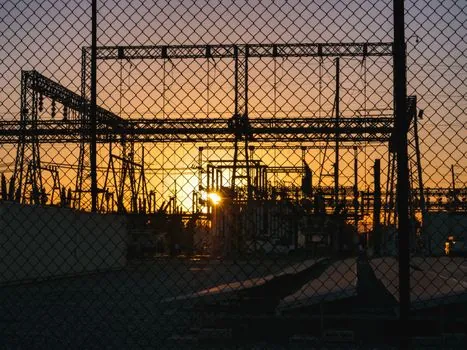
Early equipment deposits change cash timing, forcing sponsors to commit capital before every other risk is cleared and creating a capital-at-risk question that lender diligence now treats as a first-class underwriting line item [S1].
Hyperscale and AI tenants care about power delivery dates, and if transformer availability is uncertain, lease language increasingly ties rent commencement to a verified energization milestone rather than a calendar date [S1]. Sightline Climate, cited in a May 2026 industry analysis, tracked 12 GW of 2026 U.S. data center capacity at risk from a 5-year backlog on grid transformers, a figure that has sharpened tenant leverage toward developers who can demonstrate a secured slot, not just a signed utility letter [S6]. The capital exposure is not abstract: a large GSU transformer for a hyperscale campus can run into eight-figure USD territory, and reserving two or three units at once pushes the upfront commitment into a range that competes with land and shell cost [S1].
Comparison: how the main procurement paths stack up in 2026
Developers in 2026 generally choose between four procurement paths, each with a different risk/cost profile, and the table below lines them up against the criteria that actually matter when the factory queue is 120+ weeks [S1][S3][S4].
Path 1, spot buy on the open market: lowest upfront cost, no deposit, but typically 36-60 month delivery and no schedule guarantee. Path 2, OEM slot reservation with non-refundable deposit: 24-48 month delivery, fixed price band, factory acceptance testing included, highest capital-at-risk. Path 3, utility-owned transformer with developer interconnection: lower developer capex but subject to utility queue and rate-case approval, delivery tied to utility procurement cycle. Path 4, dry-type or modular substation substitution where the application allows: shorter queue for some voltage classes, but limited at the 100 MVA+ scale that hyperscale campuses require. Across these paths the binding constraints are the same: GSU and power transformer slot availability, then high-voltage switchgear (40% short in 2025), then breakers (25% short), then medium-voltage switchgear (20% short) [S3]. The data center transformer market was valued at $8.4B in 2025 and is projected to grow from $8.9B in 2026 to $14.5B by 2033 at a 7.2% CAGR, per Grand View Research sizing, so the demand pressure is not a one-year anomaly [S4].
On-site generation as a transformer-bypass strategy

Some 2026 campus designs are bypassing the grid transformer queue by siting behind-the-meter gas turbine or reciprocating engine generation, which puts a generator step-up transformer inside a smaller, faster-queue equipment class and lets the developer control the energization clock [S3].
The trade-off is fuel logistics, emissions permitting, and the fact that a GSU transformer still has to be ordered, just on a different specification sheet. A practical field comparison of the generation options behind this strategy is in reciprocating engines vs gas turbines for data center power. Developers pursuing this path are essentially trading a grid-interconnect transformer slot (longest queue) for a generator step-up transformer slot (also long, but bookable independently of utility study cycles), and the behind-the-meter architecture also reduces the high-voltage substation footprint that drives many of the civil delays flagged in the 40% construction-delay figure for 2026 U.S. data center builds [S5].
Limits and failure modes of the reservation model
Reservation only protects the schedule if three things hold: the utility does not change the service requirement, the OEM does not re-allocate the slot to a higher-paying buyer, and the project does not lose its interconnection position to a competing load request [S1][S3].
The Defense Production Act authorities invoked by the U.S. government in April 2026 around transformers, high-voltage transmission components, advanced conductors, power electronics and substations, described by the White House as "dangerously limited" domestic capacity, signal that allocation risk is now a federal-level variable, not just a commercial one [S3]. A data logger tied to substation relay status and a flow meter on the cooling loop are routine enough to ship quickly; a 200 MVA GSU transformer is not, so any reservation strategy must price in the realistic chance that the slot is re-purposed, the design changes, or the project is descoped. Developers who treat the deposit as the cost of a real option, with an explicit abandonment value and a defined re-deployment plan, outperform developers who treat it as a guaranteed schedule lock [S1][S3].
Trackable signals through the rest of 2026: any NEMA or Wood Mackenzie update to the 128-143 week U.S. transformer lead-time figure, and any DOE or Utility Dive readout from the working group convened to shorten transformer production times, will move the slot-reservation math more than another hyperscale lease announcement [S3].