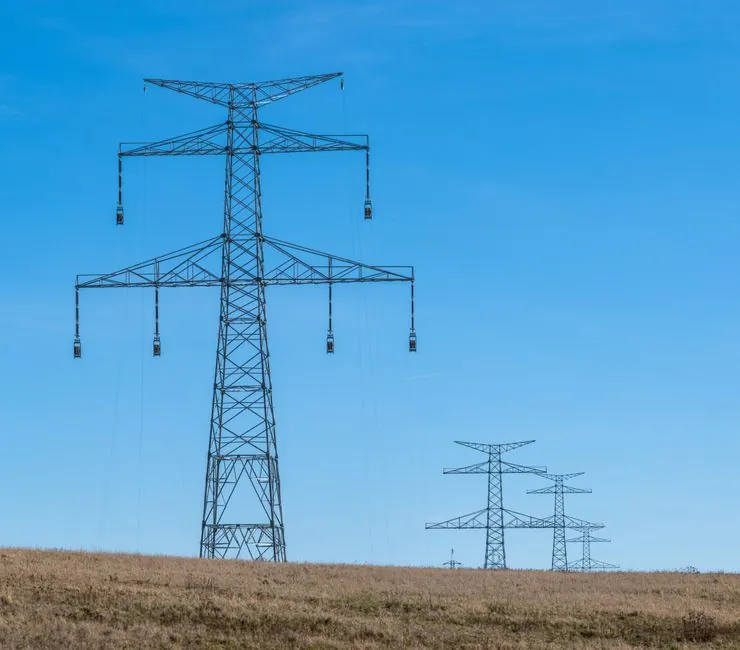
Modern electric motors sit on a four-tier supply chain that starts with rare earth, copper, and electrical steel mining and ends at Tier 1 automotive and industrial OEMs that integrate motor-inverter-transmission units on the vehicle or machine line.
Each tier is dominated by a small number of firms, the structure of which determines lead time, cost, and where a buyer has leverage when sourcing [S6]. The chain has been reshaped by EV demand: RMI notes more than 2.5 million EVs on US roads as of 2023-05, projected to reach 44 million by 2030, each carrying one or more traction motors, versus ICE vehicles which carry none [S4].
Upstream: magnets, copper, and electrical steel set the bottleneck
The upstream layer feeds three critical inputs: neodymium-iron-boron (NdFeB) permanent magnets, copper windings, and cold-rolled non-oriented (CRNO) electrical steel laminations. S&P Global Mobility (cited in RMI) forecasts EV sales could reach 40% of US passenger car sales by 2030, with optimistic projections above 50% [S4], which translates directly into forecast demand on these three inputs.
NdFeB magnets remain the structural pinch point. Dysprosium and terbium additives are needed to keep magnets stable above 150°C, the operating regime of an automotive traction motor [S6]. A typical 200 kW permanent magnet traction motor uses on the order of 2-3 kg of NdFeB, so 44 million EVs at 2030 imply a magnet demand measured in tens of thousands of tonnes, not kilograms, per year [S6].
Copper and electrical steel scale roughly with motor power. A 150-200 kW traction motor carries 10-15 kg of copper and 60-100 kg of silicon-steel laminations, with stator and rotor stacks stamped in single-piece patterns that require sub-millimetre tooling tolerance to keep iron losses under 3-5 kW at 15,000 rpm [S6]. Tier 4 wire and lamination suppliers feed Tier 3 stator/rotor stack assemblers, who in turn feed the Tier 2 motor line.
Tier 4 and Tier 3: the parts and sub-assembly layer most buyers never see
Tier 4 is the parts layer: magnet blanks and sintered NdFeB pieces, enameled copper wire (typically class 200-220 rated), CRNO steel coils in 0.20-0.35 mm gauges, aluminium rotor cages, and bearing-grade shafts. Tier 3 assembles these into stator stacks, rotor shafts, end caps, and terminal boxes. The HVA-side and the LV-side of the market differ here: industrial power supplies feeding industrial drives are sourced separately from automotive inverters. [S3]
Tier 3 also covers the sub-assembly that drives quality in finished motors: hairpin or wave winding, slot insulation, and vacuum pressure impregnation (VPI) of the complete stator. Wave winding dominates cost-driven industrial motors up to roughly 75 kW, while hairpin (rectangular bar) winding is now standard on automotive traction motors above 100 kW because it offers higher slot fill (above 60%) and lower DC resistance for the same envelope [S3].
Quality control at Tier 3 is where most motor failures originate. Bearing failure, winding insulation breakdown, and magnet demagnetisation account for the majority of warranty returns, and each maps to a Tier 3 process: bearing press-fit force, VPI resin penetration, and magnet grade selection respectively [S7]. A buyer who skips Tier 3 process audits inherits those failure modes.
Tier 2 and Tier 1: motor makers and OEM integration
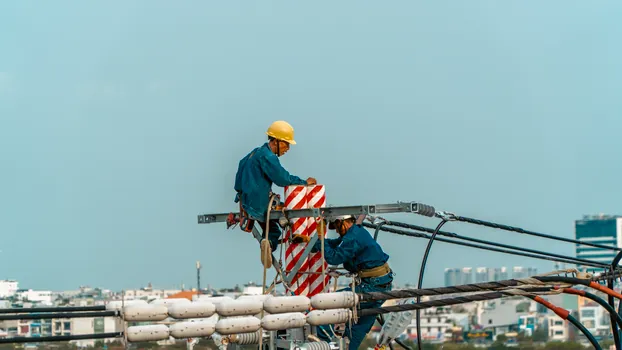
Tier 2 motor makers produce the finished motor or motor-inverter assembly. The list is short: Nidec, Bosch, ZF, BorgWarner, Marelli, and a handful of Chinese players including Inovance, CRRC Times Electric, and JJE dominate EV traction motor output, while ABB, WEG, Siemens, and Regal Rexnord cover industrial frame sizes IEC 63-630 [S3].
Tier 1 OEMs (Tesla, BYD, GM, Ford, Stellantis, Hyundai, VW, plus industrial machine builders) integrate the motor, switching power supply and inverter electronics, transmission, and thermal management into the final vehicle or machine. PwC's 2022-06 analysis of the supply chain reorganisation notes that a typical ICE powertrain has on the order of 2,000 moving parts, while an EV traction drivetrain has roughly 20, which is why the supplier base is consolidating fast around motor-inverter-transmission integration [S2][S5].
PwC also flagged that major systems essential to ICE vehicles (exhaust, fuel system, multi-speed transmission in many cases) are absent from EVs, and that the supply chain is rebalancing toward cell makers, battery pack assemblers, and motor magnetics specialists [S5]. This is the layer a procurement team touches directly: a vendor-managed inventory (VMI) or long-term supply agreement at Tier 1 has to be matched by parallel risk work at Tier 2, because the Tier 1 supplier is only as resilient as its magnetics and lamination sources.
Where the chain breaks: rare earths, copper, and Tier 2/Tier 3 capability
The structural weak points are well known. RMI's four-stage model (upstream, midstream, downstream, end-of-life) was developed for batteries but applies to motors, with raw material extraction as the most concentrated stage [S4]. NdFeB magnet production is concentrated in China, which is the source of most procurement risk on price and lead time.
Copper and electrical steel are more diversified but still price-volatile. A 10-15% copper move on the LME is reflected in 4-7 weeks in Tier 4 wire prices, and 8-12 weeks in Tier 3 stator costs because the wire order book is typically covered on a quarterly basis [S7]. Electric actuators downstream of the motor inherit the same supply variability because they share the same magnet and copper inputs.
For the procurement engineer, the actionable decision is: dual-source at Tier 4 (magnets and laminations) even if it costs 3-5% more, qualify a Tier 2 second source with documented Tier 3 audit, and require an annual magnet supply plan from the Tier 1 integrator tied to forecast EV volumes. A DC power supply vendor in the test stand has nothing to do with this, but it shares the same Tier 4 copper supply shocks on a longer lead time.
Tracking signals: where to watch the chain next
Two near-term signals are worth tracking. First, magnet and heavy rare earth pricing on a quarterly basis: a sustained 20%+ NdPr oxide move historically signals a Tier 1 reorder delay within 6 months [S6]. Second, the 2026 CWIEME Berlin agenda (released 2026) places electric motor value-chain content as a headline whitepaper, which means the Tier 2-3 vendor landscape will be visible in detail during the 2027 procurement cycle [S3].
For context, the wider EV supply-chain story continues to shift: RMI cites 44 million EVs on US roads required by 2030 from a 2023-05 base of 2.5 million, which directly bounds motor volume [S4], while the electric pallet truck segment in materials handling has been an early adopter of the same Tier 2 motor-inverter packages and is a useful proxy for industrial demand [S8]. A practical deep dive on the Tier 1 vendor map is also available in the Tier 1 supplier 2026 analysis, and the adjacent electric ball valve market is a useful read on how industrial motor demand tracks process-control spending.