
For e-commerce parcels, a dynamic checkweigher sized to peak line speed, with capacity covering the lightest and heaviest SKU, and an OPC-UA link to the WMS, is the dominant specification pattern in 2026 builds [S4].
The US automatic-checkweigher market was valued at USD 102.3 million in 2025 and is forecast to reach USD 129.4 million by 2035, reflecting sustained logistics-driven demand [S6]. E-commerce and parcel hubs are the largest non-food segment in that figure, and they tend to push selection criteria in directions that diverge from food or pharma specs.
What the e-commerce context changes about spec writing
E-commerce order profiles force three structural changes versus food or pharma checkweigher specs: SKU range, throughput window, and parcel handling rather than rigid primary packaging [S1][S2]. A typical fulfillment line must accept polybag mailers, corrugated boxes, bubble mailers, and irregular gift sets on the same conveyor, with package weights spanning roughly 50 g to 25 kg within one shift.
Throughput is bursty, not steady: weekday morning waves for next-day cutoffs and November peak can require 200-400 packages per minute on a single lane, while off-peak runs drop to 30-60 ppm [S4]. Specification must be written against peak ppm, not average, with documented margin for viral-product spikes. See the checkweigher selection basics for the underlying terminology, and the broader e-commerce picking layer covered in this warehouse conveyor spec map.
Hard selection criteria, in priority order
Five criteria consistently separate a working spec from a money-pit, and they should be evaluated in this order: capacity and resolution, throughput with margin, reject mechanism, integration, and sanitary or washdown class [S4].
Capacity and resolution. Pick a checkweigher whose maximum capacity exceeds the heaviest parcel by at least 20 percent, and whose display resolution is finer than the legal-m-for-trade increment of 5 g or 10 g. For multi-channel parcels, common spec ranges seen in 2025-2026 RFPs are 6 kg / 0.2 g, 15 kg / 1 g, and 30 kg / 2 g, with the latter dominating outbound-parcel sortation [S4].
Throughput. Rate the machine at peak ppm, not nominal, and confirm belt speed (typically 0.5-2.0 m/s) plus a weigh-cell settling time compatible with package length on the belt. Under-speccing here is the single most common cause of mid-line backups during peak.
Reject mechanism. For e-commerce, air-blast and pusher rejects dominate, with diverter belts reserved for heavier or fragile parcels. Drop-belt rejects, common in food, are usually wrong for parcel handling because they damage contents and create re-routing exceptions [S4].
Integration. Spec OPC-UA or MQTT publish of pass/fail and weight data, plus digital I/O for reject confirmation, and confirm recipe management so the WMS can switch SKU profiles automatically on barcode read.
Sanitary class. Most parcel hubs only need IP54, but if a site handles grocery or DTC food alongside general merchandise, IP65 or IP69K with stainless frame and food-grade belt becomes mandatory; in that case the same vendor portfolio will overlap with industrial valve washdown requirements on adjacent lines.
Comparison: how the main e-commerce line types differ on the same five criteria

Three line archetypes cover roughly 80 percent of 2025-2026 e-commerce checkweigher deployments: outbound-parcel, returns processing, and DTC-food/grocery. Outbound-parcel lines run 6-30 kg / 1-2 g resolution at 100-300 ppm with pusher or air-blast rejects and IP54 build, optimized for box and mailer handling [S4].
Returns lines run lighter capacity, often 3-15 kg / 0.5-1 g at 60-150 ppm, but require bidirectional flow and tighter integration to returns-management software, since the checkweigher is feeding dimensional-weight re-billing rather than compliance checks. DTC-food and grocery lines use 3-15 kg capacity at 0.2-1 g resolution, 80-250 ppm, IP65 or IP69K stainless build, and often a drop-belt or tip-belt reject paired with a metal detector or X-ray, mirroring food-plant specs [S5].
The same capacity-versus-resolution trade-off appears across adjacent warehouse equipment, as laid out in this pharma stacker crane spec map, where throughput and resolution dominate over flexibility.
Integration with the rest of the fulfillment stack
Checkweighers in e-commerce do not stand alone. The dominant 2025-2026 integration pattern is: barcode scan upstream of the scale triggers SKU recipe selection, the scale weighs, the reject device fires on out-of-tolerance, and OPC-UA or MQTT pushes the result into the WMS, where it updates inventory, dimensional weight, and carrier billing in a single transaction [S4].
For automated storage or shuttle-based sites, the same control bus is shared with the shuttle fleet and sortation controller, so the checkweigher must support the same Ethernet-based protocol the rest of the site uses; this is one place where PLC compatibility and open-publish protocols are non-negotiable, and where a mismatch can derail an entire commissioning. A flow meter on adjacent liquid-dispense lines and a pressure transmitter on pneumatic reject circuits round out the typical sensor stack, all reporting back to the same historian.
Regulatory and labeling reality for e-commerce weight checks
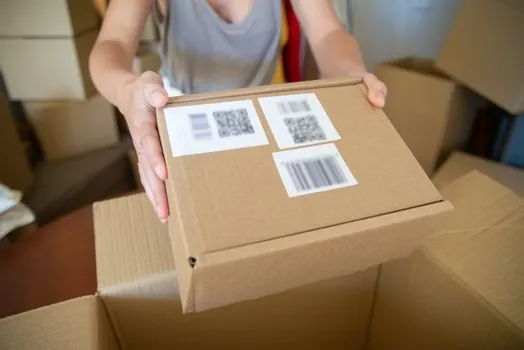
E-commerce checkweighers are not the legal-m-for-trade weight device; the carrier's bench scale at the manifesting station holds that role. The checkweigher's job is in-line process control, dimensional-weight capture, and shrink detection, so most sites run it outside the legal-trade envelope but inside a documented quality-control program [S3].
Where parcels contain hazardous materials, the checkweigher zone must respect IATA, DOT, and OSHA labeling rules and keep clear of battery-class storage, which constrains reject layout and emergency-stop placement [S3]. For DTC food or pharma, the same line must hold 21 CFR Part 11 or FSMA records, which means the OPC-UA feed needs an audit trail and a retention period that matches the longest SKUs shelf life. A pressure sensor tied into the reject circuit's pneumatic logic often carries the same audit-tag requirement.
Who should buy what, and who should not
A 6 kg / 0.2 g high-resolution dynamic checkweigher with OPC-UA publish is the right call for fulfillment centers handling small-parcel DTC, cosmetics, and supplements, where giveaway and shipping undercharge detection drive ROI. A 15 kg / 1 g mid-range machine fits mixed-SKU omnichannel and apparel-returns lines. A 30 kg / 2 g heavy-parcel machine belongs on big-and-bulky, furniture, and B2B outbound lanes. [S4]
Where the line does not yet have a WMS, or barcode-read SKU identification, the checkweigher investment will underperform; specifying it before the upstream data layer is a known failure mode. Sites running fewer than 30 ppm average over a shift usually find a static bench scale with a barcode workflow more cost-effective than a dynamic checkweigher. The same upstream-data rule shows up in this AGV selection spec map, where throughput alone is never enough.
Common failure modes and what to verify during trials

Four failure modes account for most field complaints: mis-sized reject mechanism for the actual parcel mix, weigh-cell drift from vibration on adjacent conveyor motors, recipe-switching latency on multi-SKU lines, and rejection of in-tolerance parcels because the legal-weight rounding was applied before the tolerance check [S4].
During vendor trials, run at least 200 parcels across the full weight range at the target peak ppm, with a documented AQL of 1.0 or tighter on the reject rate. Request the vendor's published accuracy curve versus belt speed, and verify the curve at your belt speed, not at the vendor's lab speed. Confirm spare-parts lead time for the load cell and reject solenoid, since downtime on a single checkweigher can stall an entire outbound shift.
Two trackable signals for 2026-09-18: watch for the 2026 update of the FDA- and FSMA-aligned hygienic-design guidance that several major OEMs have been previewing, and watch the next FMI automatic-checkweigher forecast revision for 2026 shipment numbers, since the 2025 baseline of USD 102.3 million is the only published anchor in the public dataset right now [S6].