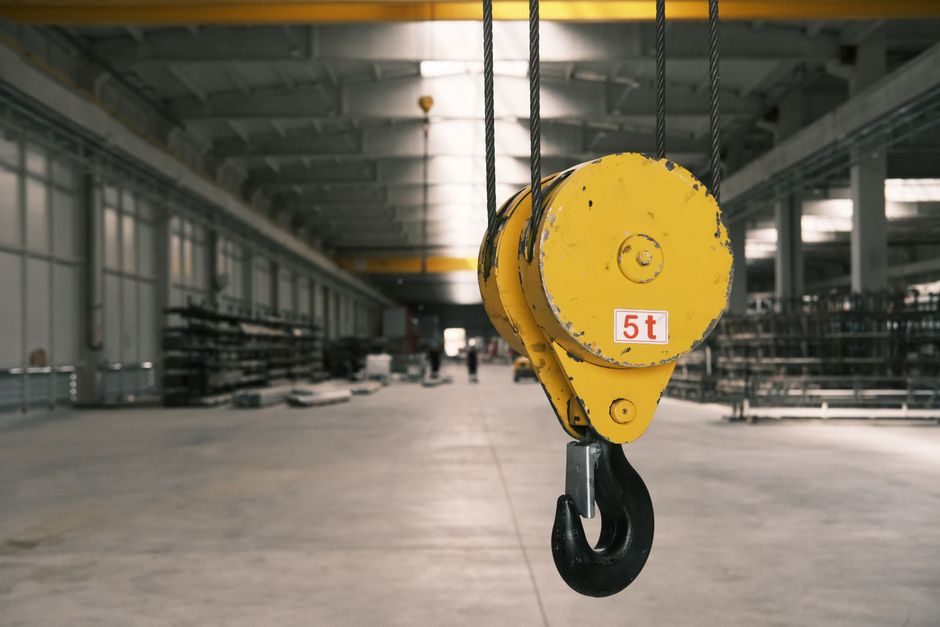
Crawler crane selection is governed first by maximum lift class and second by lattice-boom geometry: modern production models span 80 t machines such as the Manitowoc MLC80A-1 [S1] up to 300 t (330.7 US ton) units like the IHI CCH3000 [S2], and the lift class you pick dictates carrier weight, transport dimensions and undercarriage specification.
For a process engineer building a shortlist, three numbers have to be locked before any vendor call: peak lift at minimum radius, maximum free-standing boom + jib height, and ground-bearing pressure at full counterweight — the third is what most often kills a tender because soft pad or marsh site survey flags it before the crane arrives. The crawler configuration trades mobility for footprint, which is exactly the trade a telescopic mobile crane cannot make on a long-duration, heavy-lift site.
Capacity Bands and the Lift Chart You Read First
The 80–300 t band covers the bulk of bridge, refinery, wind-farm and power-station erection work; below 80 t a truck crane sizing exercise is usually a cheaper route, and above 300 t you cross into the specialized heavy-lift segment with a single-digit number of OEMs globally [S1][S2].
Read the load chart at three radii, not just the headline maximum: minimum radius (where the crane is strongest and where you rig up), working radius (where you actually place loads), and maximum radius (where tip height and chart derate sharply). The IHI CCH3000 datasheet, for example, quotes a 300 t maximum load against a working-height envelope of 18 m minimum to 90 m maximum [S2] — that 5:1 height swing is typical of large lattice-boom crawlers and tells you the machine is dimensioned for tall refinery and process-column work, not low-rise work.
Boom Configuration: Lattice vs Telescopic
Lattice-boom crawlers dominate the 80 t+ segment because pinned-boom geometry is lighter per metre of reach than a telescopic box, which directly raises the lift-to-self-weight ratio; the Manitowoc MLC80A-1 and IHI CCH3000 datasheets both describe a lattice structure on a crawler chassis [S1][S2].
A telescopic boom on a crawler (a "crawler-telescopic" or "pick-and-carry crawler") is a different product — it sacrifices peak chart capacity for mobilisation speed and is most common in the 40–80 t range. If the job needs repeated radius changes under load without a secondary assist crane, lattice is the wrong choice because each radius change is a re-pin; if the job needs high tip height with low mass up high, lattice wins on every published chart.
Ground Pressure, Track Shoe and Undercarriage
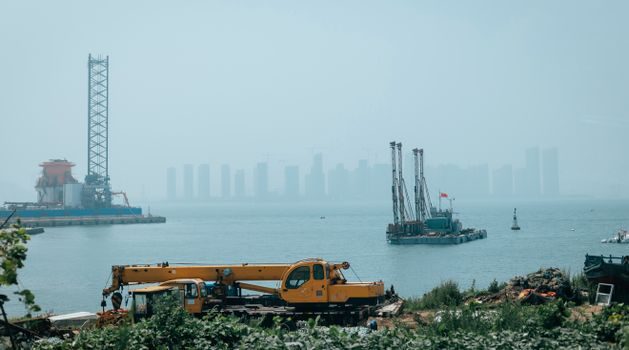
Crawler crane ground-bearing pressure runs roughly 50–120 kPa (≈0.5–1.2 bar) at full counterweight, which is typically an order of magnitude below a rubber-tyred mobile crane on outriggers but still demands matting on soft subgrade. The selection lever here is track-shoe width and track-frame length, both of which are quoted in the crawler crane undercarriage parts catalogue for each model [S3].
Track-shoe options for cranes in this class commonly range 760 mm to 1200 mm wide; wider shoes lower bearing pressure but reduce manoeuvrability on tight sites. A 300 t-class machine on 1000 mm shoes will sit closer to 90–110 kPa, while the same machine on 1200 mm extended shoes drops into the 75–95 kPa band — the difference between passing and failing a site survey on a reclaimed or decayed-ground project [S3].
Auxiliary Systems, Cab and Service Access
Operator-cab instrumentation is a useful proxy for build quality: the IHI CCH3000 spec lists engine tachometer with hour meter, hydraulic pressure gauge, fuel gauge, engine coolant temperature gauge, dual front work lamps, A/C, AM/FM radio, and front + ceiling wiper/washer [S2] — a useful comparison list when auditing a cheaper rebuild.
What that block tells an engineer is that the manufacturer is targeting continuous-shift industrial operation, not short-duration rental. Hydraulic pressure gauge + coolant temperature gauge as standard instrumentation means the cab is wired for a load-moment indicator (LMI) feed, which is a regulatory requirement in most jurisdictions above 80 t. If a quote omits an LMI, walk away.
Counterweight, Transport and Assembly Time
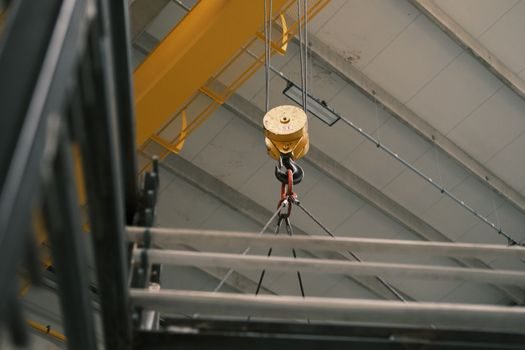
Counterweight stack height on a 300 t-class lattice crawler commonly runs 50–80 t of modular slabs, and a self-erection system (hydraulic cylinders that rig the boom without an assist crane) is what separates modern machines from legacy fleets. Manitowoc and IHI both publish self-erection specs in this class [S1][S2].
Transport matters because the crane is useless if it cannot get to the first lift: pin-connected lattice sections stack into standard 40 ft and 12 m flat-rack envelopes, but auxiliary winches, hook blocks and counterweight slabs are typically shipped as separate loads. A modern 300 t-class machine can be broken into 8–12 truck loads; legacy fleets of the same class regularly exceed 14 loads, which is a 25–30% mobilisation cost delta on a remote site.
Standards, Safety Systems and Sourcing Realities
Lift-class selection must satisfy the load-moment-indicator (LMI) and rated-capacity-limiter (RCL) requirements that come with any CE-marked or OSHA-compliant crawler; the same 80 t / 300 t envelope is the same whether the machine is destined for a European refinery or a North American bridge. Site-specific overlays — wind-speed derating, geotechnical mat design, and lift-plan sign-off — sit on top of the OEM chart, not in place of it. [S1]
The 2026 sourcing environment is shaped by 2–3 dominant OEMs in the heavy lattice-boom crawler class globally, with a long tail of regional rebuilders and used-equipment dealers supplying 60–150 t units. New-machine lead times for 200 t+ units routinely run 9–15 months from order to commissioning, which is why a 3–6 month planning buffer on the lift-class decision is not optional — by the time the geotech report is signed, the slot at the OEM may already be the binding constraint. For the smaller end of the band, the same used-equipment pipeline absorbs demand spikes in 4–8 weeks.
Next trackable signal: the OEM second-half 2026 release of higher-capacity lattice-boom variants above 350 t, several of which are already in field trials with first units scheduled for delivery in late 2026; cross-reference any tender that pushes the 300 t boundary. A second signal worth watching is the regulatory direction on LMI data logging — black-box event recorders above 100 t are under active discussion in both EU and US jurisdictions and will shift the spec on cab electronics over the next 18 months.
For component-level specifications, see crane scale.