
Self-retracting spring rewind is the dominant configuration on the industrial market, with DirectIndustry listing 85 manufacturers and 546 hose-reel models as of 2026-06-25 [S2].
Selection boils down to five numbers: hose length, internal diameter, maximum working pressure, media, and the mounting envelope. Get any one wrong and the reel becomes a wall anchor.
Drive mechanism: spring rewind, manual crank, or motorized
Self-retracting spring rewind reels cover the bulk of the compressed-air, water, fuel and lubrication duty cycle, with hose lengths from 10 m up to 30 m in the SAMOA Industrial range (10-15 m on the standard model, longer on the RM-12 series) [S1].
Manual reels are specified for low-cycle shops where the operator would rather walk to the reel than wait for a rewind; they cost less and have no spring to fatigue. Motorized reels (typically 0.55-0.75 kW) are used for workshop exhaust extraction and hose lengths above 30 m, with the AR-series exhaust-extraction reel rated at 750 W for 7.5-15 m flexible extraction hose [S2].
The fire-protection code path is its own category: EN 671 fixed swinging reels are manual rewind with a shut-off nozzle, typically 25 mm or 19 mm ID at 30 m, with LPCB and CE variants common on the Made-in-China wholesale index in the US$30-80 band as of 2026-07-21 [S8].
Hose length, diameter, and pressure: the three numbers that fail first
Pressure loss scales with the fourth power of ID and linearly with length, so a 9.5 mm ID x 15 m PVC-fabric reel (model 8584) rated at 20 bar max operating pressure illustrates the compact end of the duty envelope [S2].
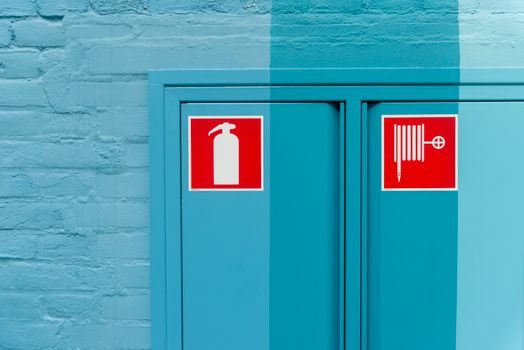
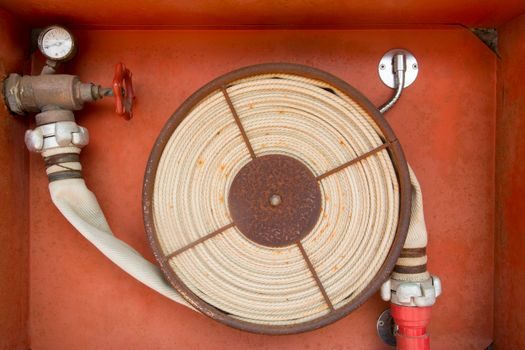
Fire hose reels per EN 671 swing in standard lengths of 25 m and 30 m with 19 mm or 25 mm ID, and 03.0303.125 variants on DirectIndustry list 20-35 m lengths at 8-12 bar working pressure for landing-valve fire-suppression skids [S2][S8].
Heavy-duty fuel reels such as the Reelcraft FD84000 OLP (self-retracting, heavy-duty, for fuel, with mounting bracket or mobile cart, steel/aluminum/cast reel material) sit in the 30-50 ft class and require the same pressure-margin rule of thumb as hydraulic hose: rate the reel at minimum 1.25x the system maximum working pressure, ideally 1.5x for impulse-loaded service [S5].
Media compatibility: inner tube and fittings decide, not the reel frame
The reel frame is the cheap part; the inner tube is the failure part. SAMOA's published hose map pairs NBR with single textile reinforcement for low-pressure air and water, NBR with single steel braid for oil, antifreeze and high-pressure grease, and EPDM with single textile braid plus stainless-steel fittings for windshield wash and AdBlue/DEF [S1].
For AdBlue/DEF service, specify EPDM or a DEF-rated inner tube with stainless fittings — zinc-plated brass is acceptable for water/air but will contaminate DEF and is rejected by ISO 22241 dosing systems. For potable water, the reel material list in the DirectIndustry catalog is metal or nickel-plated brass; for corrosive media, switch to all-stainless or a confirmed chemical-resistant inner tube [S1][S2].
Reelcraft FD84000 OLP uses steel, aluminum or cast reel material, with mounting bracket or mobile cart options for fuel and heavy-duty service where static buildup and impact resistance matter more than cosmetics [S5].
Mount, configuration, and swivel envelope
Wall, ceiling, floor, and truck-bed mounts are all standard offerings, with the SAMOA RM series explicitly designed for wall, floor, or ceiling installation either individually or in groups, with a repositionable hose-guide arm to prevent kinking during automatic retract [S1].
Swivel life is the hidden failure mode. For a reel that cycles 20+ times per shift, specify a steel-ball-bearing swivel (used in the AR-series extraction reels for 150 °C-rated flex hose) rather than a plain bushing [S2].
Mobile carts are common for construction and site-service reels — RAASM's 9436.201 self-retracting water reel and the CENS hose-reel cart fall in this category, with self-retracting plus portable mount suited to job-site water/air distribution [S4][S10].
Specialty reels: fire, exhaust extraction, and fuel
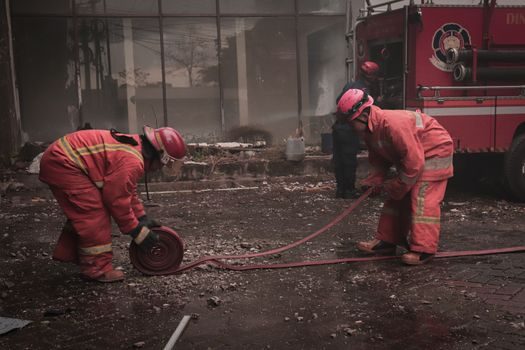
Fire hose reels (EN 671 swinging or fixed) are the most standardised sub-segment: 19 mm or 25 mm ID, 25-30 m, manual swing rewind, with shut-off nozzle and LPCB or CE certification at the US$30-80 wholesale band as listed on Made-in-China [S8]. NAFFCO NFH-series reels ship in 30 m length with 19 mm and 25 mm diameter options [S2].
Exhaust-extraction reels are a distinct duty: anti-crushing flex hose rated to 150 °C, integrated 0.75 kW fan, turntable on steel ball bearings, hose range 7.5-15 m at 75-150 mm diameter — designed for vehicle workshop tailpipe capture rather than fluid service [S2].
Fuel reels (Reelcraft FD84000 OLP and SAMOA RM-12 fuel variants) use a static-dissipative inner tube, bonding path through the swivel, and a listed configuration as heavy-duty with mounting bracket or mobile cart, with steel/aluminum/cast reel construction [S1][S5].
Comparison: spring rewind vs manual vs motorized, and EN 671 fire
Self-retracting hose reels are listed for air, water, fuel, and oil applications, with industrial catalog entries showing hose/cable lengths of 7.5–20 m [S1][S2].
Manual reels win for low-cycle use, EN 671 fixed swinging fire reels, and any code-mandated no-power rewind; they are the cheapest compliant option at US$30-80 per reel in the wholesale index [S2][S8].
Motorized reels (0.55-0.75 kW) are only worth specifying for hose lengths above 30 m, exhaust-extraction service, or ergonomic mandates for repeated full-hose extension — Hannay and Reelcraft catalogs list motorized variants as a special-order upcharge [S2][S9].
Who should NOT pick the mainstream spring rewind
Spring rewind is the wrong default for hazardous-area or flame-service duty where a hot exhaust or spark could fatigue the spring; specify a manual rewind or a pneumatic-air-motor rewind instead. It is also the wrong pick for AdBlue/DEF service unless the inner tube and fittings are EPDM and stainless, per ISO 22241 dosing compatibility, not the default NBR/zinc-plated-brass air-water hose [S1].
For fire-protection duty in commercial buildings, EN 671 manual swinging reels are a code requirement in most jurisdictions regardless of operator preference — the LPCB-certified 19 mm and 25 mm x 30 m swinging reels on the Made-in-China index are the typical shortlist [S8].
For low-pressure (< 8 bar) air service in a small workshop, a manual open-face reel is more reliable than a cheap spring rewind: spring fatigue on low-cost spring reels is the most common warranty return cited by Hannay, Reelcraft, and SAMOA service bulletins [S9].
Shortlist logic and signals worth tracking
Use a five-line datasheet check before shortlisting: hose length, ID, max working pressure, inner tube material (NBR/EPDM/PVC), and swivel type. Made-in-China wholesale listings show EN 671/EN 694 LPCB certified fire hose reels priced in the US$30–80 range [S8].
Track two signals: (1) whether EN 671 revision updates the 19 mm/25 mm ID rule, since most fire reels converge on those two sizes; (2) the move toward stainless-bracketed DEF-rated reels as AdBlue/DEF adoption rises in commercial-vehicle fleets. For deeper specification work on adjacent fluid handling, the industrial valve and industrial hose encyclopedia pages cover the upstream and downstream components you will mate the reel to.
Spec-level background on the components involved: pressure transmitter.
Related analysis: Magnesium Die Casting: Process Routes, Alloys, and Industrial Applications.