
Magnesium die casting at production scale is dominated by hot-chamber (Thixomolding) and cold-chamber high-pressure die casting, with machine clamp tonnages of 250 T, 500 T, 1200 T, and 1600 T deployed in tier-1 part lines [S4]. The commercially dominant alloy family is AZ91 (Mg-9%Al-1%Zn) with the AM series (Mg-2-6%Al) covering non-creep interior trim, both codified under ASTM B 275 [S2][S3].
At a density of 1.8 g/cm³, magnesium is the lightest structural metal, the 8th most abundant element on earth, and 100% recyclable, making it the highest strength-to-weight ratio of any commonly used structural metal in volume production [S5]. Magnesium alloy castings are produced by sand, permanent and semi-permanent mold, shell, investment, and die-casting — die casting remains the default for high-volume structural and closure parts [S2].
Process Routes: Hot-Chamber, Cold-Chamber, and Thixomolding
High-pressure die casting accounts for the majority of magnesium parts in automotive applications because of the excellent fluidity of magnesium alloys, compatibility of liquid magnesium with die materials, and the high productivity of the die casting process [S3]. Cold-chamber machines in 250 T, 500 T, 1200 T, and 1600 T clamp ratings are typical for magnesium structural castings, with dedicated magnesium cold-chamber cells operating alongside Zamak and aluminum lines [S4]. For process selection criteria, a magnesium die casting machine overview covers the working envelope differences between hot- and cold-chamber cells.
Thixomolding injects semi-solid magnesium chips directly into a heated barrel, eliminating the molten-metal handling step and reducing oxidation risk, and is widely specified for thin-wall electronics enclosures where the magnesium die casting machine footprint is constrained. For parts with thicker sections or higher mechanical loads, conventional cold-chamber die casting at 500-1600 T remains the default production route, with die-casting-die wear driven by the abrasive aluminium and rare-earth content of the alloy rather than by magnesium itself.
Alloy Designation under ASTM B 275 and the AZ/AM Families
ASTM B 275 codification uses two letters for the principal alloying elements in decreasing percentage order, two whole numbers for the rounded mean percentages, and a third letter for variant registration [S2]. In AZ91A, AZ91B, and AZ91C, "A" denotes aluminium (8.6-9.4%) and "Z" denotes zinc (0.6-1.4%), with the suffix letter indicating sequential composition variants registered with ASTM [S2]. The AM series (Mg-2-6%Al) and AZ91 alloy (Mg-9%Al-1%Zn) are the workhorses for room-temperature automotive applications such as instrument panels, steering wheels, and valve covers [S3].
High-purity "D" suffix grades deliver corrosion performance comparable to aluminium die castings in salt-spray testing, while "E" grades target high-corrosion-resistance applications where galvanic compatibility with aluminium sub-frames is required [S2][S5]. Sourcing magnesium-specific production cells rather than shared aluminium lines is recommended for AZ91D and AM-series runs to avoid cross-contamination that pushes Fe/Ni content above the 50 ppm corrosion threshold.
High-Temperature and Creep-Resistant Alloy Systems
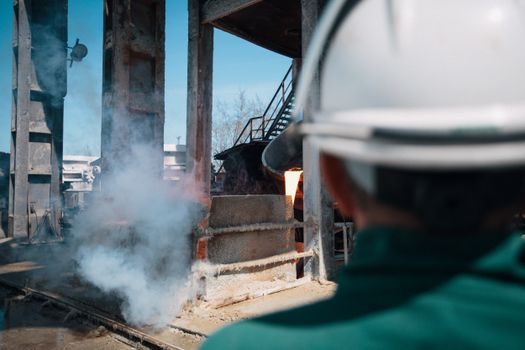
Powertrain applications such as transmission cases and engine blocks operate at 150-200 °C under 50-70 MPa tensile and compressive loads — a service envelope that AZ91 and AM-series alloys cannot sustain without significant creep strain [S3]. Creep-resistant magnesium alloys developed for these elevated-temperature conditions are based on rare-earth and alkaline-earth element additions, with microalloying strategies targeting grain-boundary stability at sustained service temperatures [S3].
Automotive deployment of these rare-earth magnesium alloys has expanded into closure panels and structural castings driven by vehicle mass-reduction targets, with the review of magnesium die-castings for closure applications documenting the alloy and process boundaries currently in production [S6]. The creep-resistant grades trade a material cost premium against the ability to displace aluminium in the 150-200 °C under-hood envelope.
Application Map: Automotive, Electronics, Aerospace, and Hand Tools
Magnesium die castings serve chain saw bodies, computer components, camera bodies, and portable power tools where both lightness and rigidity are required, and magnesium alloy sand castings are used in aerospace structural applications due to their weight advantage over aluminium [S2]. Vehicle mass reduction is now realised through magnesium in structural applications and closure panels, not just interior trim, with the closure review covering the property thresholds that magnesium must meet to displace aluminium [S6].
Light-alloy die casting is a mature tier-1 process for both aluminium and magnesium parts, with the same supplier base offering aluminum die casting machine and magnesium cell capacity in shared foundries [S1]. KENOS-branded magnesium die casting parts ship at a quoted 15,000 pieces per week supply ability, indicating the volume tier at which dedicated magnesium production becomes economically justified [S1].
Comparison of Magnesium Die Casting Process Options
Process selection across the four commercial magnesium casting routes can be lined up against four decision criteria — minimum section thickness, production volume, alloy family, and typical application. Hot-chamber (Thixomolding) supports 0.5-1.0 mm wall sections at high volume for AZ91D thin-wall electronics enclosures; cold-chamber high-pressure die casting at 500-1600 T handles 1.5-4.0 mm sections in AZ91/AM60 for automotive structural parts; gravity die casting in gravity die casting machine cells suits low-volume AM-series runs; and vacuum die casting machine routes are specified where porosity in AZ91E high-purity parts must be minimised for safety-relevant components [S2][S3][S4].
Casting-method selection must weigh design configuration, intended application, required properties, total production volume, and the specific properties of the alloy — not a single metric such as part weight [S2]. Magnesium fluidity supports die filling at thinner sections than aluminium at the same injection pressure, but the alloy's higher reactivity with water and the need for SF6 cover gas or an alternative protective atmosphere force dedicated furnace and shot-end design rather than a shared aluminium cell.
Limitations, Failure Modes, and Sourcing Constraints
Creep at 150-200 °C remains the binding constraint for AZ91 and AM-series magnesium in powertrain, and the rare-earth creep-resistant grades that solve this issue carry a 2-4× alloy cost premium over AZ91D [S3]. Galvanic corrosion against steel fasteners requires either insulating bushings, high-purity AZ91D/AM60B grades, or E-suffix alloys; standard AZ91A/B grades will fail salt-spray testing in direct contact with steel sub-frames [S2][S5].
Foundry-side constraints include the need for dedicated cold-chamber machines (250 T / 500 T / 1200 T / 1600 T have all been documented in current magnesium production lines), controlled-atmosphere melting, and a how-to-choose guide for magnesium die casting process, alloy, and machine that walks through the cell layout. The 2026 zinc die casting sourcing map shows where magnesium, zinc, and Zamak capacity is co-located in the same supplier — a useful proxy when the question is whether the foundry can run a multi-alloy part family on a shared die-casting machine line [S1].
Trackable signals for the next 6-12 months: (1) creep-resistant rare-earth magnesium alloy penetration in transmission-case and engine-block production runs above the current 150-200 °C / 50-70 MPa envelope [S3]; (2) capacity announcements in 500 T and above cold-chamber magnesium cells at tier-1 foundries running shared magnesium, zinc, and aluminium die casting [S1][S4].