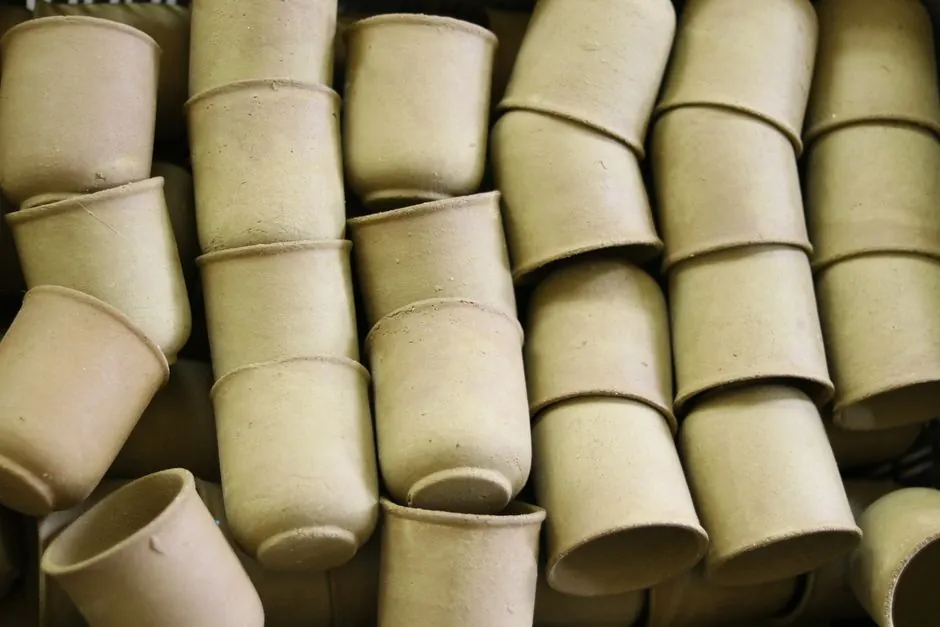
A hot box core shooter cures resin-coated sand inside a heated core box held at 250-350°C, with blow pressure typically set at 0.2-0.4 MPa and hardening (sintering) times of 40-120 s per cycle, making it the go-to process for small and medium sand cores with complex internal cavities [S3]. Buyers comparing hot box machines against shell core machines and cold box units should anchor the decision on cycle time, box temperature stability, and the binder system, not on a single tonnage or chamber figure.
Hot box is a heat-cured phenolic process; the hot box core machine and the shell core machine both use thermal curing of resin-coated sand, while a cold box core machine hardens the same family of binders with amine gas at room temperature. The hot box process is widely specified for high-volume cores under roughly 20 kg, where cycle speed and surface finish matter more than absolute minimum emissions.
Process Window and Operating Limits
Core box temperature is the primary process variable for any hot box installation: foundry-lexicon data places the working window at 250-350°C for the heated box, with hardening time at 40-120 s driving shell thickness on the inner contour [S3]. Below 250°C, cure is incomplete and surface hardness drops; above 350°C, binder burn-off and excessive fume generation start to dominate. Shoot (blow) pressure of 0.2-0.4 MPa is enough because phenolic-coated sand flows readily, a much lower pressure than the 0.5-0.7 MPa range typical of cold box shooting [S3].
For a buyer, the operating limits worth writing into the spec are: box temperature 250-350°C with PID control, digital setpoint and display, hardening time 40-120 s adjustable, and blow pressure regulated to 0.2-0.4 MPa. ATHI's hot box product literature confirms the use of electric and steam heating to solidify phenolic resin-coated sand, with PLC control, LCD parameter setting, and automatic digital temperature display as standard features on its commercial machines [S1].
Selection Criteria: What Actually Differentiates a Hot Box Shooter
Five criteria reliably separate a usable hot box core shooter from a problem unit: temperature uniformity, sand shooting head maintenance, clamping rigidity, controls, and sand-mix compatibility. Temperature uniformity is a box-and-heater design question, not just a wattage question, and is the single biggest predictor of scrap rate. Sand shooting head self-cleaning after each shot avoids manual intervention and protects the phenolic coating from burn-on, a feature that ATHI lists as standard on its commercial hot box units [S1].
Clamping rigidity matters because the core box must stay sealed during the 0.2-0.4 MPa blow; ATHI specifies high-frequency-quenched, rigid chrome-plated guide rails for the template/clamping movement, which directly extends service life under repeated thermal cycling [S1]. For controls, PLC + LCD with manual, automatic, and jog modes plus fault diagnostics is the practical minimum on any new build [S1]. Sand-mix compatibility is the last gate: hot box runs on dry, flowable phenolic-coated sand only, which is why a buyer needing to switch binder families should be looking at a core machine platform that supports hot box, warm box, and inorganic processes, rather than a hot-box-only line [S4].
Hot Box vs Warm Box vs Cold Box vs Shell: A Criteria Comparison
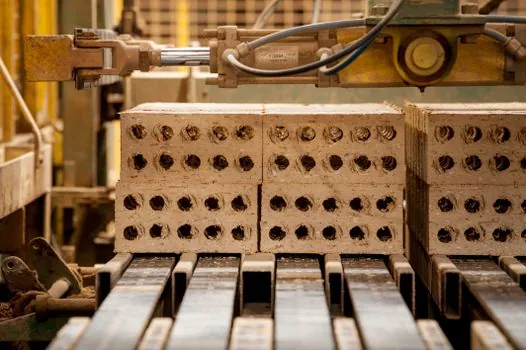
Foundries rarely pick hot box in isolation; they pick against warm box, cold box, and shell core. The decision can be lined up against four numeric criteria. Cure temperature: hot box runs 250-350°C, warm box runs at lower temperatures to broaden binder choice, cold box cures at room temperature using amine gas, and shell (Croning) cures in a similar 250-350°C heated-box window with a sacrificial back-fill [S3][S4]. Cycle time: hot box is fast, with 40-120 s hardening and short cure-on-contour steps; cold box gassing cycles are short but require amine scrubbers and gas-handling infrastructure; shell machines have longer 40-120 s hardening windows tied to shell thickness [S3]. Emissions: hot box has lower toxic gas output than older furan systems and good shake-out, which is why it is increasingly favored in plants cleaning up their emissions footprint [S5]; inorganic core systems eliminate most organic emissions entirely but require new binder investment [S4]. Part-size fit: hot box is well suited to small and medium cores, including automotive, valve, and machine-tool cores with complex internal cavities [S1]; very large cores tend to be cold box or no-bake territory.
On a simple cost-versus-flexibility grid, hot box sits between warm box (more binder flexibility, lower energy) and shell core (thinner shells, better surface). Buyers who need to run multiple binder systems on one line should look at warm box or inorganic platforms instead; buyers who need fast cycles on a single proven binder should stay with hot box [S4].
Who a Hot Box Core Shooter Is For (and Who It Is Not For)
A hot box core shooter is the right pick for a foundry running high volumes of small to medium cores in phenolic-coated sand, needing fast cycle time, repeatable dimensional accuracy, and good shake-out after casting, and serving automotive, valve, and machine-tool customers where internal cavity complexity is the design driver [S1][S5]. It is also a fit for plants that want to move off higher-emission binder systems while keeping a heat-cured, gas-handling-lite process [S5].
It is not the right pick for foundries needing to switch binder systems frequently (warm box or inorganic platforms are more flexible), for very large cores where a hot box becomes impractically large (cold box or no-bake scale better), or for operations that cannot install adequate ventilation for the lower but non-zero fume load from phenolic cure [S4]. Plants with no PLC / electrical infrastructure for heated-box PID control should also stay away; the controls package is part of the process, not an option.
Use Cases and Foundry-Line Integration
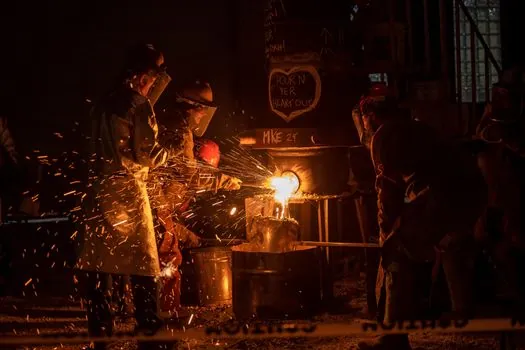
Hot box core shooters slot into three common foundry-line patterns: standalone cells for job-shop cores, dedicated cells feeding an automotive or valve casting line, and integrated sand-prep plus core-shoot plus core-storage loops. The standalone pattern is typical for small foundries and jobbing work; the dedicated cell pattern is the high-volume case where hot box's fast cure earns its premium [S1]. The integrated pattern ties a continuous sand mixer or rotor-type sand mixer to the shooter, with resin-coated sand fed on demand, and is the configuration most large OEM foundries run.
Both vertical-parting and horizontal-parting box layouts are common on hot box machines, and a buyer should match the parting line to the core geometry, not to the machine vendor's default [S1]. For cores with deep draws or undercuts, a horizontally parted box with hydraulically clamped movable half is typically easier to set up than a vertical layout. The same selection logic that drives gravity die casting machine selection for energy equipment, pairing die architecture to the casting shape rather than to a brand default, applies here as well.
Limitations, Failure Modes, and Sourcing Risks
The four most common hot box failure modes are uneven cure, sand head burn-on, box sealing loss, and PLC drift. Uneven cure shows up as soft spots in the core, almost always traced back to a heater element, a thermocouple, or PID tuning rather than to the sand. Sand head burn-on is a resin-binder problem driven by residual heat in the shooting head, which is why the self-cleaning cycle on commercial units is functionally important, not cosmetic [S1]. Box sealing loss typically comes from guide-rail wear; the chrome-plated, high-frequency-quenched rail design directly targets this wear mode [S1]. PLC drift shows up as creeping cycle times or off-spec hardening windows, and is the strongest argument for buying a machine with accessible, documented controls rather than a closed black box.
On sourcing, the main risks are spec-sheet-only purchases without a witnessed demo, undisclosed cure-temperature spread between top and bottom of the box, and warranty exclusions on heater elements and thermocouples. A practical buyer's check is to require a factory acceptance test (FAT) that logs box temperature at five or more points across the platen, at steady state, before shipment. Foundries buying hot box machines as part of a broader casting line should also align tooling standards with related fettling grinder selection for pump and valve production downstream, so that core dimensional tolerances and grinding stock stay compatible across the cell.
Shortlist Logic and Trackable Signals

A defensible shortlist of hot box core shooters can be built in three steps. First, fix the spec: 250-350°C box temperature with PID, 0.2-0.4 MPa blow pressure, 40-120 s hardening window, PLC with manual/auto/jog, and self-cleaning sand head. Second, fix the integration: vertical or horizontal parting, sand-prep interface, and downstream conveyor or robot handoff. Third, run a side-by-side FAT on temperature uniformity, cycle time at rated cure, and noise/ventilation load, with the same sand mix and the same core box on each candidate machine. [S1]
Two trackable signals worth watching through 2026: phenolic binder reformulation driven by tighter workplace exposure limits, which is pushing more plants toward inorganic or warm box platforms [S4], and tighter EU and US emissions reporting on foundry core-making, which is starting to show up in machine-builder option lists for fume handling. Buyers evaluating hot box in 2026 should confirm both the binder system and the emissions-control package in writing before placing an order, and should cross-check their core-room air-handling design against the machine vendor's stated exhaust requirements.