
A cold box core shooter is sized primarily by maximum core weight, parting style, and core box envelope, with standard industrial models spanning 3 kg to 150 kg per shot and plate sizes from roughly 300x200 mm up to 1050x1050 mm [S4][S5].
Selection logic, not brochure headline numbers, drives uptime: shot chamber volume must exceed the heaviest single-core sand demand, gassing uniformity must cover the largest core footprint, and changeover time has to fit the mix volume on the shop floor [S3].
Core Weight and Parting Geometry as the Sizing Anchor
Industrial cold box machine lines cluster into three weight bands: 3-15 kg for small valve and electrical cores, 20-50 kg for automotive and pump body cores, and 80-150 kg for engine block and large valve cores [S4][S5]. Kelsons offers a KCBCS range with shoot capacities of 3, 7, 10, 15, 20, 30, 50, 80, and 100 kg across vertical, horizontal, and universal configurations [S4]. Ganesh extends the high end to 150 kg with the GUCB 150, which carries a 1050x1050 mm horizontal parting plate [S5].
Parting style is not a marketing preference, it changes the core box envelope you can fit. Vertical parting units such as the Ganesh GVCB 5 work with 300x200x100 mm mounting plates and 5 kg cores, while horizontal parting units like the GHCB 40 use 500x600 mm plates and reach 40 kg [S5]. Universal models trade some rigidity for flexibility: the GUCB 50 accepts 400x500 mm vertical or 650x500 mm horizontal plates, which lets a jobbing foundry run both core families on one machine [S5].
The general rule is to size the machine to the heaviest core you intend to run, not your tonnage average. A 20 kg unit that is regularly pushed to its rated 20 kg will show accelerated wear on the shot plate, blow head seals, and the crossed-roller guide that carries the tooling table [S3][S4].
Shot Pressure, Chamber Volume, and Cycle Time
Shot pressure is a range, not a single number, and the range has to cover both your lightest and heaviest cores without retooling the air regulator [S3]. For thin-wall cores with tight internal passages, higher pressure packs sand into corners that a softer shot leaves loose; for delicate tooling, the same pressure can damage the core box or blow sand past parting lines [S3].
Shot chamber volume is the harder limit. If your heaviest core needs more sand than the chamber holds in a single cycle, the machine is functionally out of spec, regardless of how high the pressure gauge reads [S3]. Practical chamber-to-core ratios in commercial machines run roughly 1.2:1 to 1.5:1, so a 20 kg machine needs a chamber sized for 24-30 kg of resin-coated sand.
Cycle time on a semi-automatic 5 kg unit such as the Ganesh GVCB 5 sits around 1 minute, while automatic 100 kg-class machines from Kelsons target high-speed, PLC-controlled cycles with cycle time dependent on machine capacity [S4][S5]. Buyers running mixed product should ask for measured dry-cycle time at rated load, not the optimistic no-load figure printed in the catalogue.
Gassing System: Multi-Point Injection and Amine Management
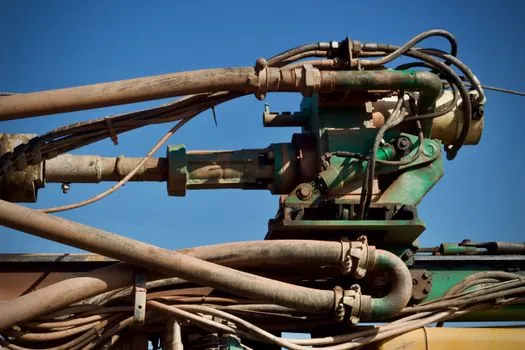
The gassing system, not the shooter, is where most cold box cores fail. Uneven amine distribution shows up as soft spots that only surface during casting, by which point the scrap has already been poured [S3]. For cores above ~15 kg, single-point injection is rarely adequate; multi-point injection through the blow plate or a separate gas head is the standard mitigation [S3].
Adjustable gas timing lets the operator tune cure duration to resin type, sand temperature, and core mass, which matters when a foundry switches between automotive and valve cores on the same machine [S3]. A scavenging system that strips residual amine from the core box before opening is also a worker-safety requirement in most jurisdictions, and it is one of the first items an OEM audits during a cold-box-core-machine commissioning review [S3].
Amine consumption is itself a selection metric. Ganesh lists "low amine consumption" as a named advantage on the GUCB 25, which signals that competitive machines in the 20-30 kg class are differentiated by how efficiently they distribute gas, not by raw shot force [S5].
Tooling Compatibility, Changeover, and Uptime
Changeover time dominates uptime on jobbing lines. Universal parting machines with quick-clamp blow plates and dedicated core unloaders shorten that window to a few minutes, which is why Ganesh offers auto blow plate and core box clamping as a standard option across the GUCB range [S5].
Tooling compatibility extends beyond the plate envelope. A shell core shooter on the same floor may share an operator skill set but not a core box footprint, because shell tooling runs hotter and uses a different clamping scheme. Buyers consolidating core production should verify that the cold box machine accepts existing core boxes, or budget for retooling on every existing design.
Two-station and three-station configurations from Kelsons address changeover by parallelizing it: while one station cures, the operator loads the next, which effectively cuts perceived cycle time roughly in half on small cores [S4]. For high-mix, low-to-medium volume cores under 15 kg, this layout often beats a single larger machine on throughput per square meter of floor space.
Control System, Power, and Data Integration
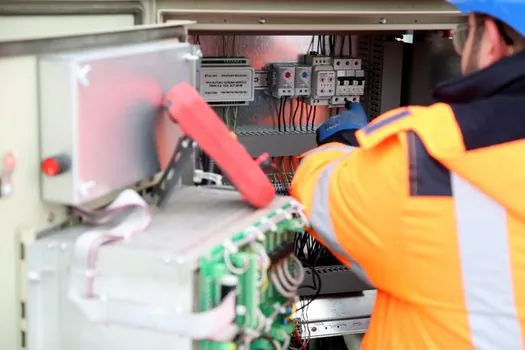
Modern cold box shooters run PLC with MMI interfaces, automatic digital temperature control, and fault diagnostics on the LCD panel [S2][S4]. Power supply is standardized in Indian and Asian markets at 415 V / 3 phase / 50 Hz, with Kelsons specifying 4 kW across the 3-100 kg range, which reflects the dominance of pneumatic actuation over hydraulic on smaller machines [S4].
Higher-end machines add data logging and Industry 4.0 monitoring: shot count, cycle time, gas flow, and temperature are recorded per shift, which lets a process engineer correlate core weight drift with binder dosing upstream [S4]. For a foundry integrating a new line, this is the data path that ties the core shop into the broader industrial oven selection logic for sand and core drying upstream.
Pneumatic versus hydraulic actuation is a real choice. Pneumatic machines are simpler, cheaper, and faster on small cores, but they struggle to deliver sustained high pressure for large dense cores. Hydraulic or hydropneumatic machines, like the Ganesh GUCB 20 and GUCB 15, deliver higher clamping force and more repeatable shot pressure at the cost of more utility hookup and warmer oil [S5].
Who Should NOT Pick the Smallest Universal
A 5-15 kg universal machine is the wrong choice for a foundry whose heaviest core exceeds roughly 70% of the rated capacity, because the shot chamber, blow head, and clamping force are all sized for the rated number, not the over-ranged number [S3]. Running a 15 kg machine at 12 kg every cycle halves guide life and increases soft-cure rejects, so the cheaper machine becomes the more expensive one over three to five years [S4].
Conversely, a 100 kg machine is wrong for a jobbing foundry running 5-10 kg cores in batches of 50, because the sand hopper, gas system, and chamber are all oversized, amine consumption climbs, and cure uniformity suffers on a small core sitting in a large gas plenum [S3][S4]. The right band is usually the one where the heaviest core sits at 60-80% of rated capacity.
Foundries without a stable amine gas generator should also avoid machines that do not bundle one, because third-party amine generators frequently have control lag that mismatches the shooter's PLC and produces under-cured cores [S2]. ATHI, Kelsons, and Ganesh all ship matched amine gas generation with the machine, which removes one integration risk [S2][S4][S5].
Selection Criteria Comparison Across Common Sizing Bands
Comparing 5 kg, 20-30 kg, and 100 kg cold box classes against four decision criteria clarifies the trade-off: a 5 kg semi-automatic suits low-mix small cores with 1-minute cycle times and minimal utility demand; a 20-30 kg universal handles the broadest jobbing mix with 400-700 mm plates and 25-30 kg max core weight; a 100 kg horizontal-parting machine runs engine and large valve cores at 80-100 kg but requires a matched high-capacity amine system and a linear guide table rated for the heavier tooling mass [S4][S5].
On cost per kg of core, the 20-30 kg class is usually the lowest, because the machine, hopper, and gas system are all in the mainstream of OEM production [S3]. On flexibility, the universal configuration wins, but it pays a 10-15% rigidity penalty compared with a dedicated horizontal machine of the same weight [S4][S5].
On changeover, two-station and three-station layouts outperform single-station machines by roughly 30-50% in mixed-product throughput, but they require more floor space and a higher initial capital outlay [S4]. On data integration, Kelsons explicitly lists Industry 4.0 monitoring and data logging on its KCBCS-FA series, while Ganesh emphasizes SCADA on its automatic sand mixing systems, which suggests that end-to-end data capture is now a baseline expectation rather than an upgrade [S4][S5].
The selection shortlist for most jobbing foundries lands on a 20-30 kg universal machine from an OEM that ships the amine generator as part of the package, with multi-point gassing, PLC control, and either a quick-clamp or two-station layout to absorb changeover losses [S2][S4][S5].
For a related decision on the shell-process side of the same core shop, the shell core machine installation guide covers the cure calibration and utility hookup that complement cold box selection. Foundries consolidating die casting and core production can also cross-reference cold-chamber machine sizing to align melt rate with core consumption per shift.