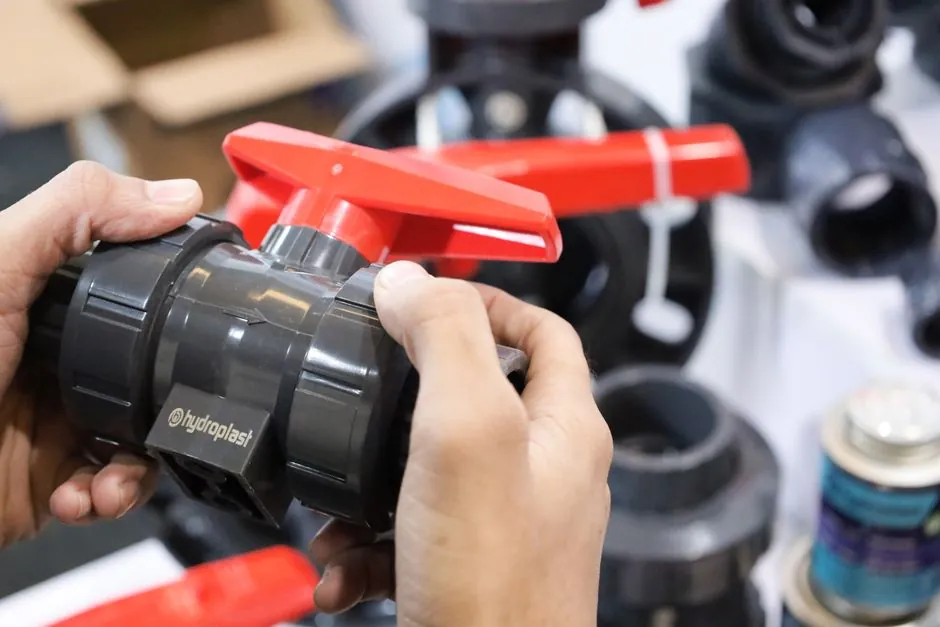
Hydraulic valve selection starts with three numbers from the actuator circuit: maximum working pressure, peak flow in L/min, and the spool configuration (e.g. 4/3-way) the cylinder or hydraulic motor needs to stroke, hold, and return. Directional control valves in the 21-31.5 MPa band dominate mobile and industrial machinery builds, while servo and proportional valves add closed-loop positioning on top of that base rating [S4].
Reference listings for DSG-03, 4WE6, and 25 GPM log-splitter spools show cast-iron bodies rated to 31.5 MPa / 120 L/min, with 24 V DC solenoid coils as the default and 220 V AC offered for plant automation builds [S4][S2]. Within that envelope, the four functional families (directional, pressure control, flow control, check) split the work; this guide walks each one.
Directional Control Valves: Spool Count, Position Count, and Actuation
A directional control valve is specified by its number of spools (1, 2, 3), number of positions (2 or 3), and the actuation method, with 4/3 (4 ports, 3 positions including a spring-centred neutral) being the workhorse for double-acting hydraulic cylinders [S2][S4].
For mobile and tractor builds, single-spool 25 GPM units at 3626 psi (25 MPa) with adjustable relief and joystick control list at $80-$90 on volume channels, while 1-spool 5 GPM versions for small log splitters sit in the $84 band with 3600 psi (24.8 MPa) ratings [S2]. Solenoid-actuated 4WE6 / DSG-03 bodies in cast iron are commonly stamped 31.5 MPa / 120 L/min, with 24 V DC coils as standard and 220 V AC options for fixed installations [S4]. For a deeper dive on supply-side pricing across Chinese OEMs and how it tracks displacement class, see the hydraulic pump suppliers 2026 spec-band map.
Pressure Control and Flow Control: Relief, Reducing, and Counterbalance
Log-splitter and tractor directional valves in the 25 GPM class ship with an integrated adjustable relief bar so a single body handles both direction and over-pressure protection, which is why a 1-spool 25 GPM unit lists around $87 with relief versus $48 for a 2/3-spool 11 GPM body sold without it [S2]. Reducing valves drop a 31.5 MPa supply down to a lower branch pressure (commonly 5-15 MPa) for clamping circuits, and counterbalance valves hold a vertical load against back-pressure when the directional valve centres, replacing a separate check block in many loader schematics [S3].
Check Valves and One-Way Logic: Cracking Pressure and Leakage Area

Check valves permit flow from port A to port B and block reverse flow until the differential pressure Δp exceeds the cracking pressure p_crack, at which point the spool or poppet lifts and the passage area grows from leakage area A_leak toward the fully open area A_max [S1].
Modellers parameterise the block on three areas (A_leak, A_init, A_max), two pressures (p_crack, p_max), a discharge coefficient C_D, and a Reynolds-number threshold for the laminar-turbulent transition, and the leakage area must be greater than zero so that closing the valve does not isolate a section of the circuit and stall the solver [S1]. In practice, a low-cracking check (1-3 bar) is used downstream of a pump to maintain prime, while a higher-cracking pilot-operated check (3-15 bar) holds a vertical cylinder against back-flow when the directional valve centres. For broader hydraulic-system context, the hydraulic working principle and circuit basics overview covers how check valves fit into pump-to-actuator lines.
Servo and Proportional Valves: When Spool Valves Are Too Slow
A two-stage servo valve pairs a torque-motor-driven flapper-nozzle pilot with a 4-way, 3-position power spool, giving sub-millisecond step response and closed-loop position accuracy on a hydraulic actuator that a standard solenoid spool valve cannot reach [S5].
The pilot stage modulates a small flow that positions the main stage, so stage-one dynamics (flapper deflection, nozzle back-pressure) and stage-two spool area curve together define bandwidth; common industrial servos target 50-100 Hz at +/- 90° phase lag, while proportional valves (no closed-loop spool feedback) typically reach 5-25 Hz. The trade-off is cost and contamination sensitivity: servos need 18/16/13 ISO 4406 fluid cleanliness or better, against 20/18/15 for proportional, so filtration spec has to be written into the hydraulic pump reservoir loop before the servo is quoted.
Comparison: Four Valve Families on Pressure, Flow, Response, and Cost
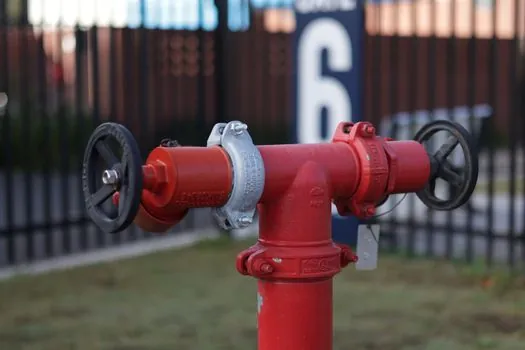
On four decision criteria (rated pressure, typical flow, response class, relative cost) the four main families split cleanly: directional solenoid spools (21-31.5 MPa, up to 120 L/min, 30-80 ms shift time, $) [S2][S4], pressure/flow control (matched to system pressure, full system flow, 20-100 ms, $) [S3], check valves (system pressure, full flow with negligible drop, passive/milliseconds, $) [S1], and servo/proportional (21-35 MPa, up to 400 L/min, 1-20 ms servo / 40-200 ms proportional, $$$-$$$$) [S5].
The matrix makes the shortlist logic simple: pick a directional spool for any on/off cylinder stroke, add a relief and a check for safety and load-hold, swap in a servo only when position or force must be controlled to better than +/- 1% over a moving load, and stay with proportional when +/- 2-3% is acceptable and filtration budgets are tight. The hydraulic valve family reference page indexes the same families with body-size and mount-pattern callouts.
Selection Criteria: Pressure, Flow, Duty Cycle, Fluid, and Standards
Solenoid valve SKUs in active supply include 4WE6, DSG-01/02/03, 25 GPM log-splitter 1-spool, and 11 GPM 2/3-spool bodies, with cast iron as the default body material and 24 V DC coils standard; 220 V AC and 12 V variants are stocked for OEM drop-in [S2][S4]. Cracking pressure, leakage area, and maximum passage area must be carried as discrete parameters into the system model so transient behaviour matches the physical valve [S1].
Limits, Failure Modes, and Sourcing Signals
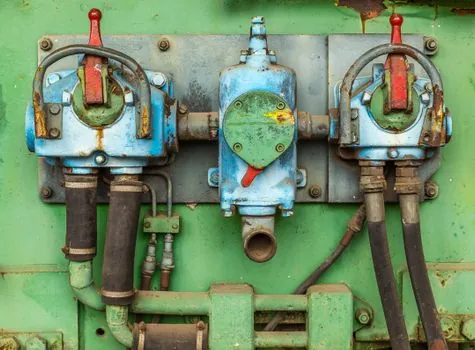
The most common hydraulic-valve failure modes are solenoid coil burnout from voltage spikes or wet windings, spool sticking from particulate above the rated ISO 4406 cleanliness code, seal extrusion at pressures above 31.5 MPa on standard polyurethane seals, and cracking-pressure drift on check valves after thermal cycling [S1][S3].
Trackable signals for the rest of 2026: Chinese OEM hydraulic-component suppliers continue to consolidate 35-year ranges of cast-iron directional, pressure, and check valves under single-catalogue programs with OEM-compatible spares [S3]; DSG-03 24 V DC solenoid directional valves remain a stocked SKU across multiple volume channels at $59-$214 with up to 72% discount lines visible in mid-2026 listings [S4]. Next check: revalidate the relief-valve set pressure and the check-valve cracking pressure on every circuit restart after a fluid change, and re-quote the servo/proportional body when the actuator's required closed-loop bandwidth crosses 30 Hz.