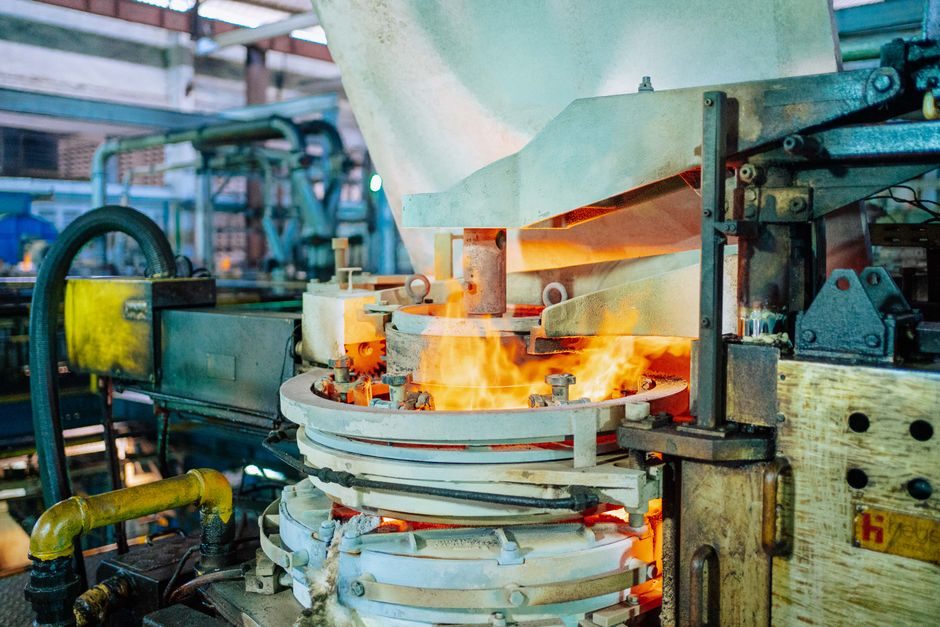
Magnesium at 1.8 g/cm³ is the lightest structural metal and the 8th most abundant element on earth, with a strength-to-weight ratio that beats aluminum and steel for weight-critical castings [S1]. For automotive and electronics buyers weighing process selection in 2026, the decision reduces to four picks: alloy family, hot-chamber vs cold-chamber, machine tonnage, and a corrosion-mitigation protocol — and getting any of these wrong is the dominant source of scrap, distortion, and field failure.
The selection logic below is built for process engineers and sourcing managers comparing magnesium against aluminum die casting, zinc, and gravity die casting on a real part — not a marketing pitch. The reference data is drawn from manufacturer technical pages and supplier catalogs active between April and July 2026.
When Magnesium Beats Aluminum and Zinc
Magnesium delivers the best strength-to-weight ratio of any commonly used structural metal, plus high impact and dent resistance, exceptional dampening, and low inertia — making it the default pick for parts that change direction frequently or are subject to NVH complaints [S1]. Compared with aluminum castings from long-established Chinese suppliers such as the 10-year veteran CZC, which ships to 50+ countries [S7], magnesium sits 33% lighter but historically trails aluminum on corrosion resistance, which is why nearly every magnesium casting in 2026 ships with a conversion coating or anodized finish.
Newer high-purity magnesium alloys now deliver better corrosion resistance than carbon steel and some aluminum alloys, narrowing the historical gap [S1]. Thin-walled magnesium die castings also collapse multi-piece welded steel or aluminum assemblies into a single part — fewer fasteners, fewer joints, lower assembly cost, higher reliability [S1]. If your part is a seat frame, steering wheel, instrument panel beam, laptop chassis, drone arm, or EV battery cover where every 100 g matters, magnesium is on the shortlist.
Alloy Selection: AZ91D vs AM60B vs AS41
Three alloy families cover roughly 90% of commercial magnesium die castings: AZ91D (general purpose, ~9% Al, ~1% Zn) for housings and covers where castability dominates; AM60B (~6% Al, ~0.3% Mn) for automotive safety components such as instrument panels and seat structures where ductility and elongation matter; and AS41 (~4% Al, ~1% Si) for power-train and under-hood parts where creep resistance at 150–175 °C is the requirement. Magnesium castings also cool faster than aluminum because of the lower heat content, which shortens cycle time and reduces thermal fatigue on the die casting die [S1].
Pick AZ91D when you need the lowest cost, the best fluidity for thin walls, and the highest as-cast surface hardness. Switch to AM60B when the part is a crash-relevant structural member: elongation of AM60B is roughly double that of AZ91D, which is why automotive seat frames and instrument panel cross-car beams default to AM60B. Step up to AS41 when sustained operating temperature sits above 120 °C. For parts requiring the thinnest possible sections (below 1.5 mm), specify high-purity AZ91D or AM60B with Fe/Ni/Cu impurity caps — modern high-purity grades can outperform some aluminum alloys on salt-spray corrosion when paired with a proper coating [S1].
Hot-Chamber vs Cold-Chamber Machine
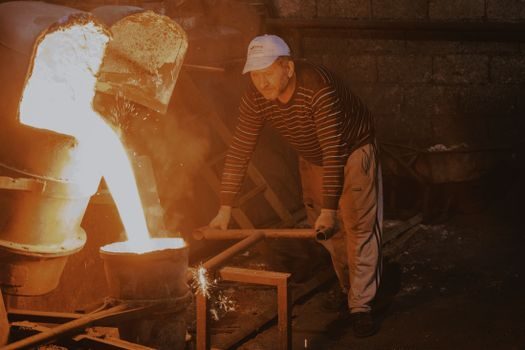
Hot-chamber magnesium die casting machines are the right default for roughly 70% of magnesium work: the melt stays inside a sealed gooseneck and injection system, so magnesium never contacts atmospheric air — this is the single most important reason hot-chamber beats cold-chamber on cycle time, safety, and oxide inclusions. Hot-chamber cells typically lock between 200 and 1,000 tons of clamping force and run parts below roughly 4–5 kg, which is the practical ceiling for the gooseneck pump. [S3]
Cold-chamber die casting machines take the shot for larger structural castings above 4–5 kg, any part with high structural demand, or where the alloy contains aluminum over ~10% that would attack the immersed plunger. Cold-chamber cells typically start at 400 tons and run up to 4,000+ tons for EV battery trays and full body structural nodes. The trade-off is real: cold-chamber magnesium cells need a SF6 or SO2-free cover-gas shroud over the ladle and shot well, plus a controlled-atmosphere holding furnace, because molten magnesium oxidizes rapidly and burns above 473 °C in air. If your part fits inside a hot-chamber envelope and you are running volumes above ~20,000 pieces/year, specify hot-chamber — the cycle-time delta is typically 30–50% versus cold-chamber.
Machine Tonnage, Clamp Force, and Projected Area
Clamp force in tons is roughly projected area (in²) × cavity pressure (tons/in²) × safety factor. For magnesium, projected-area cavity pressure typically lands between 3 and 5 tons/in² versus 4–6 for aluminum because magnesium's lower density lets the part be lighter for the same footprint — the clamp tonnage you need is therefore usually one size smaller than the equivalent aluminum tool. A part with 80 in² projected area at 4 tons/in² needs 320 tons nominal, so the next standard cell up (typically 400 tons) is the safe pick with a 25% safety margin. [S1]
Verify the machine's platen size, tie-bar clearance, shot weight, and shot sleeve diameter before locking the tool. A hot-chamber shot sleeve typically maxes out at 60–90 mm diameter with a stroke of 200–350 mm, capping practical shot weight at roughly 4 kg. Cold-chamber shot sleeves run 70–160 mm and stroke up to 700 mm. If your casting needs vacuum assistance to eliminate porosity in thick sections, specify a vacuum die casting machine rated for the required vacuum level (typically below 50 mbar absolute in the cavity) — magnesium's low density makes vacuum-assist especially effective at suppressing gas porosity relative to aluminum.
Protective Atmosphere and Safety

Magnesium melt handling is the only die-casting process where the atmosphere itself is a bill-of-material item. Furnace temperature is held between 640 and 680 °C for AZ91D, and the gooseneck or shot well is preheated and purged with cover gas before each shift. A die-spray release agent with a magnesium-compatible water-based or solvent carrier is mandatory — standard aluminum die-spray formulations contain sulfur and graphite additives that contaminate magnesium melt. [S1]
The hazard envelope is real: magnesium fires burn above 473 °C, react with water, and reach 3,100 °C. Cell layout must include Class D fire-suppression (graphite-based dry powder or sodium chloride), magnesium-rated flux traps in the drainage, and dedicated chip-and-swarf bins rather than general scrap. The safer the cell engineering, the lower your insurance premium and your ESG audit exposure — which is why a 10-year-aluminum house like CZC still tends to push buyers toward aluminum for parts that do not need the weight saving [S7].
Sourcing Map and Shortlist Logic
The 2026 sourcing map for magnesium die castings in China is thinner than aluminum — confirmed by the dominance of aluminum-focused suppliers on Made-in-China (e.g., camera housings at US$2.30 per piece, 200-piece MOQ from Ningbo Beilun Jiawei) [S3] — which is why buyers should expect longer tooling lead times (typically 10–14 weeks versus 6–8 for aluminum) and stricter minimum order quantities. A two-step qualification is the safe pattern: prototype on a hot-chamber cell in the 200–400 ton range with an AM60B or AZ91D sample, then audit the foundry's cover-gas monitoring logs, melt-chemistry spectro records, and prior magnesium safety incidents before releasing the production tool.
Use this shortlist. Pick magnesium when: the part is under ~5 kg, walls go below 2.5 mm, weight reduction is quantified against aluminum and worth the cost premium, and the operating environment is interior or coated. Pick aluminum when: the part is exposed to road salt without a coating, the section thickness is above 3 mm, or the design needs high thermal conductivity for heat dissipation — aluminum die casting remains the safer mass-production default in 2026 [S7]. Pick [zinc die casting](/encyclopedia/zinc-die-casting-machine.html) for small, intricate hardware under 1 kg where finish and dimensional tolerance dominate over weight. If the magnesium shortlist is justified, spec hot-chamber + AZ91D for sub-1.5 mm housings, cold-chamber + AM60B for structural safety parts, and require a vacuum-assist option for any casting above 3 mm wall thickness where radiographic or pressure-tight acceptance criteria apply. Two trackable signals for the next buying cycle: (1) request the foundry's SF6 usage rate per shift, since 2026 ESG audits are flagging cover-gas emissions; (2) confirm the die casting machine hydraulic or servo shot profile data — magnesium's faster solidification makes it more sensitive to shot-end setup than aluminum.
Related analysis: Clutch & Brake Total Cost of Ownership: A Spec-First Breakdown.