
For industrial clutches and brakes, the purchase price represents less than 10 percent of total spend over the equipment's life, with energy, consumables, and unplanned downtime making up the balance [S2].
Clutch-brake assemblies in stamping, winding, and conveyor duty live or die on three variables: thermal capacity per hour, wear-lining life in operating cycles, and the mean time to repair (MTTR) when the friction face finally goes clutch-brake.
Five Cost Drivers, Ranked by Lifetime Spend
TCO analysis exposes the hidden costs easily overlooked during budget planning or when making purchase decisions, encompassing purchase, use, maintenance, support, and disposal [S1]. Applied to clutch-brake hardware, the five cost drivers rank in this order: electrical energy (hold-coil or spring-set continuous draw), friction-lining replacement, compressed-air supply for pneumatically actuated units, unplanned production-line stoppage, and end-of-life disposal of friction material containing regulated particulates.
Spring-set electromagnetic brakes draw a release coil only during the actuation pulse; once the brake is set, no further current is needed electromagnetic-brake. That architecture is the single biggest TCO lever for failsafe-stop applications, because the parasitic kilowatt-hours that plague continuously-energised holding brakes simply do not accrue. Specifying a 24 VDC release coil with a dedicated switched-mode power supply, rather than a linear transformer-rectifier, cuts inrush transients that historically burn out switch contacts and force premature coil replacement.
Purchase Price vs. Lifecycle: The 5-10x Rule
The price tag on a clutch or brake reflects one small part of the big picture, with the balance split between energy, consumables, and the cost of the line being down [S2]. For a typical 200 N·m industrial brake on a three-shift stamping press, the purchase price of the unit itself is roughly 8-12% of the 10-year lifecycle cost; the remaining 88-92% sits in electricity, friction-disc exchanges, alignment labour, and lost production during brake-change events.
The TCO calculus is similar whether the equipment is a brake resistor on a VFD drive, a clutch-brake package on a mechanical press, or a fleet of servo motors - the purchase price is a down-payment, not the bill. The same reference framework appears in the Sun Java deployment guide, where choosing between many small hardware systems and a few larger ones is decided on management and downtime exposure, not sticker price [S3]. A 10 kW clutch running 16 hours a day, 250 days a year, will draw roughly 40,000 kWh annually; at industrial tariffs that single line item equals the cost of the brake itself inside 18-24 months.
Who a TCO Model Is For - and Who It Is Not
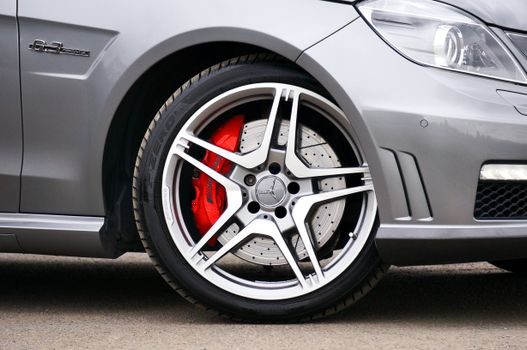
TCO modelling pays back fastest on equipment with high duty cycle, high energy draw, and a long design life - stamping presses, paper rewinders, crane hoist brakes, and tension-control clutch-brake units on metal-processing lines all qualify. TCO is overkill for a brake that cycles a few times an hour on a low-stakes conveyor gate, or for prototype tooling that will be scrapped inside two years. [S2]
Capital-procurement teams operating on a one-year payback hurdle often reject the higher-priced spring-set electromagnetic brake in favour of a continuously-energised unit, because the TCO horizon is shorter than the cost-recovery curve electromagnetic-brake. That decision is rational at the project level but expensive at the plant level, and it is exactly the kind of trade-off a TCO model is designed to surface.
Decision Matrix: Spring-Set vs. Powered-Hold vs. Pneumatic
Three architectures dominate the spec sheet: spring-set electromagnetic (fail-safe, release-on-command), powered-hold electromagnetic (engage-on-command, release-on-power-loss), and pneumatically actuated (compressed-air piloted). On four decision criteria the trade-offs line up as follows.
Energy: spring-set draws release-coil current only during the millisecond actuation pulse, so steady-state kWh is effectively zero; powered-hold draws continuous coil current proportional to torque setting; pneumatic consumes compressed air at 6-8 bar whenever the brake is engaged, with leakage losses even when idle. Maintenance: spring-set and pneumatic units typically need friction-face exchange every 1-2 million cycles; powered-hold units run cooler but share the same friction-life curve. Safety: spring-set fails closed on power loss, the preferred architecture for hoists, elevators, and E-stop duty; powered-hold fails open and is restricted to applications where drift is acceptable. Installed cost: spring-set units carry a 20-40% price premium over powered-hold equivalents of the same torque class, a premium that the energy savings recover inside the first 12-18 months on three-shift duty.
Maintenance and Consumables: The Hidden Multiplier
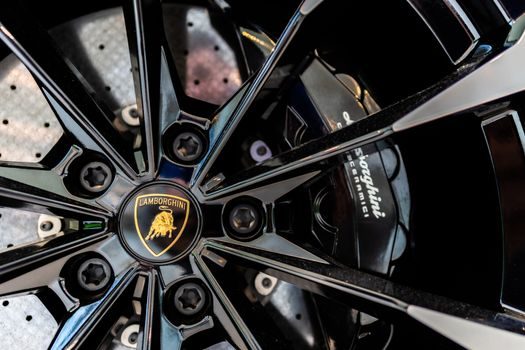
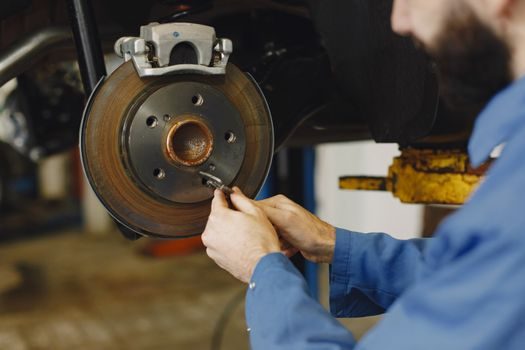
Total Cost of Ownership includes both the initial purchase price and the cost of operations and maintenance over the product's life [S5]. For a clutch-brake, operations and maintenance typically means three line items: friction-lining or disc exchange, air-filter and solenoid-valve service on pneumatic units, and the labour hours to remove, refit, and re-align the assembly on the shaft.
Specifying a modular friction face that can be replaced without disturbing the rotor/stator air gap cuts MTTR by roughly 40-60% versus a unit that has to be fully removed and re-shimmed clutch-brake. That same modularity shows up across adjacent motion-control assemblies, including shaft coupling installation where acceptance criteria and re-alignment time dominate the maintenance budget.
Energy, Heat, and the MTTR Connection
Energy in a clutch-brake is not dissipated cleanly: most of it shows up as heat in the friction interface, and heat is the wear-lining killer. A brake that absorbs 50 W of continuous slip energy will see lining life drop by half for every 30 °C rise above its rated continuous operating temperature; this is a documented behaviour of organic-friction materials, and it is why duty-cycle derating curves are non-linear, not straight-line.
The cheapest way to extend lining life is rarely more friction material, it is better thermal management: a forced-air fan kit, a water-cooled heat-sink plate, or a switch from a continuously-energised powered-hold coil to a pulsed-then-release spring-set architecture electromagnetic-brake. A standard industrial fan consumes 30-80 W but extends lining life by 2-4x, a payback curve that beats almost any other line item in the TCO spreadsheet.
Standards, Sourcing, and Specification Discipline
For hazardous-area service the specifier must layer the TCO model against ATEX 2014/34/EU or IECEx certification costs, which can add 15-30% to unit price and 6-12 weeks to lead time. The cost-of-ownership question on those builds is no longer 'spring-set or powered-hold', it is 'specify the certified unit now, or retrofit later and absorb both the upgrade cost and the production-line stoppage'. [S2]
On standard industrial service, the same reference frames used in other capital-equipment TCO work - from cloud capacity planning [S3] to manufacturing fluid handling [S2] - all point to the same conclusion: lifecycle cost is dominated by operating-phase variables, and the cheapest spec is the one that aligns torque margin, duty cycle, and cooling with the actual 95th-percentile workload rather than the nameplate. Track these three signals over the next 12 months: relative price moves between spring-set and powered-hold units in the 100-500 N·m torque class, updates to ATEX/IECEx third-party certification fee schedules, and any new standardisation of friction-lining wear-indicator telemetry that lets the maintenance team replace discs on condition rather than on a calendar.
