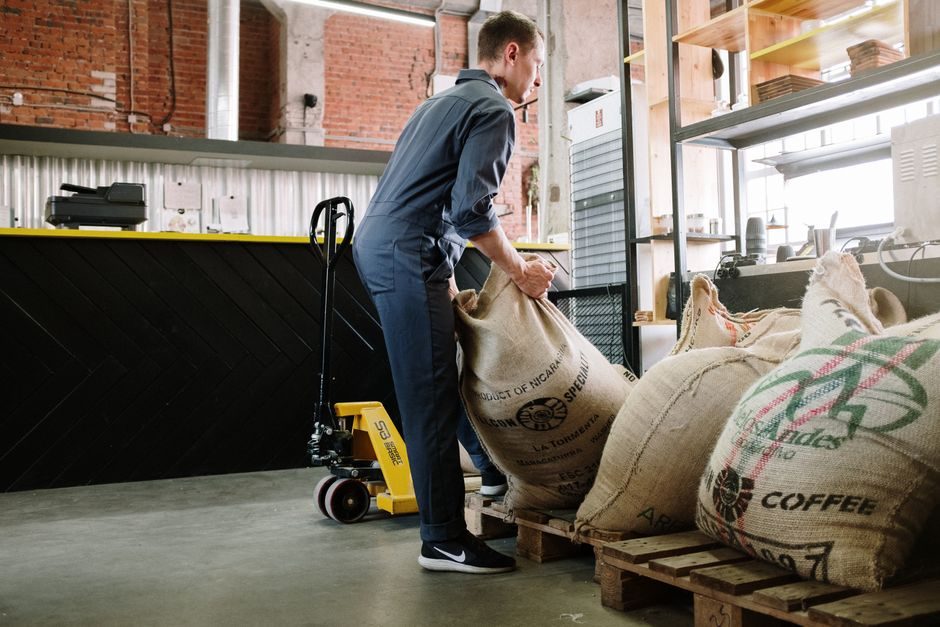
A pallet jack is selected the same way any other piece of material-handling equipment is selected: by matching five hard spec values — load capacity, fork dimensions, lift mechanism, wheel material, and power source — to the floor, the pallet standard, and the shift profile of the operation [S1][S2].
Distributors such as ULINE stock more than a dozen variants on a single category page — Standard, Industrial, Deluxe, Heavy Duty, Quick-Lift, Low Profile, Steel Wheel, Battery Powered, Scale, Corrosion Resistant, Adjustable Width, Multi-Directional, Scissor Lift, and All-Terrain — and each variant exists because a real spec combination in a real facility did not fit the standard model [S1]. See the manual pallet jack and electric pallet truck encyclopedia entries for the baseline definitions.
Load Capacity: 2,200 kg Standard, 5,000+ kg for Heavy Steel
Standard hand pallet jacks in mainstream North-American distribution are rated at roughly 2,200–2,500 kg (5,000 lb), which covers the GMA-style 48×40 in wooden pallet loaded to a sensible stack height [S1][S2].
Heavy-duty variants on the same category page jump to 5,000 kg (11,000 lb) and above, using a thicker steel chassis, larger hydraulic ram, and reinforced forks; they exist for steel coils, concrete blocks, and dense machinery skids that would bend a standard unit [S1]. A common buyer mistake is to round up to the heavy-duty SKU for an ordinary palletizing line, paying 2–3× the unit cost for tonnage that will never be loaded — pick the rated unit that sits 25–40% above your peak measured load, not the next class up.
Fork Width and Length: 550 mm EU vs 685 mm US Pallet
Fork width must match the pallet stringer or block footprint, not the aisle width. European pallets (EUR/EPAL 1200×800 mm) require a fork width of about 550 mm, while US GMA pallets (1219×1016 mm) are typically handled with forks in the 685 mm range; many manufacturers offer an adjustable-width model for mixed-fleet operations [S2].
Fork length is a second decision: 1220 mm (48 in) handles one-way GMA pallets cleanly, while 1525–1829 mm (60–72 in) is specified when a single load is two pallets end-to-end. ULINE's Low Profile category addresses the opposite problem — pallet bottoms under 75 mm entry height that a standard 85 mm frame cannot engage [S1]. For facilities handling both CHEP and GMA pools, the pallet rack bay spacing and the jack fork length should be reviewed together so turning radius is not lost.
Power Source: Manual Hydraulic vs Electric Lithium
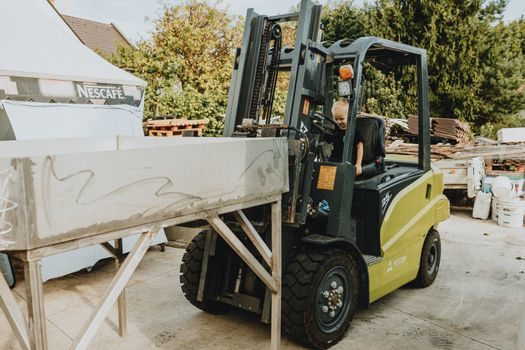
Manual hydraulic pallet jacks are the lowest-cost option and dominate global unit volume because they require no charging infrastructure and survive rough shift abuse; the trade-off is operator effort, which scales steeply above ~2,000 kg per move or above ~30 moves per hour [S2].
Electric pallet trucks — ULINE's "Battery Powered" and "Electric Pallet Trucks" categories — use a 24V lithium or lead-acid pack with a walkie or rider platform; they pay back when a single operator runs more than 2–3 hours of continuous pallet movement per shift, and they collapse the labor cost of a 2,500 kg move from a 4-person push to a thumb-throttle drive. Quick-Lift hydraulic models are the middle ground: a single pump stroke raises the forks to the load with no repeated pumping, which roughly halves handle-strokes per move and is the most cost-effective upgrade for a manual fleet [S1]. Buyers evaluating electric units should also review pallet stacker selection, because stackers add lift-height range that a jack does not.
Wheel Material: Nylon for Rough Ground, PU for Smooth Floor
Wheel compound is selected by floor surface, and the same truck can ship with three different wheels — the most common mistake is buying on frame spec and inheriting the wrong wheel [S2].
Nylon wheels are hard, abrasion-resistant, and the right choice for outdoor yards, dock plates, and rough concrete; they are noisy on smooth floors and can chip epoxy. Polyurethane (PU) wheels have a soft contact patch, run quietly on epoxy or sealed concrete (typical in factories, warehouses, and libraries), and resist abrasion well enough for occasional outdoor runs; they cost more per wheel. Steel-core wheels wrapped in TPE are reserved for high-capacity heavy-duty units where the wheel itself must carry the chassis load [S1][S2]. For facilities that also use plastic pallet footprints, PU wheels are usually specified because harder nylon accelerates pallet-surface wear on HDPE decks.
Special Environments: Stainless, Scale, Scissor, All-Terrain
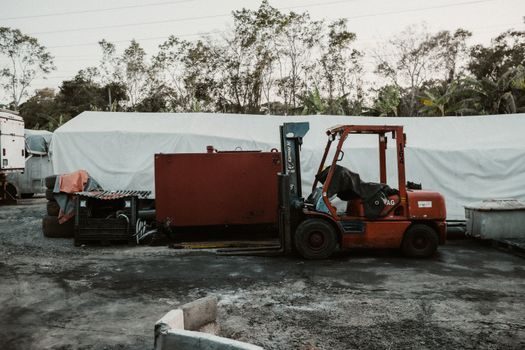
Stainless-steel pallet trucks are specified for clean rooms, food processing, pharmaceutical, and chemical plants where carbon-steel corrosion would contaminate product or shed rust; they are built from 304 or 316 stainless and use sealed bearings [S2]. Pallet-truck scales integrate a load cell into the chassis and let receiving or shipping weigh the load in motion — useful when floor scales are bottlenecks at the dock.
Scissor-lift pallet trucks raise loads to 800 mm or more for ergonomic workstation feeding, and all-terrain units add large pneumatic wheels and a reinforced chassis for construction sites and unpaved yards [S1]. The multi-directional and adjustable-width variants solve non-standard rack or pallet geometries that would otherwise need a forklift. For inter-process transport at higher lift heights, a pallet stacker becomes the appropriate spec class rather than a jack.
Decision Shortlist by Application
For a single-shift warehouse on smooth epoxy floor moving 1,500–2,000 kg GMA pallets at <20 moves/hour, a standard manual hydraulic jack with PU wheels, 685 mm fork width, 1220 mm fork length, and 2,500 kg rating is the lowest-risk spec [S1][S2].
For multi-shift distribution moving >30 moves/hour, the same capacity in a 24V electric walkie truck pays back in 9–14 months on labor alone. For steel coil or machinery handling above 3,000 kg, specify a heavy-duty 5,000 kg steel-wheel unit and re-verify fork thickness. For food, pharma, or wash-down areas, jump directly to a 304/316 stainless-steel chassis. For mixed CHEP/GMA pools, an adjustable-width or quick-lift manual jack avoids buying two fleets [S1].
Two signals worth tracking before purchase: confirm pallet-pool entry height (standard 100 mm vs low-profile 75 mm) with a caliper on the actual pallets in your dock, and confirm floor flatness in mm/m — a jack rated for the load is only as stable as the surface beneath the wheels [S2]. For readers cross-shopping adjacent lift equipment, the reach truck vs forklift aisle comparison and the overhead bridge crane vs stacker crane map cover the lift-height tiers above what any pallet jack can deliver.