Specifying an aerial work platform is a constraint-satisfaction problem, not a brand problem: working height, platform capacity (typically 200–1000 kg for scissor classes), ground condition, and power source eliminate most of the catalogue before paint colour is discussed [S1][S3].
On modern fleets the four families — scissor, articulating/telescopic boom, vertical mast, and truck-mounted — cover roughly 90% of industrial access work; the wrong family is the single most expensive mistake, because the chassis, outrigger geometry, and stabilisation envelope cannot be retro-fitted later [S2][S3].
Start with the four hard numbers, not the brochure
Working height is the platform floor plus 2 m of reach; if the spec is "we need to touch a 12 m ceiling", the machine you order is a 14 m working-height scissor, not a 12 m one [S1]. Platform capacity is rated for the entire basket — personnel, tools, and material — and is split into a "restricted" and "unrestricted" envelope on most booms (e.g. 230 kg / 450 kg on a Haulotte articulating-boom class) [S1].
Terrain class (hard indoor floor, finished slab, rough site, soft ground) dictates whether you need solid tyres, non-marking tyres, or rough-terrain drive. SIVGE's aluminium work-platform line and similar self-propelled vertical masts target indoor slab duty with non-marking casters and a 1–2 m footprint; truck-mounted and rough-terrain scissors need 4WD, oscillating axles and outriggers [S3]. Sizing any of these wrong by even one envelope usually pushes the rental onto a heavier, more expensive class.
Match machine family to the work envelope
Scissor lifts deliver the largest platform area for the lowest cost-per-square-metre at height — ideal for façade work, MEP fit-out, and overhead cable trays where the access point is straight up. Typical working heights run 8–18 m on electric scissor, 8–28 m on diesel rough-terrain scissor [S1][S3].
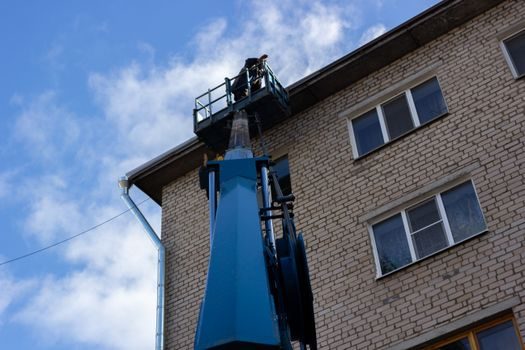
Articulating booms (knuckle booms) handle up-and-over obstructions; telescopic booms give the longest horizontal outreach — useful on shipyards, steel erection, and tree work. Vertical masts are sub-12 m, push-around or self-propelled, with a 1-person basket; they fit the narrow-aisle warehouse and finished-floor use case where a scissor is too wide [S3]. Truck-mounted platforms (also catalogued as aerial work trucks) integrate a 12–35 m boom on a 3.5–7.5 t chassis, traded against lower payload and road-legal weight [S5].
Quick comparison by decision criteria, drawn from manufacturer data sheets [S1][S3][S5]:
- Scissor: best platform area / cost; poor outreach; best on flat, firm ground.<br>- Articulating boom: best up-and-over; mid cost; needs 2–3 m outrigger envelope.<br>- Telescopic boom: best reach (20–40 m horizontal on 38–56 m machines); heaviest tow weight; needs the largest set-up pad.<br>- Vertical mast: narrowest footprint, lightest tow, indoor-only envelope; 1-person, 150–200 kg platform rating.<br>- Truck-mounted: drive-on-site between jobs; integrated stabilisers; trades payload for mobility [S5].
Power source and duty environment
For indoor work, electric DC (battery) is mandatory on most spec sheets — no CO, no fumes, quieter than 70 dB(A) at the platform, which matters around food, pharma, and live offices. Lithium-ion packs are now standard on newer Palfinger and Haulotte classes, cutting charge time and allowing opportunity charging [S1][S5].
For outdoor rough-terrain duty, diesel Stage V (EU) / Tier 4 Final (US) engines dominate above 12 m working height; bi-energy (diesel + electric) bridges the two — diesel to drive and elevate outdoors, electric to roll indoors without a tail-pipe excursion [S1][S5]. Hybrid and full-electric rough-terrain scissor classes have appeared in the 16–22 m band but at a 10–20% price premium over the diesel equivalent [S5].
Standards, inspection, and total cost of ownership
Compliance pulls the spec list tighter than marketing does. In the EU, aerial work platforms fall under machinery directive 2006/42/EC; the harmonised standard EN 280 is the operational bible for design, stabilisers, and load sensing. In North America, ANSI A92.20 (design), A92.22 (mobile elevating work platforms) and OSHA 1910.67 govern operator training and daily inspection [S2].
Inspection cadence on a working fleet is typically a pre-shift visual, a 3-month thorough examination, and an annual load test, with the maintenance log kept on file for the regulator; on a Chinese OEM line such as SIVGE, the same unit is documented to UL and CE marks plus factory load tests before shipment [S2][S3]. Blumenbecker's service tier publishes a 24-hour fault-response window in industrial regions — the kind of service-level commitment that often decides the rent vs buy math on a single project [S2].
Where the wrong spec costs money
Three failure modes recur. First, ordering a scissor when the access point is 4 m off the wall — you need a boom, full stop. Second, picking a truck-mounted platform to reach a 9 m indoor ceiling — the wheelbase alone blocks the doorway. Third, under-rating platform capacity: a two-person cable-pulley crew with 60 kg of tools on a 230 kg boom envelope will trigger the load-sensor cut-out every shift and burn the operator's confidence in the machine [S1][S3].
Two floor-load numbers also bite on indoor work: a mid-size 12 m electric scissor weighs 3.0–3.8 t and exerts roughly 12 kN/m² through its wheels, which is fine on a 150 mm suspended slab but will crack a 100 mm warehouse floor. For a deeper comparison of width-class envelopes on indoor lifts, the platform scale reference page lists typical footprint and axle load data for similar indoor mobile equipment.
Build a short list, then validate on paper
Lock the four hard numbers — height, capacity, terrain, power — and the family chooses itself. From there, build a 2–3 machine short list against three tie-breakers: outrigger / stabiliser envelope (fits the site?), turning radius (fits the aisle?), and the OEM service network within 50–100 km of the jobsite [S1][S2][S5].
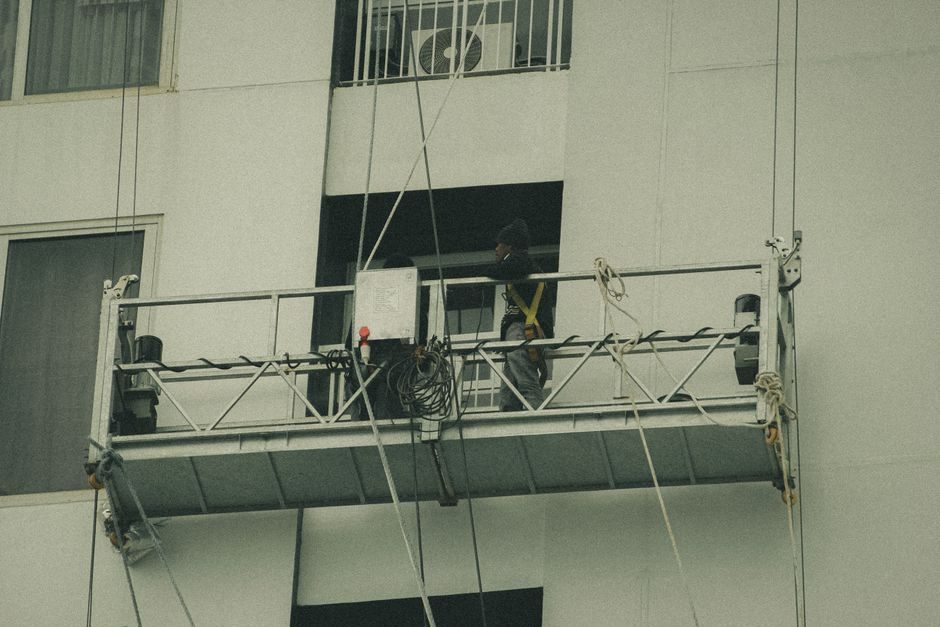
Final spec is then a paper exercise: confirm EN 280 / ANSI A92 declarations, ask for the latest thorough-examination certificate, and pin the delivery date to the OEM's published lead time (typically 4–8 weeks for a configured electric scissor from a European OEM, 2–4 weeks for a Chinese export unit ex-works Hangzhou) [S3][S5]. The unit that meets those four hard numbers, ships on the required date, and has a service van within an hour of your site is the one to sign for. For crews that need a self-propelled scissor or boom across a wide jobsite, a suspended platform is a different category entirely — roof-rigged and rope-suspended — and only enters the conversation when permanent façade access replaces the mobile fleet.
Trackable signals for the next sourcing cycle: OEM publication of Stage V hybrid rough-terrain scissor models in the 18–22 m band, and any update to EN 280 Annex B on platform load-sensing thresholds. Both will reshape the electric vs diesel split on European sites within the next 12 months [S5].
For related coverage, see Asphalt Paver Suppliers 2026: China OEM Capacity, Ammann Specs and India Regional Sources.